When a proofer starts drifting off temperature
A proofer that runs too cool will slow fermentation and leave batches under-sized, while a cabinet that overshoots can dry the surface and spoil the finish. In busy sites across Johannesburg, Pretoria, Durban and Cape Town, this usually shows up as uneven rise between trays, misting that stops too soon, or a thermostat that keeps hunting up and down. If the unit is older, coastal humidity can also shorten the life of seals, switches and terminals.
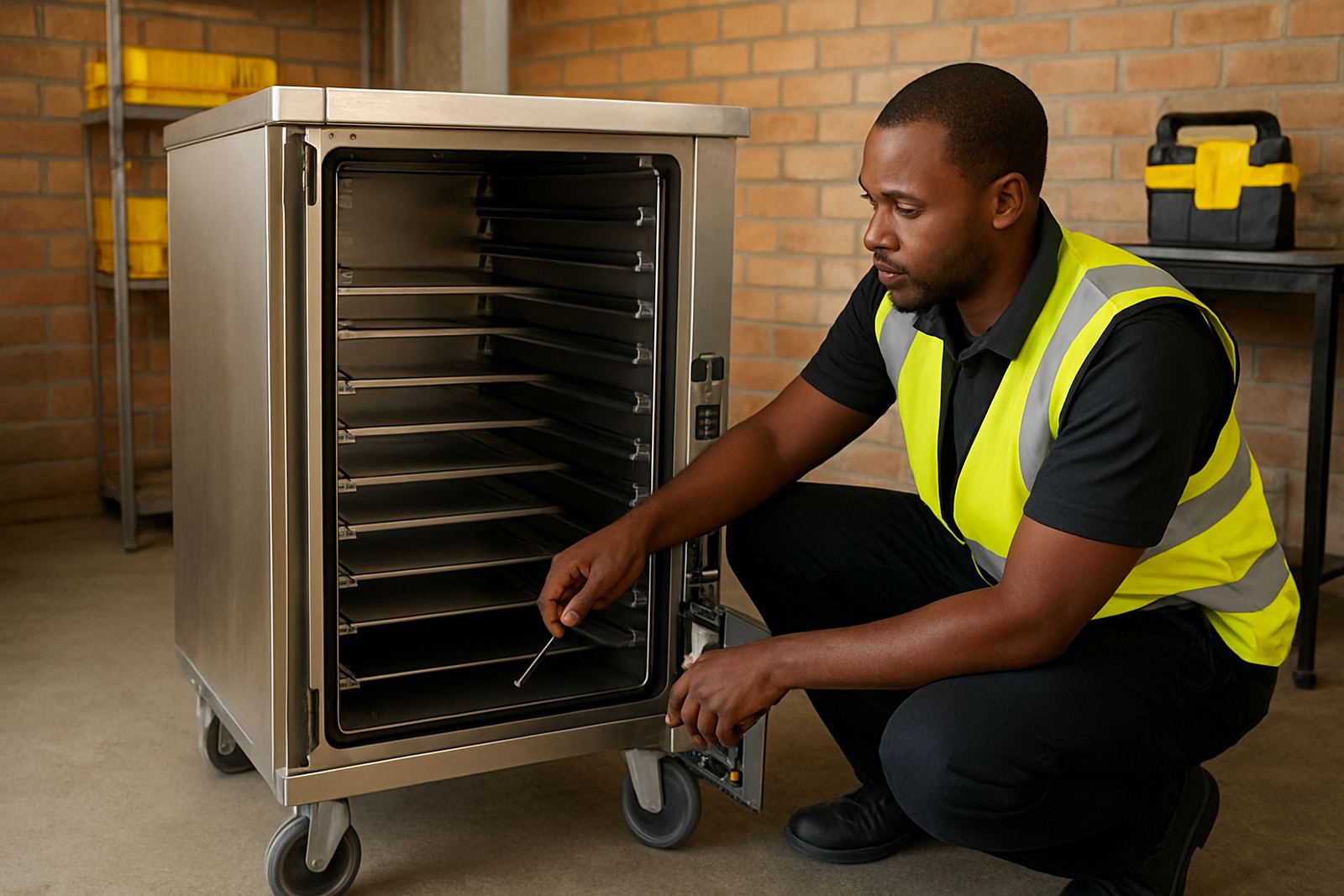
We help identify the part behind the fault before money is spent on the wrong item. That includes element checks, thermostat matching, gasket replacement, switch testing and advice on whether the cabinet is worth repairing. For smaller operators, this often keeps a proofing line going for far less than a full unit replacement.
Typical parts found in South African proofers
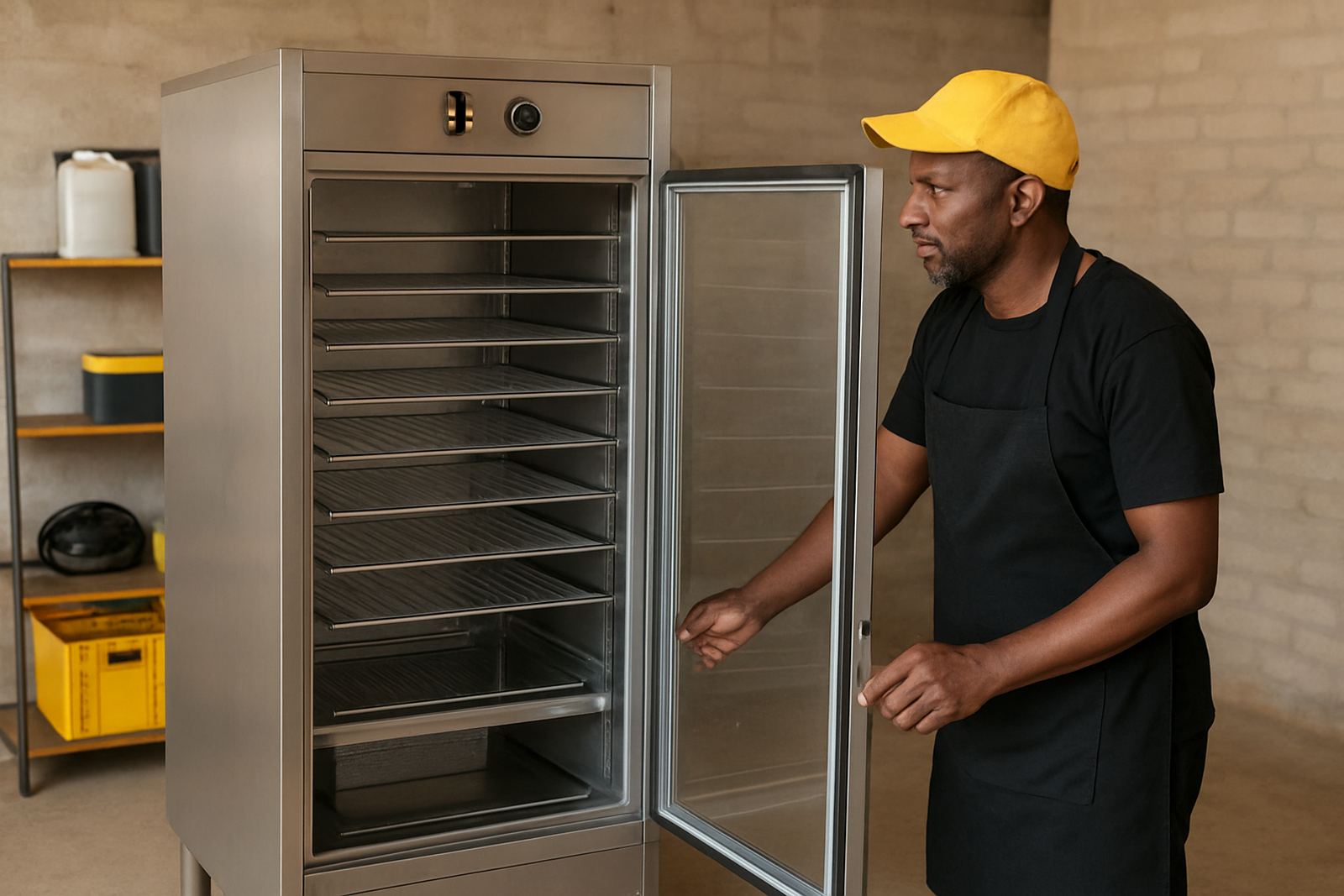
Most proofers use a fairly simple set-up, but the parts need to match the cabinet size and the control layout exactly. In many cases the main items are tubular elements, capillary or digital thermostats, humidity control parts, door gaskets, selector switches, indicator lamps and terminal blocks. Some units also use fans, water trays, drain fittings and safety cut-outs.
We see a lot of mixed equipment in restaurants, hotel bakeries and takeaway chains, where one site may have a compact single-door cabinet and another site has a larger roll-in unit. It is important to compare the old part carefully, because a similar looking thermostat or element can still be wrong on voltage, length, mounting pattern or sensing range.
- Elements for heat recovery and steady cabinet temperature.
- Thermostats for manual control or digital temperature sensing.
- Gaskets to stop heat loss and keep humidity inside the chamber.
- Switches, pilot lights and safety parts for reliable daily operation.
- Humidity components, trays and fittings for proofing conditions that stay even.
Planning a repair without slowing production
When a proofer is part of a bakery schedule, the first question is usually how long the cabinet can be down. For that reason we always look at the working pattern, tray count and the time of day the machine is needed. A site in Midrand or Sandton may want a quick part swap before the breakfast run, while a bakery in Durban may need extra attention to corrosion and moisture. Planning the repair around delivery and fitting windows avoids unnecessary downtime.
It also helps to keep the serial number, measurements and a photo of the old part before ordering. If the cabinet has been altered, or if a previous repair used a non-standard component, that information saves a lot of back and forth. A clear parts request means the right item reaches the workshop or site first time, which matters when staff are waiting on stock for same-day baking. We have seen many delays caused by missing details, not by the parts themselves.
Common mistakes that waste money on proofers
One of the biggest mistakes is replacing only the obvious part and ignoring the cause of the fault. For example, a bad gasket can force the element to run longer, and a weak thermostat can make a new element fail sooner than expected. Another common issue is fitting a part that is close enough in size but wrong for the voltage or control type. That can lead to poor performance, nuisance tripping, or unsafe operation.
We also find that proofers are sometimes run with heavy scale build-up, blocked vents or damaged hinges, especially on sites near the coast where moisture and salt air are part of daily life. If the door does not close squarely, the cabinet has to work harder and the humidity level drifts. Small mechanical faults can look like electrical faults, so it is worth checking the full cabinet before replacing parts. A rushed fix may seem cheaper on day one, but it often costs more over a month or two.
For municipal compliance and safety, the cabinet should be fitted and tested properly after any repair. That includes confirming the earth, checking insulation, and making sure the controls switch off as they should. If your site has internal maintenance records, keep the part numbers and test results together so the next service is quicker.
Layout advice for kitchens that run proofers daily
Proofers work best when they are placed where airflow, access and cleaning are all practical. Leave enough room around the cabinet for service panels to open and for a technician to reach the controls without moving other equipment. In compact bakeries and food stores, this can be the difference between a quick repair and a half-day shutdown. Keep proofers away from doors that open directly onto cold draughts, and away from fryers where grease can settle onto controls.
For sites using more than one cabinet, plan for a clear order of operation. Trays should move from prep to proofing to baking without crossing the main wash-up path. If the cabinet is fitted near a dishwash area, water splash and steam can shorten the life of switches and terminals. A clean, dry position is always better than a cramped one, even if it means moving a table by a metre or two. Good layout makes part fitting easier later as well.
Budget ranges for proofers and what drives the price
Repair budgets depend on the cabinet type, the age of the unit and how much of the control system needs attention. A basic gasket or switch replacement may stay in the low hundreds of Rand, while a thermostat, element or combined control repair can move into the low thousands. If the fault includes multiple items, on-site labour and testing, the total can increase fairly quickly. The aim is always to keep the repair sensible compared with the age and workload of the cabinet.
As a guide, many proofing cabinet repairs fall somewhere between R450 and R3 500 for parts only, while more involved work with fitting and post-fit testing can sit above that depending on travel and access. Larger or imported cabinets may cost more because the matching parts are less common. We always suggest comparing the repair price with the cost of lost production, because a cabinet that is out for two days can affect far more than the repair invoice. For bakeries in Bloemfontein, Durban or Pretoria, that calculation is often what decides whether to repair now or schedule a full service later.