Why the wash-up line needed attention
The client was a busy neighbourhood bistro in George serving breakfast, lunch and evening trade, so the dishwasher could not sit out for long. Their main complaint was water escape around the door seal, weak rinse coverage, and inconsistent cleaning on glassware and plates after back-to-back covers. In a coastal town, that sort of fault shows up quickly because humidity, salt in the air and daily heat all work against rubber parts and small fittings.
The brief was clear: identify the failed parts, confirm compatibility before ordering, and keep the repair focused on the wash-up machine only. The bistro did not want guesswork or mixed parts from different models, because one wrong gasket can mean another shutdown and more labour. We worked off the machine details and the old seal profile, then matched the rinse-side items that were showing wear.
- Client type: independent coastal bistro
- Town: George, Western Cape
- Equipment: commercial undercounter dishwasher
- Main issue: leaking door seal and poor rinse performance
The constraints we had to work around
There were three practical constraints. First, the unit had to stay as close to service as possible because the kitchen had no spare dishwasher on site. Second, the machine had seen several years of use, so the serial plate was faded and a few old parts were already fitted as substitutes. Third, the bistro sits not far from the coast, which means stainless surfaces last well enough but seals, jets and clips still take a hammering over time.
Load-shedding also mattered. Their kitchen runs a tight prep window, so we had to schedule the fitment support around the power outage pattern and avoid wasting a service slot on a dead machine. We also checked the rinse arm pattern and door closing pressure before release, because a leak can come from the gasket itself or from a door that no longer sits square. That kind of fault is easy to miss if you only order one part and hope for the best.
- Coastal humidity affecting rubber wear
- Limited downtime, no backup machine
- Faded machine details, so compatibility had to be checked carefully
- Power cuts forcing a narrow fitting window
Parts supplied and what each one did
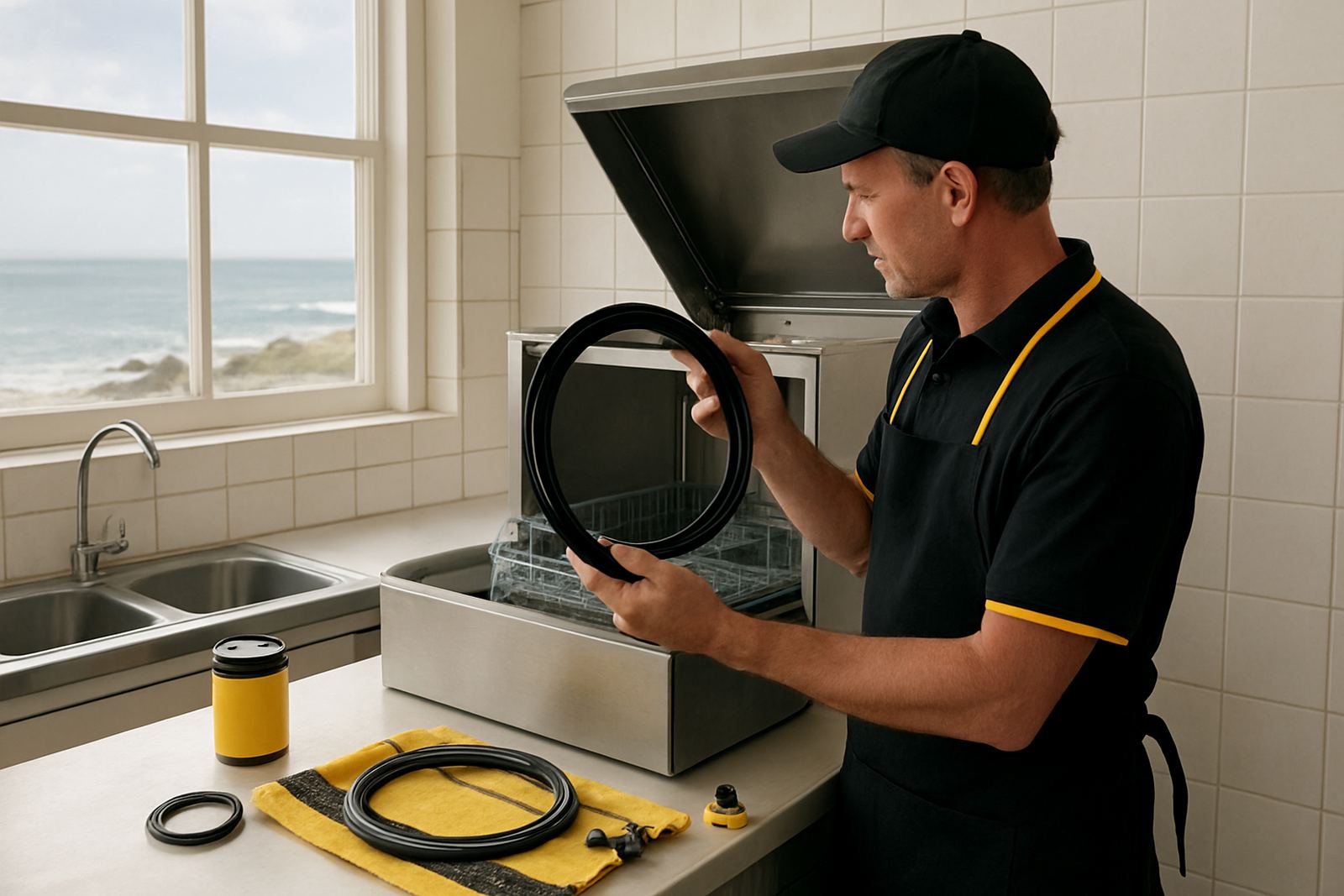
We supplied a replacement dishwasher door gasket sized to the machine profile, plus rinse-side components that restored spray coverage and helped the wash cycle clear residue properly. The gasket was selected for a positive door seal and better resistance to repeated opening through a busy service. The rinse parts included items linked to spray distribution and flow consistency, so the final result was not just a dry seal but a cleaner rinse finish too.
The technical side of the job was mostly about compatibility. With commercial dishwashers, the right profile, length and corner shape matter more than people expect. A seal can look right on paper but still pinch, twist or leave a gap at the hinge side. We checked the measurements against the machine type, then matched the rinse components to the existing line-up so the bistro would not be stuck with parts that needed return work.
- Door gasket matched to the original profile and cabinet opening
- Rinse components selected for steady spray pattern
- Check carried out on door closing pressure and seating line
- Parts chosen to suit normal wash temperatures and daily service use
Fitment support and testing on site
Once the parts were on hand, the fitment was completed in one planned visit. The old gasket was removed, the channel cleaned out, and the new seal seated carefully so it would not bunch at the corners. We then checked the rinse side, cleared any scale or debris from the passage points, and ran the unit through a number of test cycles with warm water to watch for leaks and spray imbalance.
The machine was also checked for lid and latch tension, because a good seal wont hold if the door does not close evenly. After fitment, we confirmed that the rinse pattern was reaching the corners of the racks and that the drain and refill rhythm was behaving as expected. The bistro team was shown what to watch for in the first week, especially around door feel, drip lines and any change in wash sound.
- Old seal removed and seating channel cleaned
- New gasket fitted without twisting the corners
- Rinse path checked for scale and uneven flow
- Test cycles run to confirm no visible leaking
Timeline from identification to handover
The project ran over a short two week window. In week one we identified the machine, confirmed the failed components, and sourced the correct parts from our Midrand base. In week two we arranged dispatch to George, completed the fitment support and ran the test cycles before handover. That pace kept the bistro going and avoided the usual stop start that happens when parts are ordered before the fault is properly confirmed.
Because this was a wash-up upgrade rather than a full equipment replacement, the schedule stayed tight and practical. The bistro could plan around a single service interruption instead of several days of back-and-forth. It also meant the kitchen team did not have to change their own routine or hold dishes longer than normal, which is important when lunch trade starts piling up early.
- Week 1: part identification and compatibility checks
- Week 1: sourcing and dispatch from Midrand
- Week 2: on-site fitment support in George
- Week 2: testing and handover
Results for the bistro wash-up area
After the repair, the dishwasher held water properly again and the rinse pattern returned to an even spread across the load. That meant fewer re-washes, cleaner glassware, and less pressure on the staff member working the pot wash station during service peaks. The kitchen also reported less splashback around the machine, which helped keep the floor drier and the area safer underfoot.
For a coastal bistro, the real win is not only stopping a leak but extending the working life of the machine between major services. A sound gasket and properly matched rinse components can make a noticeable difference to chemical use, water waste and staff frustration. It is a small repair on paper, but in a busy kitchen it keeps the whole back-of-house moving. That matters when the lunch rush hits and nobody has time to fuss with a dodgy door.
- Improved seal on the dishwasher door
- More even rinse coverage across racks
- Less re-washing of crockery and glasses
- Better control of water splashes around the wash-up point
What we would do again on a similar job
On another George or Garden Route bistro job, we would follow the same order: identify first, check compatibility before dispatch, then fit and test in one visit where possible. That approach keeps the repair grounded in the actual machine condition instead of assumptions. We would also ask for a clear photo of the serial plate and door seal profile upfront, because those two details save time and avoid the wrong part arriving on the first drop.
We would repeat the same focus on coastal wear too. In places with salt air and regular washing down, small seals and rinse fittings deserve proper attention before they fail completely. The best outcome is a machine that carries on working through a full service week without surprise leaks, and that is exactly what this job aimed to secure.
- Start with machine identification and photos
- Check seal profile, size and latch pressure
- Test rinse flow after every replacement
- Keep one spare gasket on hand for busy coastal sites
Key facts
| Project location | George, Western Cape |
|---|---|
| Client type | Independent coastal bistro |
| Equipment | Commercial undercounter dishwasher |
| Parts supplied | Door gasket and rinse-side components |
| Timeline | 2 weeks from identification to handover |
| Services used | Part Identification, Compatibility Checks, Dishwasher Part Fitting, Onsite Parts Support, Post-Fit Testing |