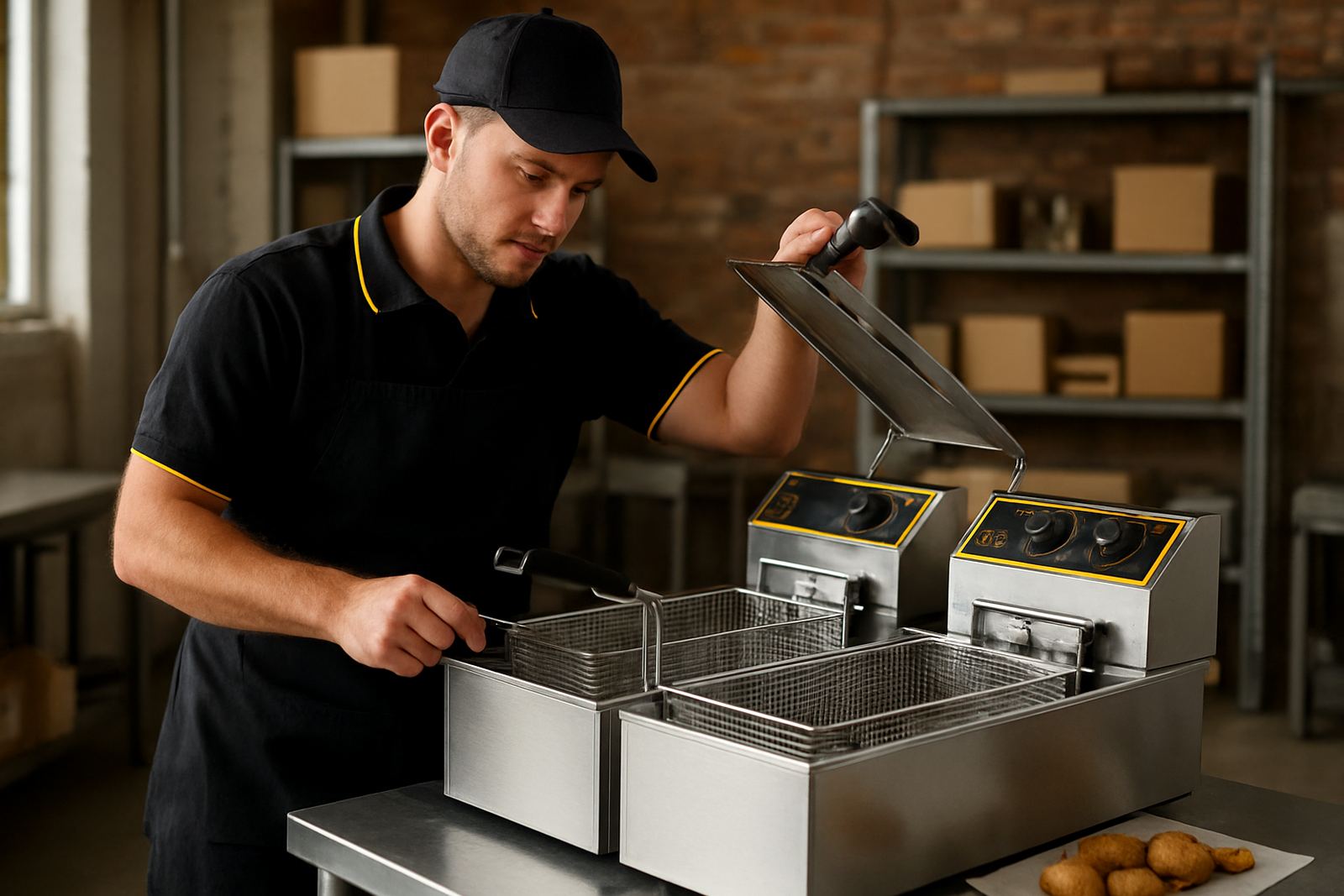
When an electric fryer starts slowing service
Most fryer calls start the same way, the oil is not reaching temperature, the control trips, or the basket handle is loose and hard to use. In a busy kitchen that means longer waits on chips, chicken portions and snack prep, which quickly affects service during lunch and supper rushes.
Electric fryer faults are often caused by a failed element, a tired thermostat, burnt contactors or heat damage around the wiring and handles. Coastal kitchens in Durban or Port Elizabeth can also see quicker corrosion on terminals and fittings, while inland sites in Pretoria or Bloemfontein usually battle power dips and load-shedding related stress on components.
- Oil heating too slowly or not at all
- Temperature swinging beyond the set point
- Contactors chattering or sticking
- Basket handles cracking, loosening or bending
- Resetting after every short power interruption
The usual fryer spares that keep the unit working
For most electric fryers the core spares are elements, limit controls, thermostats, contactors, switches and basket handles. On some units the issue is one part only, but in older fryers it is common to find heat damage across more than one component. A failed element can overwork the control side, and a weak contactor can create heat at the terminals then the wiring starts discoloring.
We help check the rating plate, physical size, terminal position and mounting style so the new part fits properly. That matters because many fryers look similar from the outside but the internal layout, voltage and kW rating can differ a lot. Sending the wrong element can delay a repair by days, and in a kitchen that is not a small issue.
- Heating elements for standard tank sizes and twin-tank setups
- High limit controls for safety shut-off
- Thermostats and temperature sensors
- Contactors and switching components
- Basket handles and grip hardware
How to plan a replacement before the breakdown grows
If a fryer is still running but showing symptoms, it is worth planning the replacement in the quietest trading window you have. Many operators in Johannesburg, Midrand and Pretoria prefer early morning fitment before prep starts, while hotels and school kitchens often need work done after service or on a maintenance day.
Check how many fryers are on site, which ones are the main output units, and whether there is a spare basket or backup tank. If one fryer is carrying most of the load, the replacement should be prioritised first. It also helps to note whether the kitchen has stable mains power or frequent outages, because that affects which parts may need to be tested after fitment.
- Record the fryer model, voltage and kW rating
- Take a photo of the wiring before removal
- Confirm tank size and element shape
- Plan fitment during a low-service period
- Allow time for post-fit testing before trading resumes
Common mistakes that cost time and money
The biggest mistake is ordering a part by appearance only. A thermostat knob, element shape or contactor size can look close enough, but the fixing points may be different. Another common problem is replacing the failed part without checking the cause, so the new item burns out soon after the kitchen opens again.
We also see fryers fitted back into service before the wiring is checked. Loose lugs, heat-marked connectors and brittle insulation can create repeat faults. In damp storerooms and coastal kitchens, even a small missed issue can become a bigger one within weeks, especially if the fryer is cleaned aggressively around the control box.
- Ordering by photo alone without checking ratings
- Ignoring damaged connectors or terminals
- Fitting the part and skipping test heating
- Mixing old and new wiring on a tired harness
- Leaving fryer lids, handles or guards loose after service
Budget ranges for fryer repairs and spare parts
Electric fryer repair budgets vary depending on the fault and how many parts need to be replaced. A simple switch or handle job may sit in the lower range, while a full element and thermostat replacement with testing will cost more. If the contactor and high limit control have also taken damage, the budget should allow for a fuller repair rather than a one-part fix.
As a working guide, many fryer part orders fall between R450 and R3 500 for a basic to moderate repair, while more involved repairs with multiple electrical parts can move into the R4 000 to R8 500 range. Onsite fitting, where needed, is quoted separately depending on location, access and after-hours timing. For national dispatch we keep the process practical, with Midrand as the base and deliveries into Durban, Cape Town and the smaller inland centres as part of normal turnaround planning.
For food businesses, the cheapest repair is not always the best value if the fryer is down again next week. It is better to match the part properly, test it under heat, and make sure the unit is safe before it goes back onto the line.
Why kitchens call FoodServ Parts Store for fryer spares
We work with fryer faults in commercial kitchens every day, so the focus is on the part, the fit and the follow-through. That includes part identification, compatibility checks, element fitting, thermostat fitting, gasket fitting where needed, burner fitting on related equipment, switch panel repairs, dishwasher part fitting and post-fit testing when the repair is completed on site.
FoodServ Parts Store operates from Midrand and supports kitchens across Johannesburg, Pretoria, Durban, Cape Town and Bloemfontein. If you can send the fryer details, a clear photo and the fault description, we can narrow the part down and avoid the usual back-and-forth that slows service. For urgent orders, that saves a full day or more in the middle of a trading week.