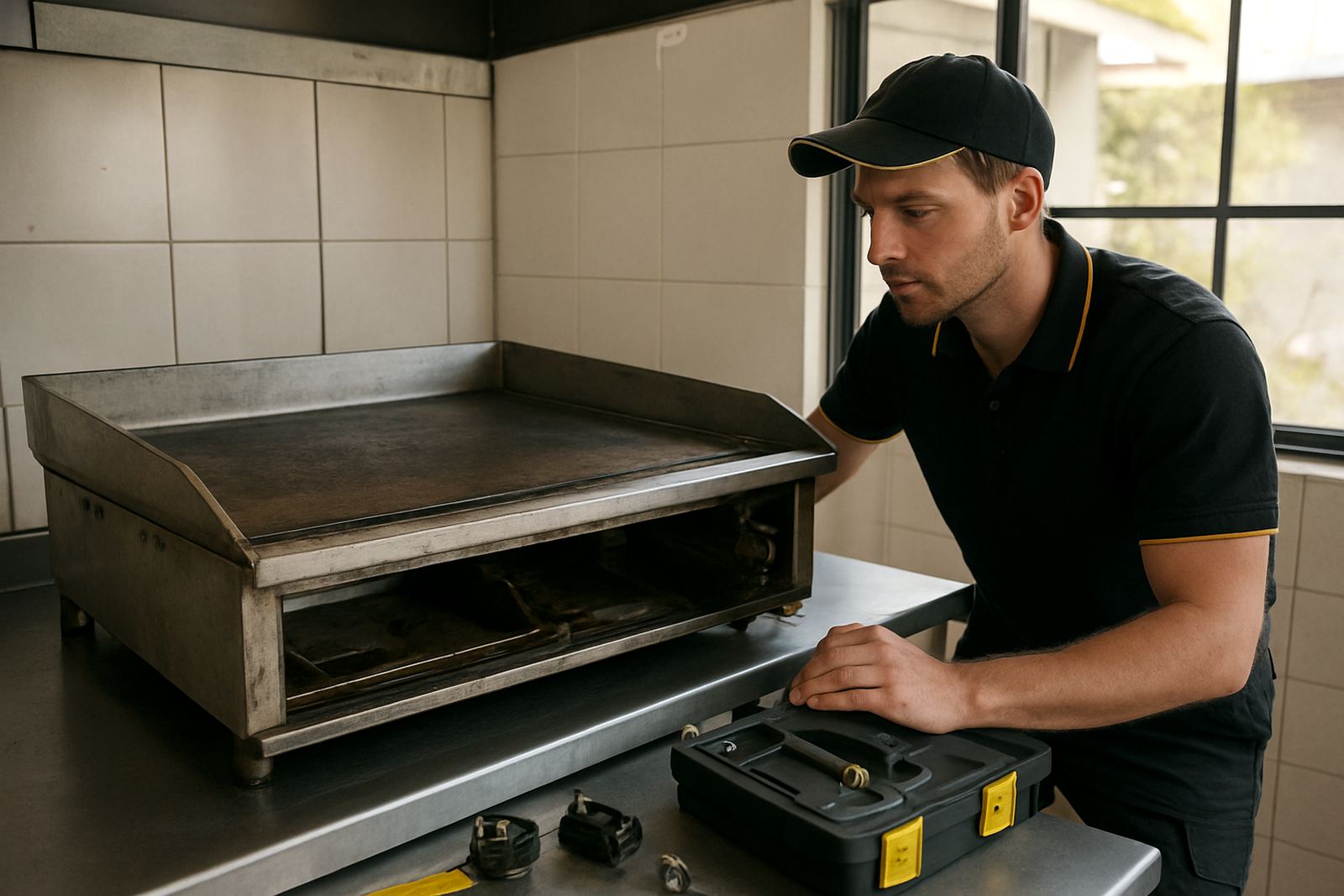
When a griddle starts losing heat or cooking unevenly
A griddle fault usually shows up in service long before it stops completely. One side may run hotter than the other, the plate may take too long to recover after a load of eggs or patties, or the thermostat may start cycling badly so the surface swings between undercooked and burnt. In busy sites around Johannesburg, Pretoria and Durban that kind of variation costs time, product and customer patience.
Most calls we see come from breakfast kitchens, canteens, forecourt food counters and compact burger shops. The issue is often not the whole appliance, only one worn part in the heat path or control circuit. On older units, loose terminals, heat-damaged wiring and tired seals are common too especially where the griddle has been running through load-shedding and power surges.
- Slow heat-up after switch-on
- Hot spots or a cooler front edge
- Thermostat not holding set temperature
- Cracked gasket or steam loss around the plate
- Switches that feel loose or fail intermittently
Typical griddle set-ups we supply spares for
Flat-top griddles vary more than many kitchens expect. Some are simple single-zone units with one element and one thermostat. Others use twin zones, separate control knobs, pilot lights, heavier contactors or switch panels for different cooking areas. We help match parts for electric griddles in small cafés as well as larger breakfast lines serving hundreds of meals a day.
The usual spare set depends on the frame, plate size and control layout. A 600 mm unit may use a very different element shape from a 900 mm or 1200 mm model, even when the outside casing looks similar. That is why we check the rating, terminal position and fixing points before dispatch. In coastal areas like Cape Town and Durban, moisture and salt air can also affect terminals and switches sooner, so a full inspection is worth doing at the same time.
- Heating elements and element terminals
- Thermostats and capillary controls
- Indicator lights and main switches
- Door, plate and control area gaskets
- Wiring links, terminals and heat-resistant fittings
Layout and planning advice before you order parts
Before replacing parts on a griddle, it helps to map the unit properly. Note the model plate if it is still readable, measure the plate width in millimetres and check where the controls are mounted. A right hand control bank, front fascia switch panel or side-mounted thermostat can change the part selection completely. If the appliance has had repairs before, take a clear photo of the wiring and terminal layout so nothing gets reversed on site.
For busy kitchens, planning the job around service hours saves downtime. Many operators keep one spare thermostat, one set of switches and at least one compatible element on hand for their highest-use griddle. That is practical in towns where same day call-outs are not always possible and it avoids a long stop during the lunch rush. If your kitchen has a backup grill or counter top hotplate, you can stagger the repair and keep trading while the griddle is opened up.
- Measure the cooking surface and control spacing
- Check voltage and element rating before ordering
- Photograph terminals, brackets and wiring colours
- Allow for gasket replacement if the plate was removed
- Confirm whether the unit has one or two heat zones
Common mistakes that waste time and money
The biggest mistake is ordering by description only. A thermostat can look right but still have the wrong temperature range or probe length. The same applies to elements, where the fixing centres and terminal position must line up properly. On griddles that have been in service for years, one incorrect part can create a second fault, then the repair turns into a bigger job than expected.
Another common issue is fitting a new part while leaving heat-damaged wiring in place. If the connectors are brittle or the insulation has gone hard, the new component may fail again quickly. We often advise replacing worn terminals, switches and related fittings at the same time. It costs less than reopening the unit a week later because a loose connection has burnt off.
Finally, do not ignore gasket condition on units where the plate assembly has been lifted. If the seal no longer sits flat, heat leaks and moisture gets into areas it should not. That can affect performance and make cleaning harder too.
Budget ranges for griddle repairs in Rand
Griddle repair budgets vary with size, brand type and whether you need one part or a full control set. As a working guide, a simple switch or thermostat replacement may stay in the lower hundreds, while a matched element and control repair can move into the mid hundreds to low thousands. Larger units, or jobs that need multiple parts at once, will sit higher again.
For planning, many small kitchens should allow R450 to R1 200 for a basic fault, and R1 200 to R3 500 where an element, thermostat and fittings all need attention. Heavier commercial griddles can run beyond that, especially if the job includes onsite fitting, testing and replacement of heat affected wiring. It is usually cheaper to replace the worn item early than to run the plate until the fault spreads.
If you are running in a coastal town or a high-humidity kitchen, keep a small maintenance allowance aside for terminals, switches and gaskets. Those parts wear faster in wet cleaning conditions and in sites where equipment is washed down every night.
Midrand dispatch, fitting support and compatibility checks
FoodServ Parts Store supplies griddle heating and control spares nationally from Midrand, with support for part identification, compatibility checks and post-fit testing where required. Our team handles the practical side too, from checking the old part against the new one to helping a fitter confirm the wiring after installation. That matters when the unit has no clear label or when the same kitchen has more than one similar appliance.
We work with operators across Johannesburg Coverage, Pretoria Coverage, Durban Coverage, Cape Town Coverage and Bloemfontein Coverage, and we know that some sites need the part couriered fast while others need advice before anyone opens the machine. If you are replacing a griddle element, thermostat, gasket or switch panel, send the photo, measurements and any old part number you have. We can normally narrow it down quickly and avoid the wrong buy.
- Part identification from photos and measurements
- Compatibility checks before dispatch
- Element, thermostat and gasket fitting support
- Onsite parts support where needed
- Post-fit testing after repair