When the undercounter unit starts letting the team down
An undercounter dishwasher is usually the first machine to show strain when the site is busy and the rinse water is not getting hot enough. You will see cloudy glasses, detergent left on plates, longer wash cycles, and staff doing repeat washes at the sink. In coastal towns like Durban or Gqeberha the damp air can also shorten the life of seals and switch parts, while in Gauteng load-shedding often leads to repeated restarts that stress heaters and controls.
Most calls start with a simple complaint, but the real issue can sit in a different part of the machine. A weak element, a thermostat reading off, a split door gasket, or a stuck switch can all cause the same poor result. The best starting point is to check the model details, the power supply and the water conditions before ordering parts.
Typical spares used on compact wash stations
Undercounter dishwashers used in bars and small restaurants usually have a straightforward set of service parts. Some are water and heat related, others deal with door sealing, pumps and control functions. If a machine is used for glasses in a cocktail bar or light plate washing in a café, the same parts still take a beating if the cycle count is high.
- Heating elements for wash tank or rinse boost
- Thermostats and temperature sensors
- Door gaskets and tank seals
- Burners on gas-heated wash systems
- Switches, start buttons and selector controls
- Dishwasher fittings for baskets, spray arms and basic mounts
We also assist with compatibility checks, because many undercounter units look similar but use different voltages, mounting points and connector layouts. Ordering the wrong element or thermostat can waste time and keep a busy service counter stuck.
Planning the fit so the machine keeps up with service
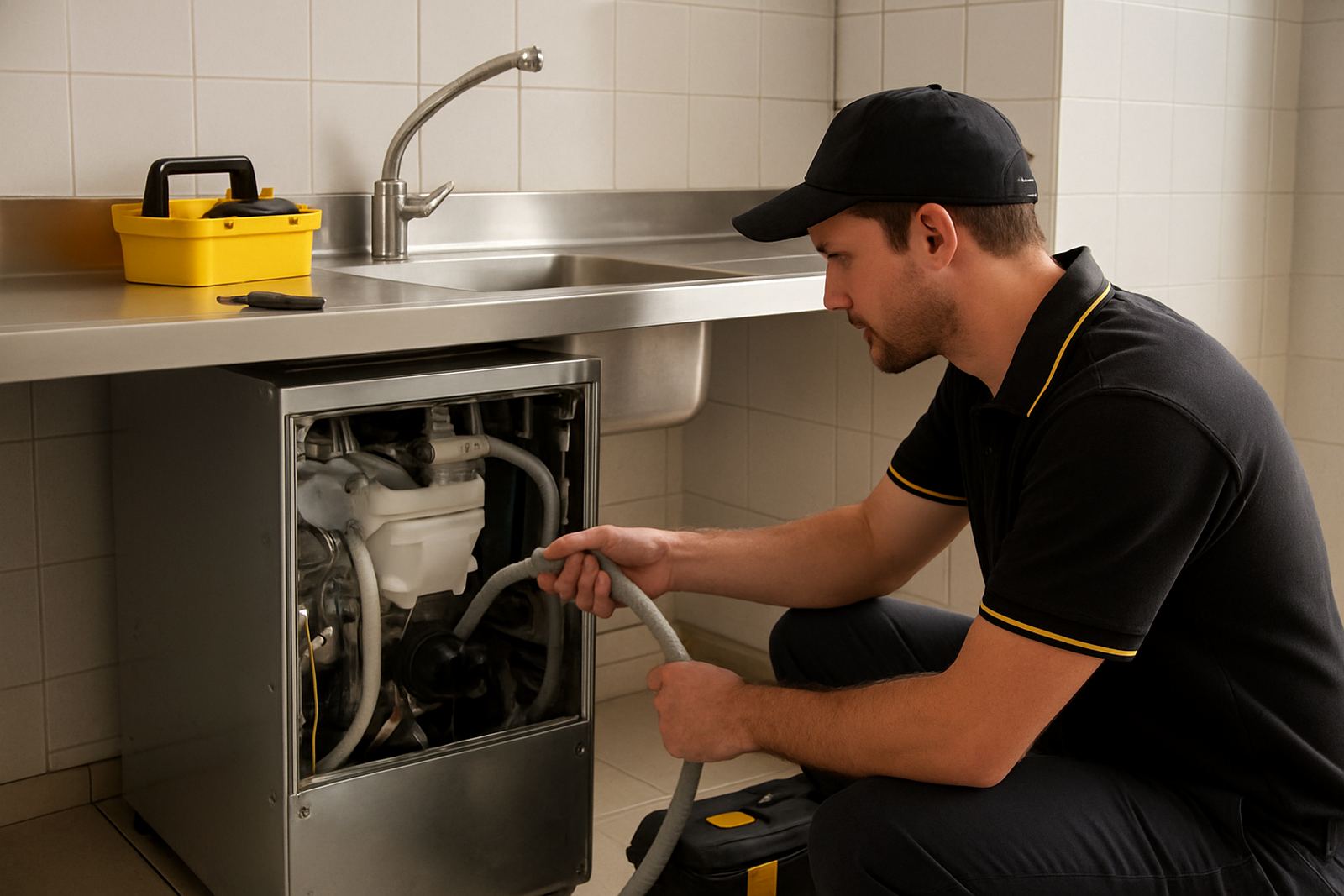
A compact dishwasher needs enough room for door swing, water inlet, waste line and safe access to the back panel. In many city kitchens the unit sits under a prep counter or next to a bar sink, which makes access tight for maintenance. If the machine is installed too close to a wall or pushed hard against pipework, basic fitting jobs become slow and expensive.
When replacing a part, check the full setup rather than only the failed item. Water pressure, incoming temperature, drainage slope and electrical supply all affect performance. A new element will not fix a machine that is losing heat through a worn door gasket or poor rinse water supply. It helps to think about the whole wash point not just the spare part.
If you are planning a new wash station, leave space for removal of side panels and the lower kick plate. That simple bit of planning saves a lot of labour later and keeps the machine serviceable when the kitchen is busy.
Common mistakes that cost time and money
Most downtime on undercounter units comes from avoidable mistakes. The biggest one is fitting a part that almost matches but does not suit the exact machine. The second is skipping a full inspection after a fault, which means the same problem comes back a week later. On some sites the issue is also basic: hard water scale, blocked filters, or staff using too much detergent.
- Buying by size alone instead of checking the model plate
- Replacing only the thermostat when the element is already weak
- Ignoring damaged gaskets that let heat escape
- Running the machine with poor water flow or blocked spray arms
- Using untrained staff for live electrical checks
In older premises around Johannesburg CBD or Pretoria inner areas, wiring and water connections can also be older than the machine itself. That is when part identification matters most, because a small mismatch can trip the unit or leave it washing below temperature.
Budget ranges for repairs and part replacement
For undercounter dishwashers, the budget depends on whether you are changing a single control item or doing a full heat and seal repair. A basic switch or minor fitting can stay on the lower end, while a heater and thermostat set with labour will cost more. If the unit has been running with a split gasket or repeated overheating, the repair bill can climb quickly.
As a practical guide, many smaller part replacements fall between R450 and R1 500 for supply only, with fitted jobs often landing between R900 and R3 500 depending on access and testing. Larger repairs involving multiple parts, onsite support, or repeat visits can move into the R3 500 to R7 500 range. These are working ranges, not fixed prices, because model type, urgency and location matter.
For cafés and bars, it is often cheaper to repair early than wait until the unit stops mid-service. One failed wash cycle can create a stack of dirty glasses and plates very quickly.
How we help from Midrand to the coast
FoodServ Parts Store supplies undercounter dishwasher parts nationwide from Midrand, with coverage into Johannesburg, Pretoria, Durban, Cape Town and Bloemfontein. We work with bars, coffee shops, canteens and smaller back-of-house teams that need the right part without long delays. Our team handles part identification, compatibility checks, fitting support and post-fit testing where needed.
If you are sending in a part request, include the model details, a clear photo of the old component, and the fault description. That makes it easier to match the correct item and avoid a second trip or a useless courier return. For coastal sites, we also factor in corrosion and moisture related wear, which is often the reason switches and terminals fail earlier than expected.
- Midrand dispatch for national deliveries
- Onsite parts support for selected fitment work
- Technical help for elements, thermostats, gaskets and switches
- Post-fit testing to confirm heat, sealing and cycle function