What a solenoid valve does in kitchen equipment
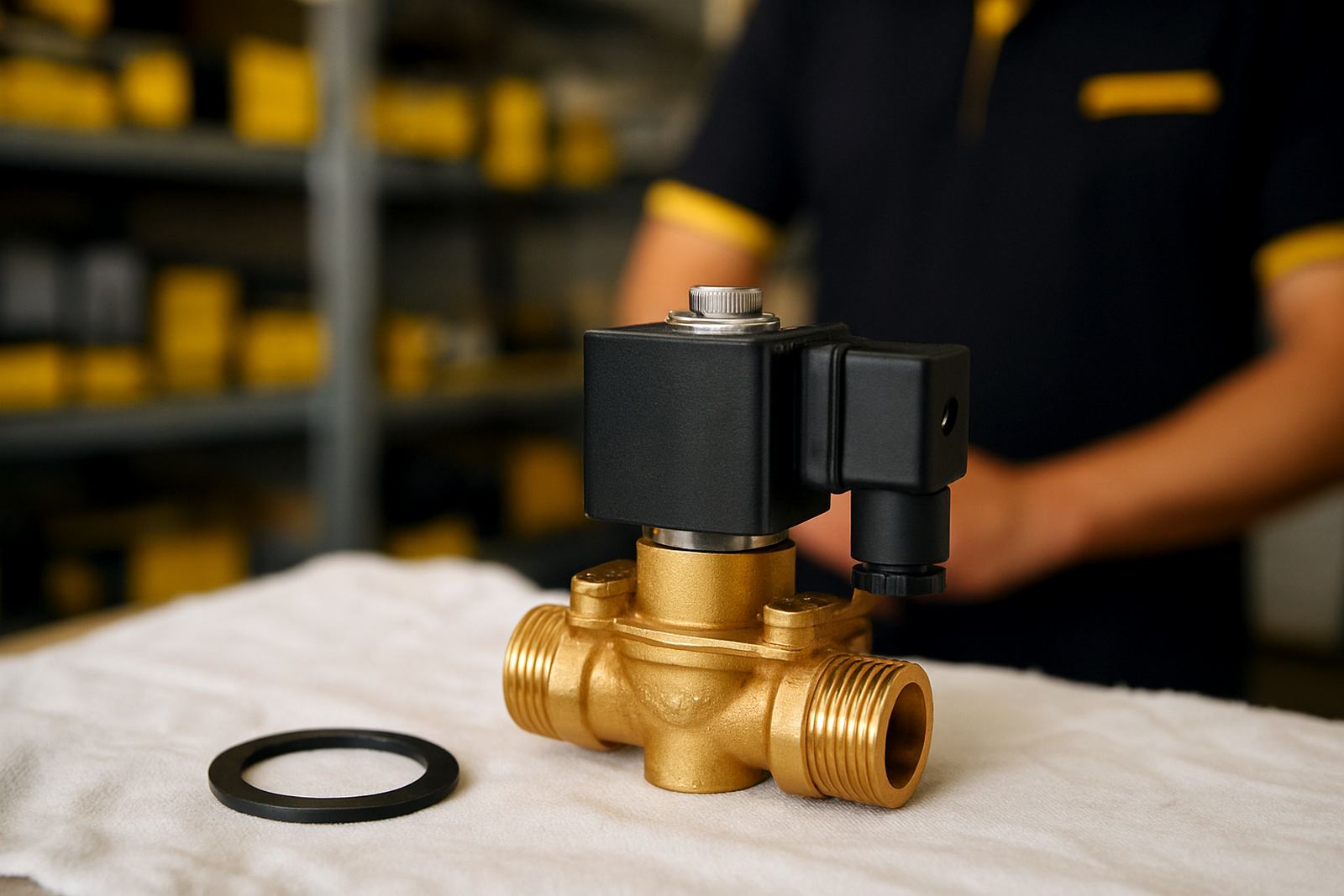
A solenoid valve is an electrically operated valve that lets water in when a machine calls for it, then shuts off again once the level or cycle is reached. In a dishwasher, it may control the wash tank fill or rinse line. In a steamer, it can manage the water feed to the generator. In filling systems, it keeps flow steady and controllable. The valve body usually carries the water path, while the coil creates the magnetic pull that moves the internal plunger.
These parts work fast, but they do need the right pressure, voltage and water quality to do their job. A valve that is too small can starve the machine, while one with the wrong coil or seal material may chatter, leak, or burn out early. For kitchens dealing with load-shedding, voltage swings and long operating hours, it helps to choose a valve that matches the equipment spec closely and not just the pipe size.
Common sizes, coil voltages and outlet styles
Solenoid valves are supplied in a few standard sizes, but the correct option depends on the machine and the water line. We stock and source valves for light, medium and heavy duty use, with different bore sizes and thread types for commercial equipment. Some models are normally closed, which means they stay shut until energised. Others are configured for specific flow control functions or continuous duty operation.
- Inlet sizes commonly from 1/8 inch to 1 inch, depending on flow needs
- Coil voltages such as 12V, 24V, 110V, 220V and 230V AC
- Normally closed and other control styles for direct fill or timed fill systems
- Threaded, push-fit or hose connection options, depending on the appliance
- Brass, stainless steel or heat-resistant polymer bodies for different water and temperature conditions
- NBR, EPDM or similar seal options for water, steam and detergent exposure
For Cape Town, Durban and other coastal areas, corrosion resistance matters more than many buyers expect. Hard water, steam, detergent residue and humidity can all shorten the life of the valve if the body and seals are not suited to the site.
Where these valves are used in commercial kitchens
We supply solenoid valves for dishwashers, steamers, combi-style equipment, water filling systems and selected beverage or prep machines that use automatic water control. In dishwashers, the valve must handle repeated on-off cycling and sometimes dirty inlet water if filtration is poor. In steamers, the valve often works under heat and needs seals that cope with elevated temperature. In filling systems, consistency is important so that every batch receives the same amount of water.
These valves suit restaurants, hotels, school kitchens, butcheries, canteens and takeaway operations across Johannesburg, Pretoria, Midrand, Durban, Cape Town and Bloemfontein. If the machine has been running with a slow fill, intermittent filling or a constant drip into the tray, the valve may be the fault, though we still recommend checking strainers, water pressure and the control signal before replacing it.
- Dishwasher inlet and rinse feed control
- Steamer water feed and top-up systems
- Tank filling and level-controlled water circuits
- Detergent or rinse dosing systems on some machines
- General commercial appliance water entry points
Fitting needs, power checks and water conditions
Installation must start with the correct power supply. A 220V or 230V coil is common in South Africa, but many imported machines use 110V, 24V or 12V control circuits. If the voltage does not match, the coil may hum, overheat, or fail to pull the plunger fully open. Check the machine wiring before fitting any replacement. If the valve is part of a control board circuit, make sure the board is sending the right signal and the connector pins are clean and tight.
Water pressure also matters. If inlet pressure is too low, the valve may open but still not allow enough flow. If pressure is too high, some valves can hammer, leak or wear the seals quickly. A pre-filter or inlet strainer is worth keeping clean, especially where municipal sediment or scale is common. In areas with hard water, regular descaling and inspection can extend valve life and reduce callouts after hours.
- Confirm coil voltage and frequency before installation
- Match inlet and outlet thread size to the pipework
- Check flow direction if the body is marked for one-way use
- Inspect washers, ferrules and the inlet strainer at the same time
- Test for leaks under normal operating pressure after fitting
Care, faults and when the valve should be replaced
Solenoid valves often give a few warning signs before they fail completely. A machine that fills slowly, chatters, trips the control fuse, or keeps dripping after the cycle has ended may have a worn coil or a damaged seal inside the valve. Sometimes the problem is debris caught in the inlet seat, not the full valve body, so a proper inspection can save unnecessary parts replacement. That said, if the coil has overheated, the plastic body has cracked, or the valve leaks internally after cleaning, replacement is usually the safest call.
Routine servicing should include cleaning the inlet screen, checking the coil for heat damage, and looking for scale on the plunger or seat. In busy kitchens, it is sensible to keep one correct spare on hand for high-use machines, especially where a failed water inlet valve can stop the line during lunch service. Our team can help identify the part from the old sample, a photo, or the equipment plate details.
What to check before you order a replacement
When ordering a solenoid valve, the more detail you have the better the match. A valve that looks similar may still have the wrong thread, wrong coil, or different internal opening size. If you are unsure, send us clear photos and the machine model details and we will check compatibility from Midrand before dispatch. We also assist with onsite parts support and post-fit testing where needed through our FoodServ team.
- Machine make, model and serial number
- Old valve body markings and coil voltage
- Inlet and outlet thread size or hose diameter
- Normally closed, normally open or special control type
- Seal material if the valve handles steam, hot water or detergent
- Failure symptom such as no fill, slow fill, leaking or burning coil
If the equipment is tied into a dishwasher, steamer or filling circuit with other faults, we can also assist with related parts such as thermostats, switches, gaskets and burners. FoodServ Parts Store supports customers nationally from our Midrand depot, with coverage into Johannesburg, Pretoria, Durban, Cape Town and Bloemfontein.
Key facts
| Product type | Water inlet and control solenoid valves |
|---|---|
| Typical use | Dishwashers, steamers and filling systems |
| Common coil voltages | 12V, 24V, 110V, 220V, 230V AC |
| Typical connection sizes | 1/8 inch to 1 inch, model dependent |
| Body materials | Brass, stainless steel or heat-resistant polymer |
| Seal options | NBR, EPDM and similar water or steam seals |