Why scale starts in wash systems
Scale forms when hard water is heated and the dissolved minerals drop out as a white or chalky deposit. In wash systems this build-up usually shows first on heating elements, inside hoses, in spray arms and around solenoid valves. Once it starts, the machine has to work harder to move water and reach temperature, and that extra strain shows up in repair bills.
In many South African towns the water supply already carries enough minerals to cause trouble, especially where borehole water is mixed in or where water treatment is inconsistent. In coastal areas like Durban the issue is often made worse by heavy daily use, while inland sites can see faster scale where hot water is topped up frequently. A small amount of deposit can look harmless, but it can start reducing heat transfer long before anyone notices a fault.
The parts that suffer first
Not every part fails in the same way. Scale tends to settle where water sits still, where heat is highest, or where the opening is already small. That is why a dishwasher may still switch on and fill, yet still wash badly because the spray pattern is weak and the rinse temperature never stabilises.
- Heaters: scale acts like insulation, so the element runs hotter and can burn out sooner.
- Valves: mineral grit and deposits can cause sticking, slow filling or uneven flow.
- Spray arms and nozzles: blocked holes reduce coverage and leave plates and pots with residue.
- Sensors and thermostats: if scale coats probes, the machine may read the water temperature incorrectly.
- Pumps: restricted flow can make the pump noisy and put extra load on seals and bearings.
When a machine starts cycling longer than usual or the rinse is not hot enough, scale is often part of the story, even if the fault seems electrical at first glance.
Signs the wash system is losing performance
The warning signs are usually practical and easy to spot if staff know what to look for. The wash results drift before the machine stops completely. Plates come out with a film, glasses dry with spots, and pots need a second wash cycle. If the heater is taking longer to recover, that is another strong clue.
Look out for these common symptoms:
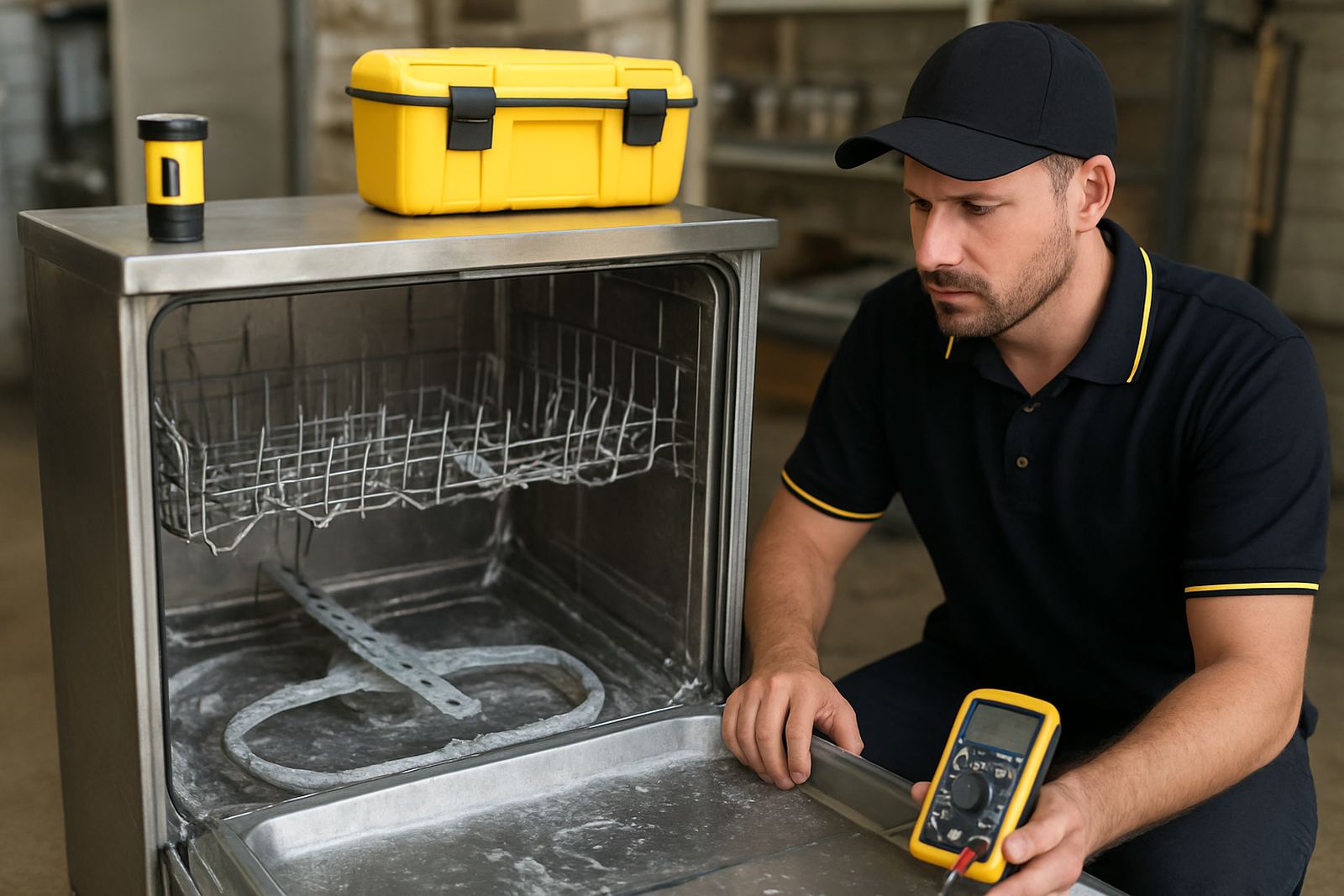
- White flakes or chalky residue inside the tank or on the element
- Spray arms spinning slowly, or not at all
- Longer heat-up time before service starts
- Low water pressure at the rinse nozzles
- Repeated thermostat trips or overheating
- Strange humming from the pump under load
If staff keep topping up rinse aid or detergent but the wash quality still drops, the root problem may be scale rather than chemical dosing. It is easy to blame the detergent, but often the machine is simply struggling to push water through narrowed passages.
How scale shortens valve and heater life
Scale does not only affect cleaning results, it changes how components operate. A heater covered in mineral deposits cannot transfer heat properly, so the metal gets hotter than intended. Over time that leads to pitting, cracks and electrical failure. In busy kitchens, especially where wash cycles run back to back, that extra heat stress can shorten the life of the element by months.
Valves face a different problem. Deposits can stop a valve from closing cleanly, or they can slow the opening so the machine fills unevenly. That creates pressure issues, repeated cycling and unnecessary wear on the valve coil. A small leak at first may become a bigger fault if the valve seat is already contaminated.
Once a system starts running hot and slow, the losses stack up. Power use increases, wash times stretch out and staff often compensate by running another cycle. That means more water, more electricity and more wear on parts that should have lasted longer.
What kitchens can do before a breakdown
Good prevention is mostly about water quality, cleaning routine and early inspection. In a restaurant or school kitchen the easiest time to catch scale is during closing, when the machine can be checked properly and any white build-up wiped out before it hardens.
Practical steps that help include:
- Flush and clean the tank regularly so deposits do not sit overnight
- Check spray nozzles weekly and clear any blocked holes
- Inspect elements for a rough, crusted surface
- Test inlet valves if fill times change or flow sounds weak
- Use the correct wash and rinse settings for local water conditions
- Keep a record of repeated faults so patterns can be traced quickly
Where the supply water is especially hard, some sites also fit water treatment equipment ahead of the machine. That is often worth the cost in larger kitchens, because it protects the heater and the valve train at the same time. If a dishwasher is in constant use, preventative checks should be part of the weekly routine, not left until something fails.
A local example from a busy kitchen in Durban
A catering kitchen in Durban came in with a dishwasher that was running, but the wash result had dropped and the rinse was leaving spots on glassware. Staff had already replaced detergent and checked the pumps. The real issue was heavy scale on the heater and a partly restricted inlet valve. The machine was still filling, but slowly, and the heating cycle had stretched far beyond normal.
Once the affected parts were identified and the scale removed, the wash cycle returned to normal and the heater recovered properly. The team also changed their cleaning routine and started checking the spray arms every few days. It was not a major overhaul, just careful fault finding and the right replacement parts where needed, but it stopped the same fault from coming back a week later.
That kind of problem is common in kitchen after kitchen. The machine may look fine from the outside, yet inside the water paths are narrowing and the heater is working too hard.
Getting the right parts before the problem spreads
When scale damage starts, the key is to match the right spare part to the fault instead of replacing random items. A heater that has burned through because of heavy build-up needs one response, while a valve that is sticking from mineral deposits may need cleaning, fitting or replacement depending on its condition. The same applies to thermostats, gaskets and switch parts that have been stressed by heat and poor circulation.
FoodServ Parts Store supplies commercial kitchen spare parts nationally from Midrand, with support for part identification, compatibility checks and fitting work where needed. For kitchens in Johannesburg, Pretoria, Durban, Cape Town and other areas, that makes it easier to get the correct item without wasting time on the wrong size or connection. If a dishwasher, fryer or oven is showing early signs of scale related wear, it is worth checking the full system, not just the one part that finally failed.
Scale is not dramatic, but it is expensive if it is ignored. Catch it early and the wash system keeps doing its job, instead of turning a small mineral problem into a bigger breakdown.