Why the same fault keeps coming back
In commercial kitchens, repeat failures usually point to a condition around the part, not only the part itself. An element can burn out early because of scale build-up, low voltage or a thermostat that is reading off by a few degrees. A gasket can split again if the door is warped or the hinge is out of line. A burner may keep giving trouble if gas pressure is wrong or if the orifice is blocked with grease and grit.
That is why a quick swap can feel like progress for a week, then the same call comes back. The machine was never checked as a system. In a busy service kitchen, especially where equipment runs long hours and load-shedding has already stressed the plant, the weak point often stays in place.
Before ordering a part, it helps to ask a simple question: what caused this component to fail in the first place? If that question is ignored, you are buying the same repair twice.
Check the cause, not only the symptom
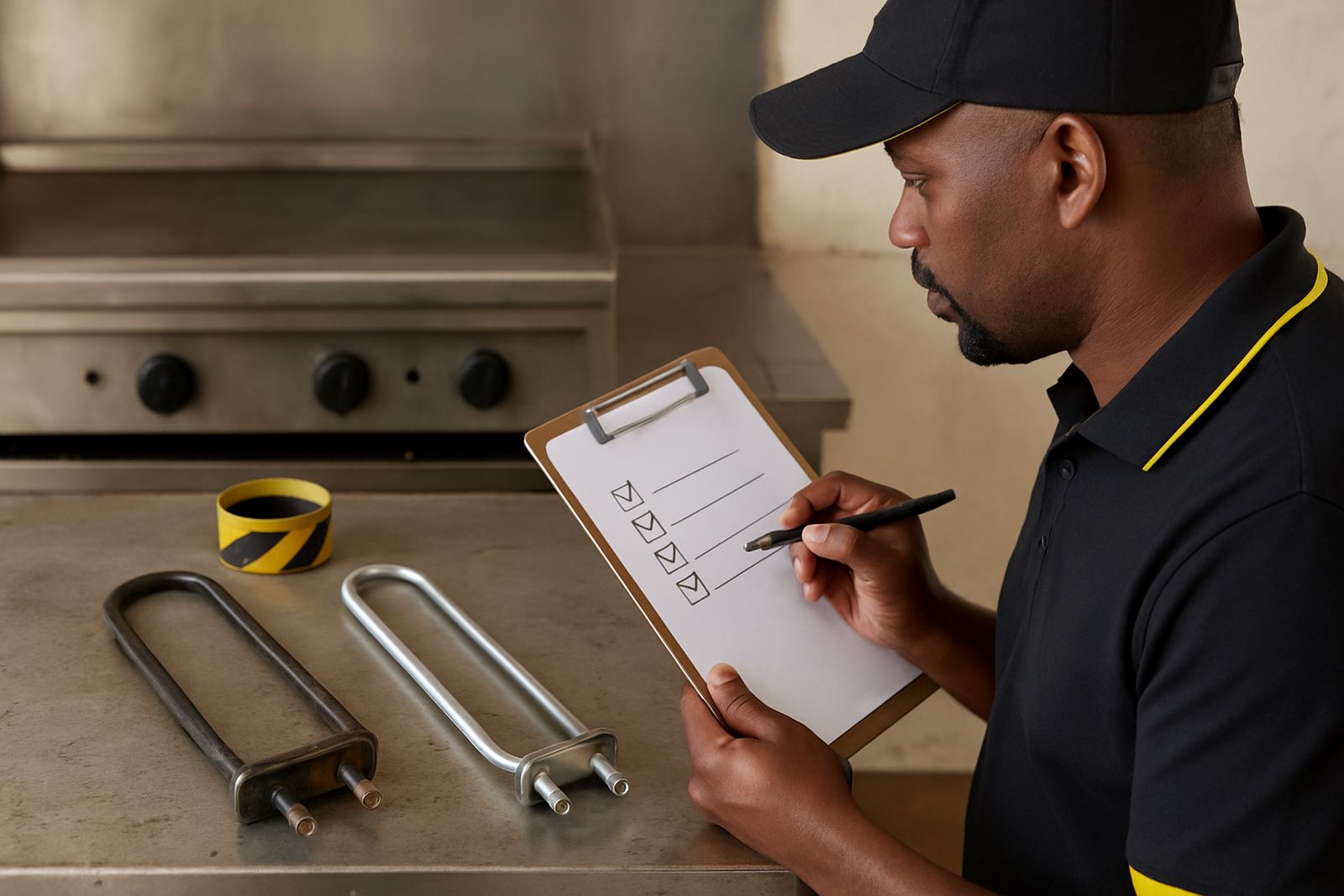
A burnt element on an oven may look like a straightforward replacement, but the real issue could be poor ventilation around the cavity, a sticky relay or repeated power surges. A dishwasher heater can fail early because water is too hard, the machine is not descaled regularly, or the inlet and drain cycle is not completing properly. On a fryer, a thermostat that sticks can overheat oil and shorten the life of seals and wiring.
Good fault finding starts with measurements. Is the supply voltage steady? Is the water pressure correct? Are the contacts pitted? Is the door closing squarely? A short check often saves a long chain of call-backs, and it also protects the rest of the machine from damage.
- Look for scorch marks, loose terminals and heat discolouration.
- Check whether the surrounding part has worn at the same rate.
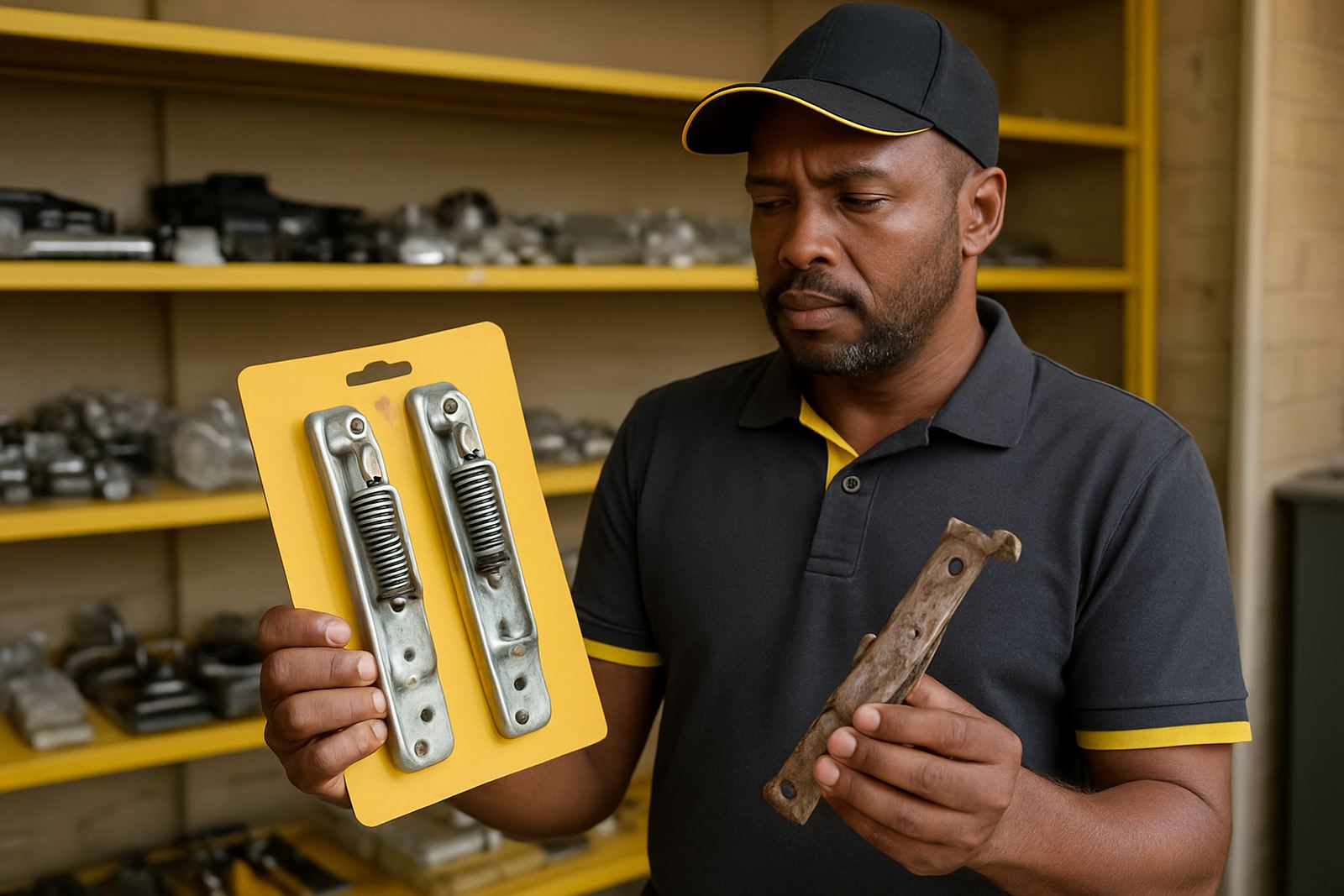
- Compare the old and new part numbers, ratings and fitment details.
- Test the machine after fitting, not just before handover.
Local conditions that shorten part life
South African kitchens do not run in ideal conditions. In coastal areas like Durban, humidity and salt in the air can corrode terminals and switch panels faster than expected. In Gauteng, voltage dips and surge events can be hard on controls and heating parts. In older buildings around Johannesburg and Pretoria, water quality and inconsistent maintenance schedules can create repeat dishwasher faults.
Even something small like a loose earth connection can turn into a chain reaction. A switch starts to arc, heat rises, wiring insulation hardens, then another part fails. That is why a proper inspection after replacement is worth more than a quick visual check. It also helps to keep a note of what failed, when it failed and what else was found on site, because patterns show up over time.
For kitchens working through peak breakfast or lunch trade, a single missed issue can shut down a station at the worst possible time. It is better to slow down for ten minutes and catch the cause than to return the following week for the same job.
What should be checked before the new part goes in
Before fitting a new element, thermostat, gasket, burner or switch, the surrounding equipment should be inspected and cleaned. On many appliances, the part is only the last link in a chain. If the chain is still damaged, the replacement will not last.
- Confirm the appliance model and the exact part specification.
- Inspect terminals, seals, brackets and mounting points for wear.
- Check for scale, grease, moisture or carbon build-up.
- Test the electrical or gas supply under normal operating conditions.
- Make sure the machine is level and doors or lids close correctly.
If a dishwasher keeps losing heat, the heater may not be the first fault to solve. If a fryer keeps tripping, look at wiring, probes and oil condition as well. If an oven gasket keeps tearing, inspect the hinge alignment and frame before fitting another seal. That approach reduces repeat failures and helps the part do its job properly.
Why fitting and testing matter just as much as supply
Supplying the correct spare part is only half the job. If the part is not fitted correctly, the fault can return even when everything else is in order. A thermostat wired on the wrong terminals can give false readings. A gasket fitted unevenly can leak heat and put strain on the door. A burner installed without checking the gas train can run weak or uneven.
Post-fit testing should be part of the repair, not an optional extra. That means running the machine through a proper cycle, watching for temperature rise, checking for leaks or trips, and making sure the control response is stable. It also means confirming that the repair does not create a new fault somewhere else in the system.
When a kitchen is under pressure, people want the fastest fix possible. Fair enough. But the fastest fix is not always the cheapest one if it fails again next week. A proper fit now usually saves a second callout, a second part and more downtime.
A Midrand example from a busy service kitchen
A catering kitchen near Midrand called after the same oven element had failed twice in three months. The replacement parts were correct, but the fault kept returning. On inspection, the chamber had heavy grease build-up, the fan was not moving air evenly, and the supply voltage dropped during peak use. The element was overheating because it was fighting bad conditions.
Once the chamber was cleaned, the fan issue sorted and the electrical supply checked, the new element held up properly. The client did not just need another part. They needed the reason behind the failure removed. That is the kind of difference that keeps a kitchen working through a busy week instead of limping from one breakdown to the next.
Whether the site is in Midrand, Sandton, Pretoria, Durban or Cape Town, the lesson is the same. The replacement part should be the end of the fault, not the start of another one.
How FoodServ Parts Store helps cut repeat failures
At FoodServ Parts Store, the aim is not only to supply spares but to help you match the right part to the right fault. That includes part identification, compatibility checks and support with fitting for elements, thermostats, gaskets, burners, switches and dishwasher parts. Where needed, we can also assist with onsite parts support and post-fit testing so the repair holds up in real kitchen use.
From our Midrand base, we dispatch nationally and support kitchens across Johannesburg, Pretoria, Durban, Cape Town and Bloemfontein. If you are dealing with repeated breakdowns, send the appliance details, the old part information and a clear fault description to parts@foodservparts.co.za. A bit of careful checking upfront can save a lot of repeat work later.