Start with the equipment model, then confirm the opening size
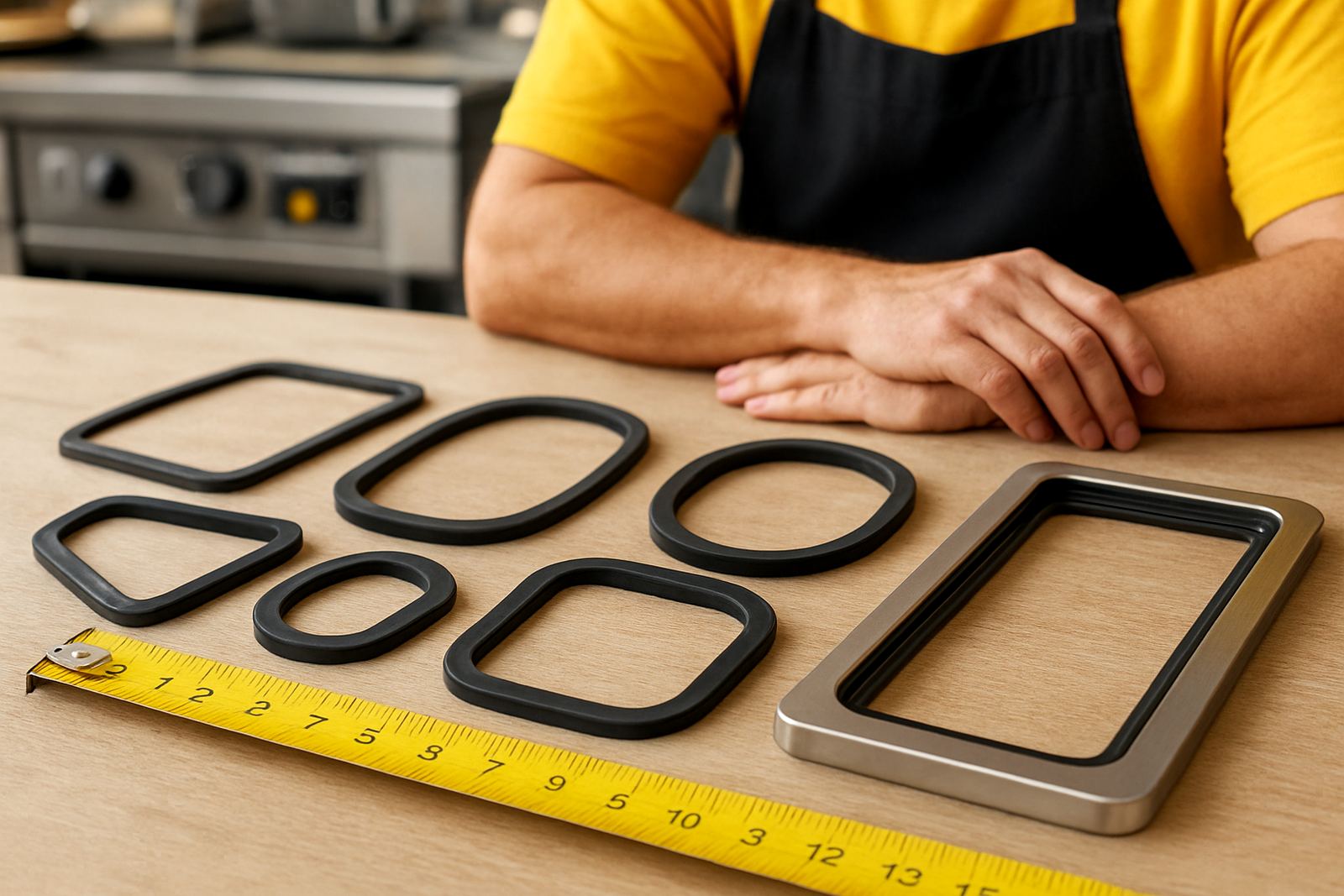
Before ordering, check the machine model plate and measure the opening the gasket must seal. On ovens and combi units that means the door frame or cavity opening, while on dishwashers it is usually the door perimeter or access panel. A few millimetres off and the door may not close fully, which wastes power and puts strain on hinges and latches.
Measure the full length, width and if possible the corner radius too. For round or oval seals, take the outside and inside diameters. In older kitchens around Johannesburg and Pretoria we often see units with a replacement gasket fitted after years of wear, and the original part number is long gone. In that case the measurement is doing the work, not a guess.
- Use a steel tape measure, not a soft tailor tape
- Measure on the equipment itself, not the old gasket only
- Check for stretch, flattening or missing sections on the removed seal
- Note whether the gasket sits on the frame, door or panel
Profile matters more than most people think
Two gaskets can be the same length and still not be interchangeable. The profile is the shape of the seal, and it controls how the gasket compresses against the mating surface. Some seals are bulb type, some are channel type, some are flat with a lip and some use a magnetic strip on cold or heated cabinets. If the profile is wrong, the door may shut but the seal will not hold.
For ovens and fryers, the profile must cope with repeated opening, closing and cleaning. For dishwashers, the profile needs to carry water without trapping grime in a corner. A seal that works on one make may fail on another because the groove depth or lip angle differs by only a few mm, but that small difference is enough.
- Bulb profiles suit many oven and access door applications
- Flat or lip profiles are common where the sealing face is narrow
- Grooved channel profiles need the correct edge thickness
- Magnetic seals are used where the design calls for pull-to-close pressure
Fixing method decides how the gasket stays in place
Some gaskets clip into a channel, some push into a groove, and others are fixed with retaining pins, corners or high-temperature adhesive. The fixing method must match the appliance design or the seal will move, twist or pull out during cleaning. We see this a lot after a hasty repair when the right seal was not available and a near match was forced in.
If the original gasket used retaining clips, check that the clips are still sound and that the frame is not bent. On dishwasher doors, a loose fixing point can let water escape at the bottom edge and make the floor slippery. In a busy kitchen that is a safety issue, not just a nuisance.
- Push-in seals need a clean, even groove
- Clip-in seals need intact retainers and correct corner fit
- Adhesive backed seals need a clean dry surface
- Pin or corner fixed seals should match the original hole spacing
Heat, steam and detergent all change the choice
Operating heat is not just about the oven temperature. It also includes radiant heat from nearby burners, steam bursts from door openings and chemical exposure from daily cleaning. A gasket that lasts in a mild prep area can fail quickly in a high-use line kitchen, especially where doors are opened hundreds of times a day. Coastal kitchens in Durban also deal with humidity, so a seal that absorbs moisture can soften sooner than expected.
For ovens and fryers, choose a gasket rated for continuous heat at the levels the unit sees in normal service. For dishwashers, make sure the material handles hot water, detergent and rinse aid. If the seal goes hard, cracks at the corners or starts to smell burnt, it is already past the point where it should stay in service.
When a bakery in Midrand was losing heat from a deck oven during load shedding recovery, the issue was not the element. The door gasket had flattened on one side, and the oven was taking longer to recover after each opening. Once the correct seal was fitted the heat hold improved and the operator stopped overcompensating with longer bake times.
Check the wear pattern before you place the order
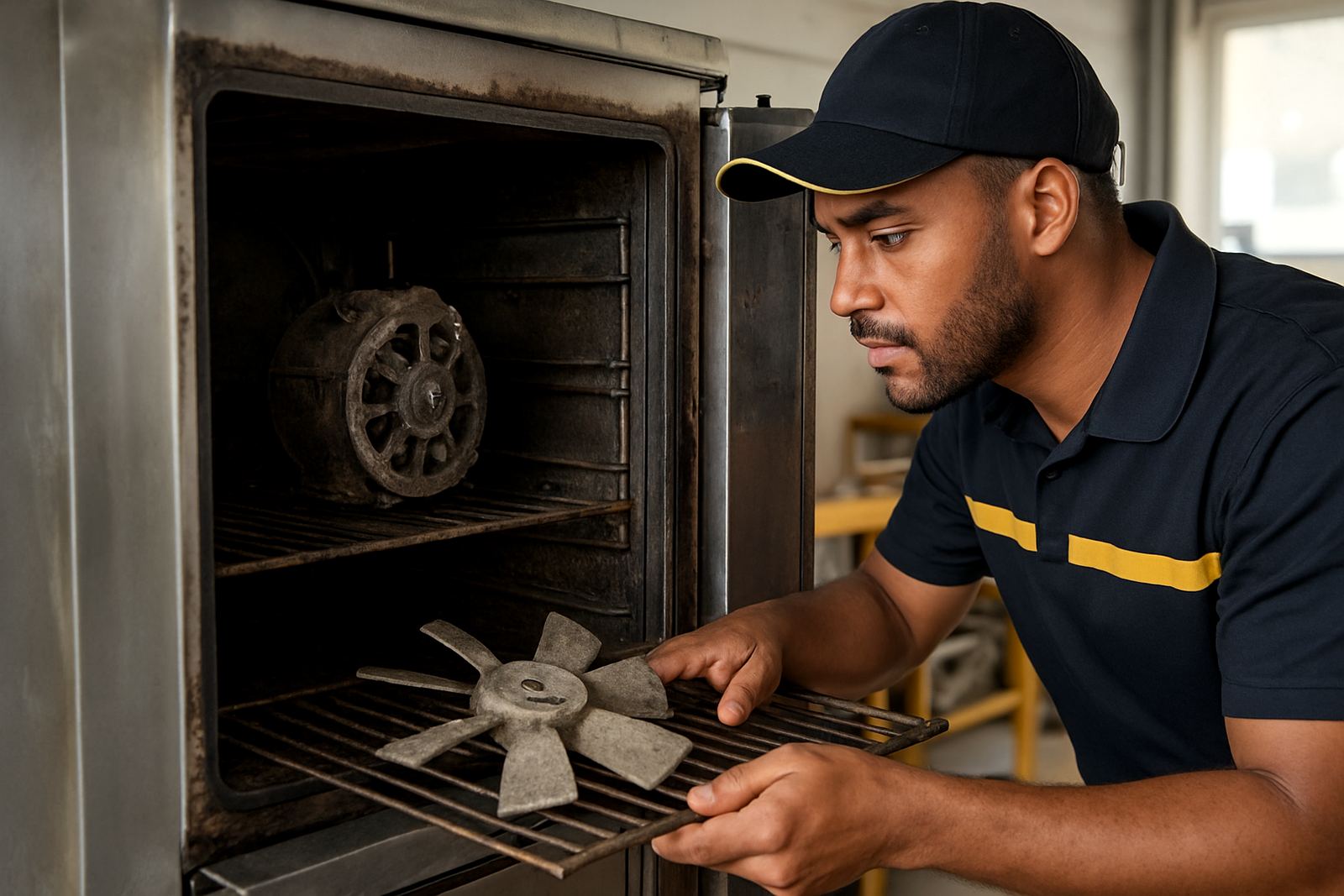
The old gasket tells a story if you look closely. A seal worn more on one side can point to a warped door, loose hinges or a frame that is no longer square. If the gasket has cuts in the same place every time, something inside the unit may be rubbing. Replacing the seal without checking the cause can mean the new one fails too soon.
Look for shine marks, flat spots, split corners and areas where the seal has gone hard. If the equipment has been moved, especially between sites in Johannesburg, Pretoria or Cape Town, the door may no longer align properly after transport. A quick alignment check can save a second visit and an extra part order.
- Flat spots usually mean poor compression or age
- Corner splits can indicate heat stress or sharp frame edges
- Oil staining on fryer seals may show a spill path
- Water marks on dishwasher seals point to leak direction
Fit it properly and test it before handing the unit back
Even the right gasket can fail if it is fitted badly. Clean the channel, remove old adhesive and check every corner before installation. Stretching a seal too far during fitting can make the corners lift later, and that is when heat or water starts escaping. It is worth taking the extra few minutes now rather than returning to site after the lunch rush.
After fitting, close the door and check the compression all round. On ovens, run a simple post-fit heat check. On dishwashers, run a short cycle and inspect for drips around the lower edge and hinge side. If the door now needs a hard slam to close, the gasket may be too thick or the alignment is still off.
FoodServ Parts Store supports part identification, compatibility checks and gasket fitting from Midrand with dispatch nationwide. For a replacement that actually matches the application, the best route is to confirm the profile, the size and the fixing before the order leaves the warehouse.