Why campus kitchens need a parts plan, not just a buying list
High-volume campus kitchens work on a different rhythm to a small café. Breakfast starts early, lunch comes hard and fast, then supper service, prep and wash-up keep going long after the dining hall has emptied. When an oven switch burns out or a fryer thermostat starts drifting, there is rarely time to wait for a part to be sourced from scratch.
That is why planned consumable stock matters. It keeps service moving, reduces emergency call-outs and helps the kitchen team avoid the costly habit of running equipment until it fails completely. In our experience, the best campus operations in Johannesburg, Pretoria and Durban keep a short list of known wear items on site and track what has been used, tested and replaced.
A practical stock plan is not about filling a shelf with random boxes. It is about knowing which parts fail often, which items cause a full machine stop, and which items can be swapped quickly by a competent technician or maintenance team.
The parts that should stay on the shelf
The exact list will differ by kitchen, but most campus sites should carry a core group of parts for ovens, fryers and dishwashers. These are the items that most often save a service run when something goes wrong during peak hours or after a power dip.
- Heating elements for ovens, fryers and dishwashers
- Thermostats and temperature controls for older and newer units
- Door and tank gaskets for heat retention and leak prevention
- Burners, ignition parts and flame control components
- Switches, selector knobs and switch panel items
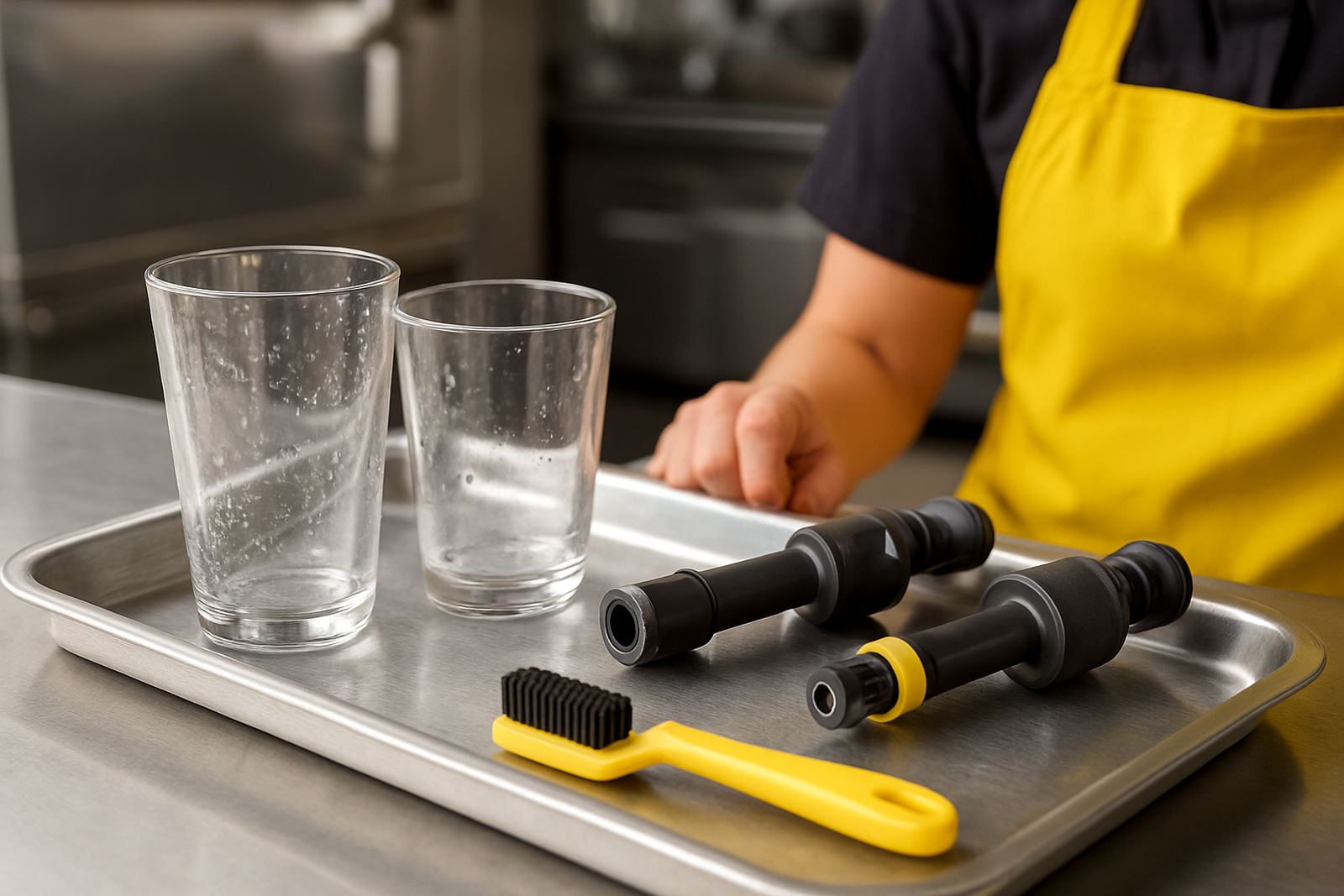
- Wash pump seals and common dishwasher consumables
- Fasteners, clips and small fixings that are easy to misplace during repairs
It also helps to keep one spare part for each high-use machine rather than relying on one central item for the whole campus. If one kitchen feeds residents, staff and visitors, a single failed machine can create a queue that spreads quickly.
How to match stock to the actual equipment on site
Before buying spares, the kitchen should record every appliance model, serial number and service history. This sounds simple, but many sites only discover the details after a fault has already happened. A proper list lets the team check compatibility before money is spent and prevents the common mistake of ordering a part that looks right but does not fit.
For campus kitchens, the equipment mix often changes over time. One block may still use older ovens while another has newer fryers or dishwashers added during a refit. That means stock must be reviewed at least twice a year, not once and then forgotten. We often see this in Pretoria campuses where one building is upgraded and the others carry on with older machines, so the parts store has to reflect both generations.
A local maintenance file should note the following:
- Equipment make, model and serial number
- Date of installation and last major service
- Parts that fail most often
- Which items are held in stock and where they are kept
- Who is allowed to fit the part and test the unit after repair
That file saves time when a fault happens at 05:30 and the team needs an answer fast, not a long search through old invoices.
Load-shedding, power dips and the hidden damage they cause
Even when the electricity comes back on, the damage may already be done. Sudden outages and voltage swings can affect thermostats, switch gear and heating elements. On coastal sites, humidity adds another layer of wear because moisture can creep into terminals and switch panels. In Durban this shows up often after a wet spell, and in some inland campuses dust plus repeated power interruptions create a different but just as nasty problem.
That is why emergency stock should include parts that help with restart faults, not only visible breakages. A fryer may look fine after a power dip, yet fail to heat evenly because a control part has been weakened. A dishwasher might run but not reach the correct wash temperature, which affects hygiene and rinse quality.
When the power returns, the kitchen should do a quick check of the units that matter most. If something is running oddly, it is better to isolate the fault early than push through another lunch service and risk a bigger failure later on.
What a practical stock room looks like on a busy campus
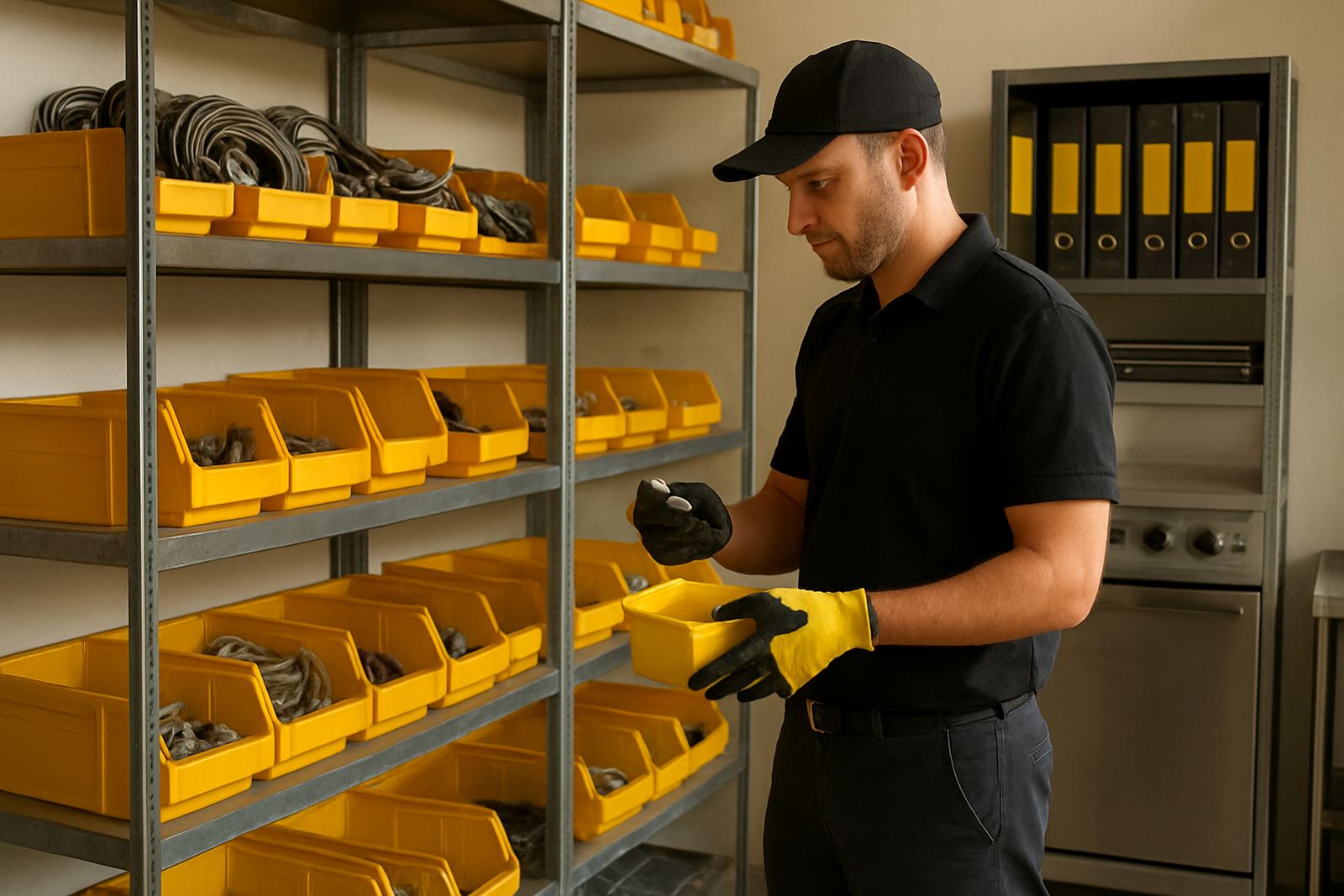
The best stock rooms are tidy, labelled and easy to count. Parts should be stored away from heat, grease and wash-down areas, with shelves marked by appliance type and usage level. Do not keep sensitive items near steam lines or under sinks, and make sure old stock is not mixed with current spares.
One university kitchen in Midrand reduced after-hours breakdowns by splitting stock into three groups: daily-use consumables, emergency shutdown parts, and scheduled service items. The maintenance team could then see at a glance what was ready for same-day use and what was reserved for planned work. That small change cut lost time during term time, and made monthly checks much easier.
- Keep the highest-use items at eye level and clearly labelled
- Separate clean spare parts from used or faulty items
- Record each withdrawal with the date and appliance name
- Reorder before stock runs too low, not after it runs out
- Review stock after every major repair or equipment swap
A clear storage system also helps with accountability. If a part is taken for a repair, everyone should know where it went and whether it has been fitted, tested or returned unused.
When to fit parts, and when to call for support
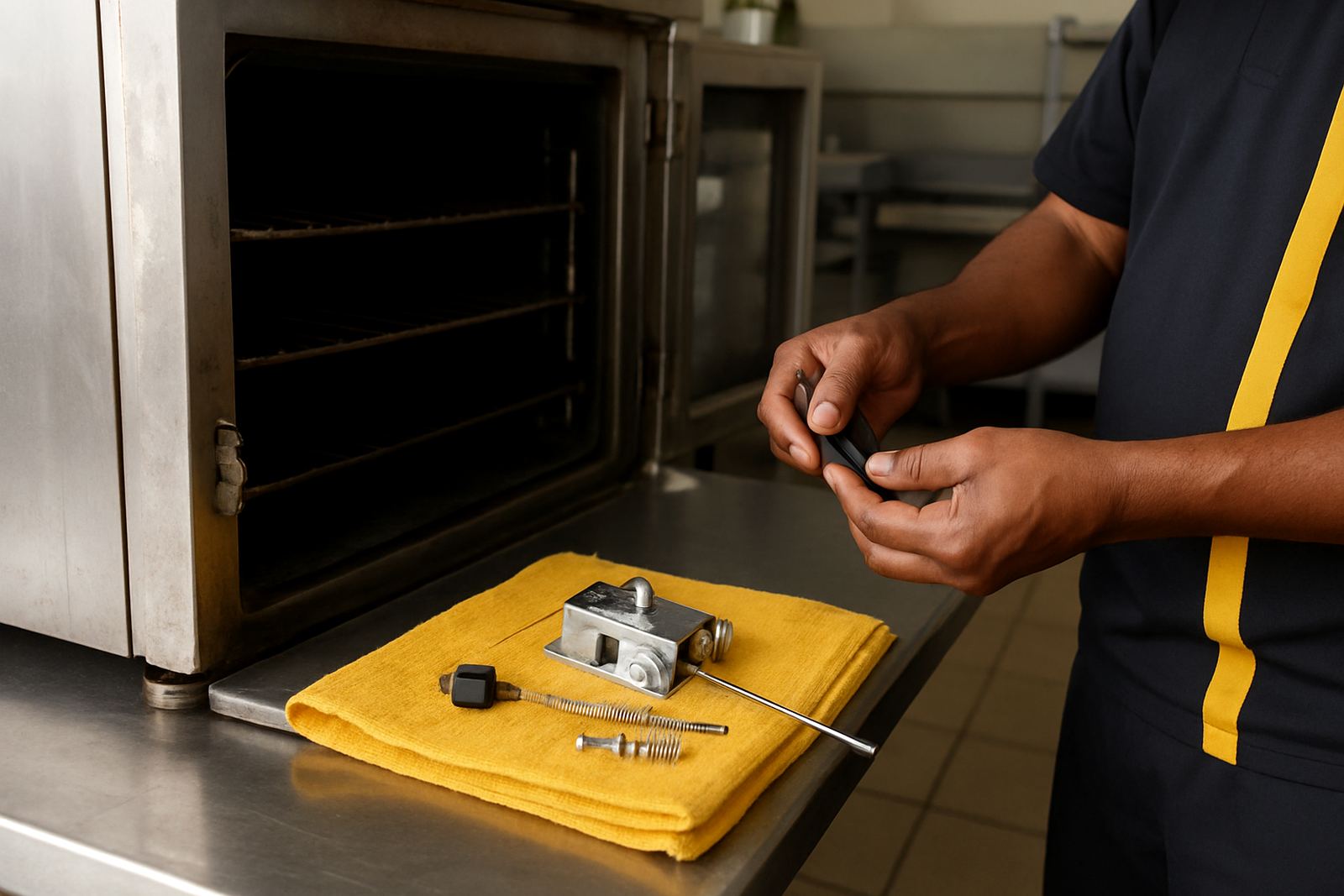
Some jobs are simple and some need proper technical attention. A trained team may be able to replace a gasket or swap a switch, but heating faults, burner issues and dishwasher wiring should be handled with care. Incorrect fitting can damage the appliance, waste the part and leave the kitchen with the same fault an hour later.
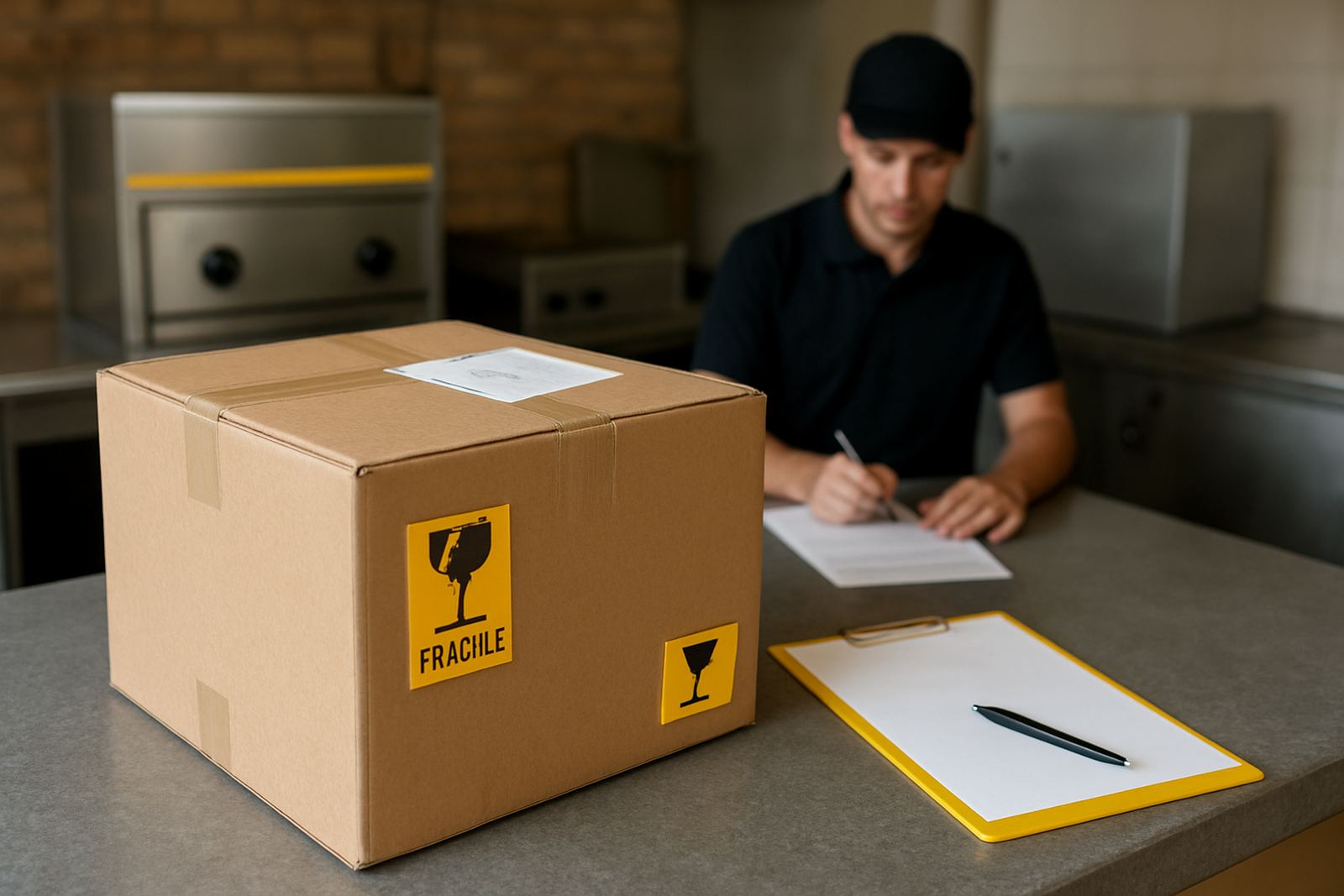
That is why campus kitchens benefit from having a parts supplier that also supports identification and compatibility checks. It helps to confirm the item before dispatch, then arrange fitting and post-fit testing where needed. If a fryer element is changed, the unit should be tested under working load. If a thermostat is replaced, the temperature should be verified before the next service run begins.
With the right support in place, stock on the shelf becomes an insurance plan rather than dead money. It gives the kitchen a better chance of staying open through exams, conferences and term-time pressure without scrambling for every small part at the last minute.
A simple rule for campus kitchens
Keep one eye on the equipment that feeds people every day, and another on the parts that can stop it suddenly. If the shelf matches the machines, and the record matches the shelf, the kitchen is far less likely to stall when the pressure is on.
For campus sites working across Johannesburg, Pretoria, Durban, Cape Town or Bloemfontein, the winning formula is the same: know the equipment, hold the right spares, and replace wear items before they turn into service stoppages.