Start with the simple checks before you strip anything down
When a door stays open, bounces back, or needs a hard push to catch, begin with the basics. Look for chips in the frame, grease buildup around the seal, loose screws on the hinge bracket, and any tray or rack that is stopping the door from swinging fully home. On commercial kitchen equipment, even a few millimetres of movement can be enough to stop the latch from engaging.
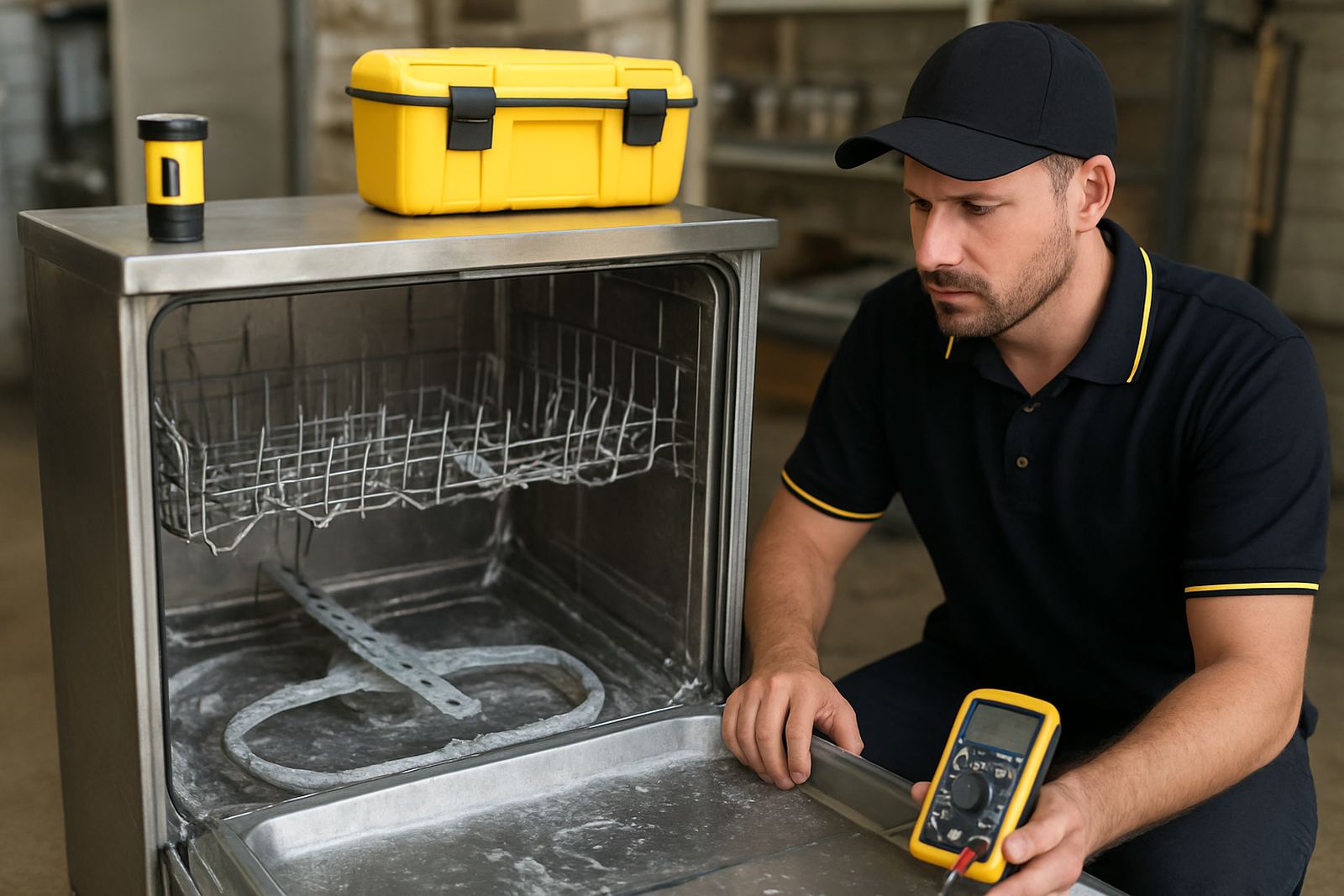
If the problem started after a deep clean or a busy service, check whether the door was knocked out of line. A fryer or dishwasher door that takes a knock from a trolley can shift slightly and still look fine at first glance. In a Midrand kitchen we once saw a dishwasher door fail to close because a pan handle had bent the lower basket runner, the fault looked bigger than it was.
- Check for loose hinge screws and missing washers.
- Make sure no tray, basket or rack is fouling the door path.
- Look for grease, detergent build-up or food debris on the latch area.
- Inspect the seal for tears, swelling or hard spots.
Why hinges cause more trouble than most people expect
Misaligned hinges are one of the most common reasons a door does not close square. On ovens, the weight of a hot door puts strain on the hinge arms and pivot points. Over time, the door can drop a little on one side and the catch no longer meets properly. On dishwashers, repeated slamming or letting the door hang on one side can twist the hinge alignment.
If the hinge is worn, replacing only the latch may not solve the issue. You may get the door to catch once or twice, then it starts rubbing again because the frame is still out of line. Check for movement in the hinge pins, springs and mounting points. A small amount of play is enough to cause a poor seal, especially on equipment working through long shifts in Jozi or on the coast where humidity can swell some materials and speed up corrosion.
- Uneven door gaps left to right or top to bottom usually point to hinge trouble.
- A scraping sound when closing often means the door is dropping on one side.
- If the door must be lifted to close, the hinges or mounting points may be worn.
Worn latches and catches can look fine until they fail
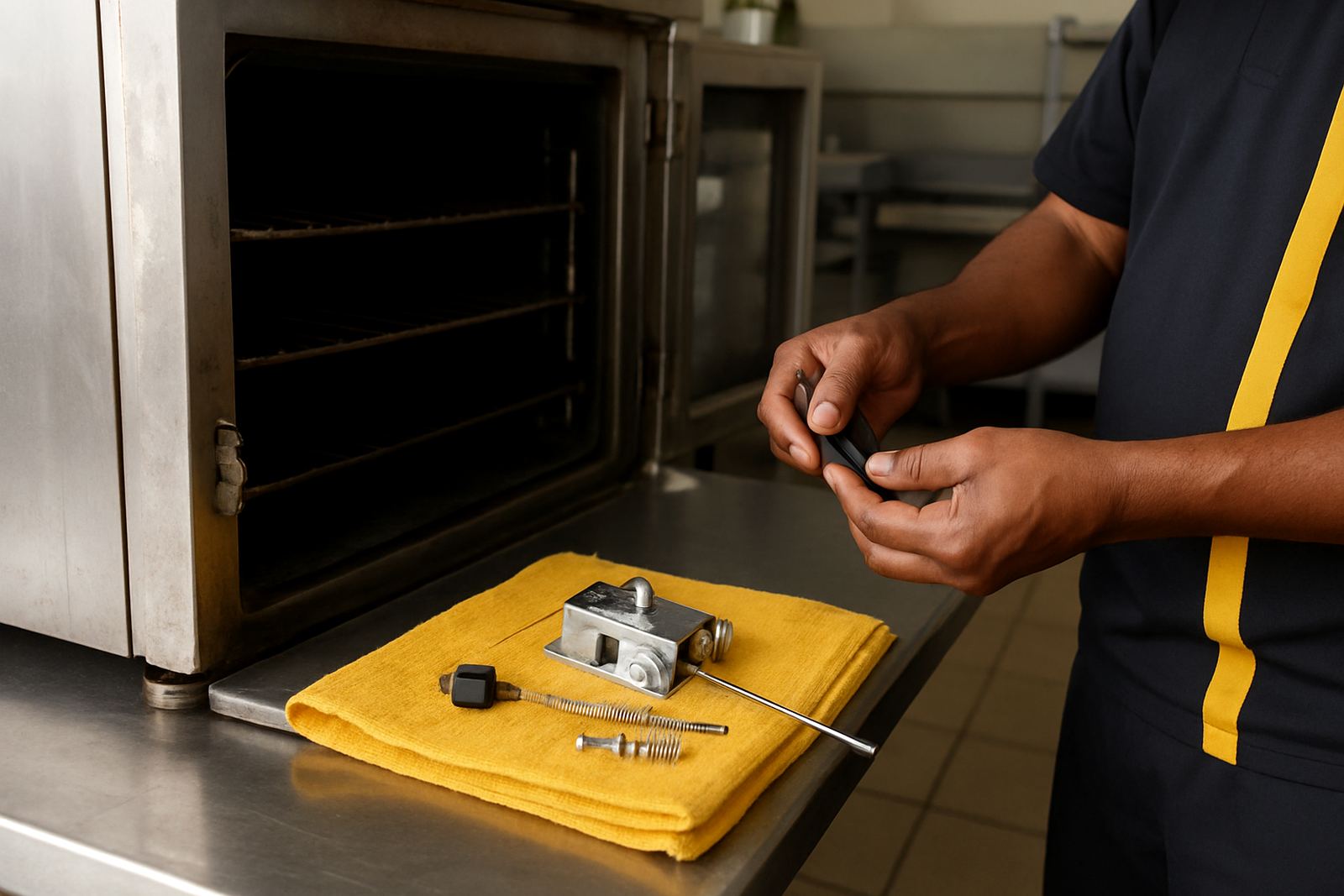
The latch is the final point of contact, so wear here often shows up as a door that nearly closes but will not stay shut. Springs weaken, catches wear smooth, and the strike plate can shift out of position. On ovens and fryers, heat cycles can harden the metal and make the latch less forgiving. On dishwashers, detergent and steam can attack smaller moving parts over time.
A latch problem is not always visible from the outside. Sometimes the door handle feels normal, but the catch inside is only holding on one edge. That is why it helps to test the door slowly by hand and watch where the catch meets the strike. If it slips off, there may be a bent tab, worn spring or a damaged receiver plate.
- Listen for a clean click when the door shuts.
- Check whether the handle feels loose, spongy or too easy to pull open.
- Look for rounded edges on the catch where it should still be crisp.
Swollen gaskets are common on ovens and dishwashers
Door seals, also called gaskets, can swell, harden or split with age. Heat, steam, grease and cleaning chemicals all shorten their life. When a gasket gets too thick in one area, the door may stop short or spring open again after you release it. This is especially common on ovens that run hard from breakfast through supper and on dishwashers that see repeated heat and rinse cycles.
A seal can also hold the door slightly off-line if it has folded over during cleaning or fitting. Check that the gasket sits in its channel all the way round and that there are no flat spots or gaps at the corners. In coastal kitchens, salt air and constant moisture can make the rubber go brittle faster than many teams expect, so a seal that looks acceptable may already be failing.
Do not force the door closed against a swollen gasket. That can bend the hinge, damage the latch and turn a simple gasket swap into a bigger repair.
What a proper fit and test should include
Once the faulty part is replaced or adjusted, the job is not finished until the door is tested under normal working conditions. Open and close it several times, then check the seal all round and confirm that nothing rubs. If it is an oven, test it cold first and then again after it has warmed up, because metal expands and a small issue can show itself only when the unit is hot.
A proper post-fit check should also confirm that the door closes without extra force and stays shut when the unit is moved, opened and closed repeatedly. If the equipment is on an uneven floor or the cabinet is twisted, you may need to correct the installation as well. Sometimes the door is not the only problem, the base is out by a few millimetres.
- Check the seal at the top, bottom and both corners.
- Watch for rubbing once the unit is hot.
- Test the latch 5 to 10 times in a row.
- Make sure nearby panels, hinges and handles are secure.
When to call for parts identification and onsite support
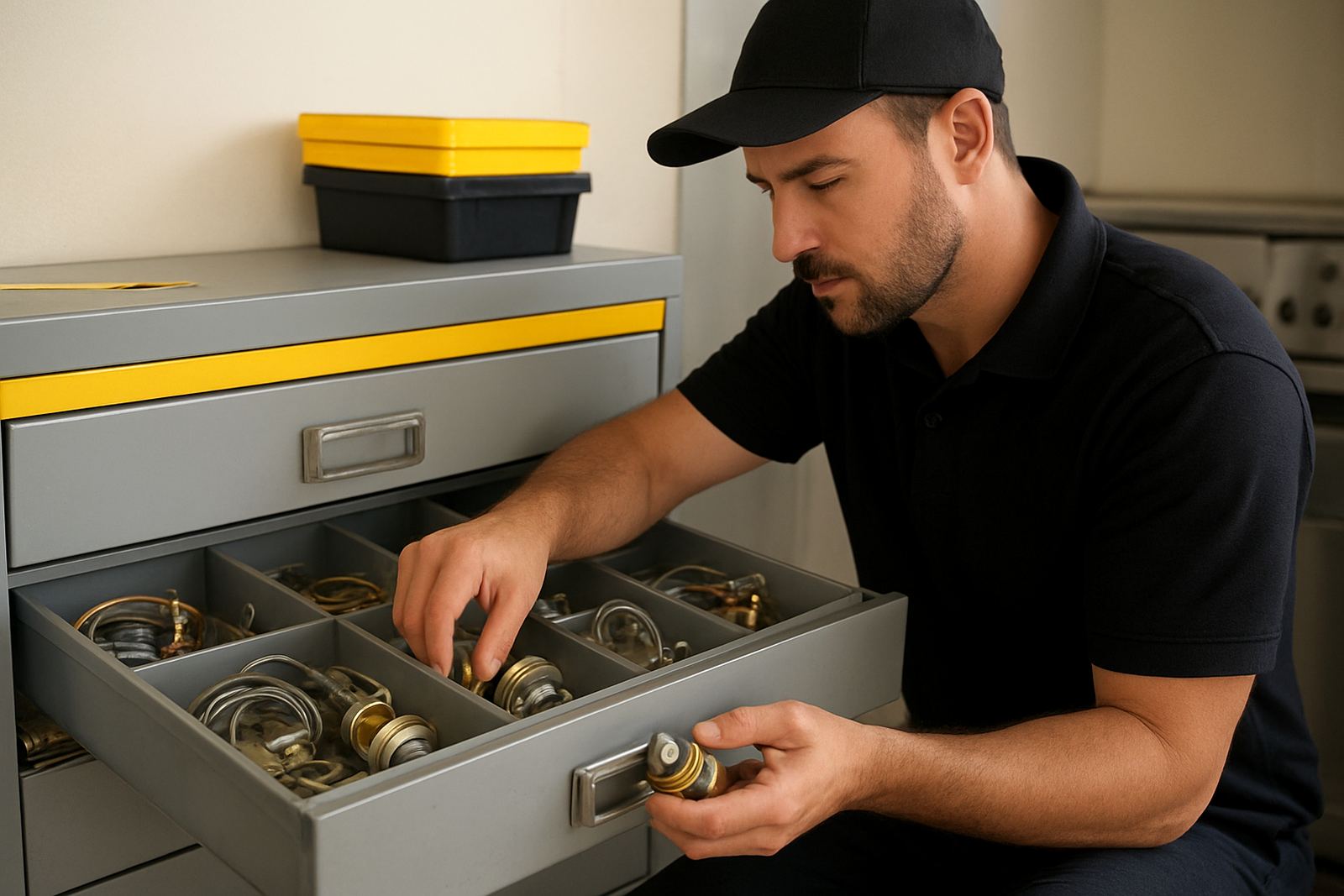
If you cannot match the hinge, gasket, latch or strike plate by eye, part identification saves time and wasted trips. Commercial kitchen equipment uses many similar-looking parts that differ in length, hole spacing or mounting shape. Getting the wrong one can leave the door worse than before. For sites from Midrand to Pretoria, Johannesburg, Durban, Cape Town and Bloemfontein, it helps to send a clear photo of the door, the data plate and the damaged part together.
Some jobs are best handled onsite, especially if the unit is built in or the door needs careful fitting and testing after the repair. That is often the case with heavy oven doors, dishwasher assemblies and fryer panels where one loose screw can throw the whole alignment off. If you are running through a lunch rush, a quick call and the right part on hand can save a service stop later.
FoodServ Parts Store supplies commercial kitchen spare parts nationwide, with dispatch from Midrand and practical support for compatibility checks, fitting and post-fit testing. If a door will not close, the fix is usually not complicated, but it has to be the right one and fitted properly.