What poor rinse usually looks like in a kitchen
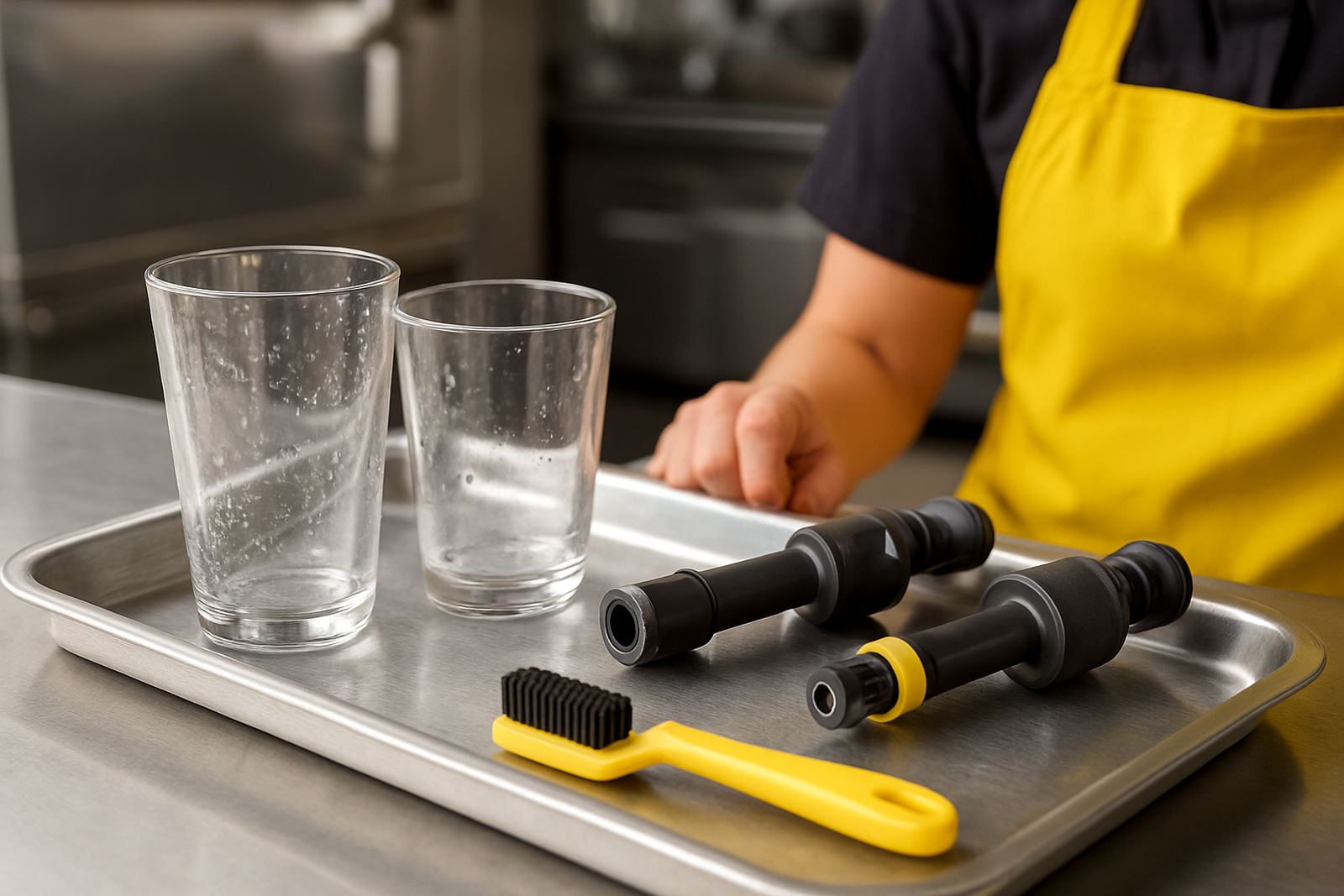
Poor rinse performance does not always mean the machine has stopped working. More often it shows up as a thin white film on glassware, food marks left on plates, or detergent smell that should have been cleared by the final rinse. In busy canteens, hotels and takeaway kitchens this becomes obvious very quickly because the same rack comes out looking dirty even after a full cycle.
One common sign is that the wash tank looks normal, but the final spray feels weak or uneven. Another is when the top rack cleans better than the bottom, or the machine seems fine in the morning and then starts missing rinse coverage once service gets busy. That points to flow, pressure or spray delivery rather than a full breakdown.
- Cloudy glasses after a hot cycle
- Food residue left in corners and around rims
- Uneven results between racks or baskets
- Streaking on cutlery and trays
Jets and spray arms are usually the first place to check
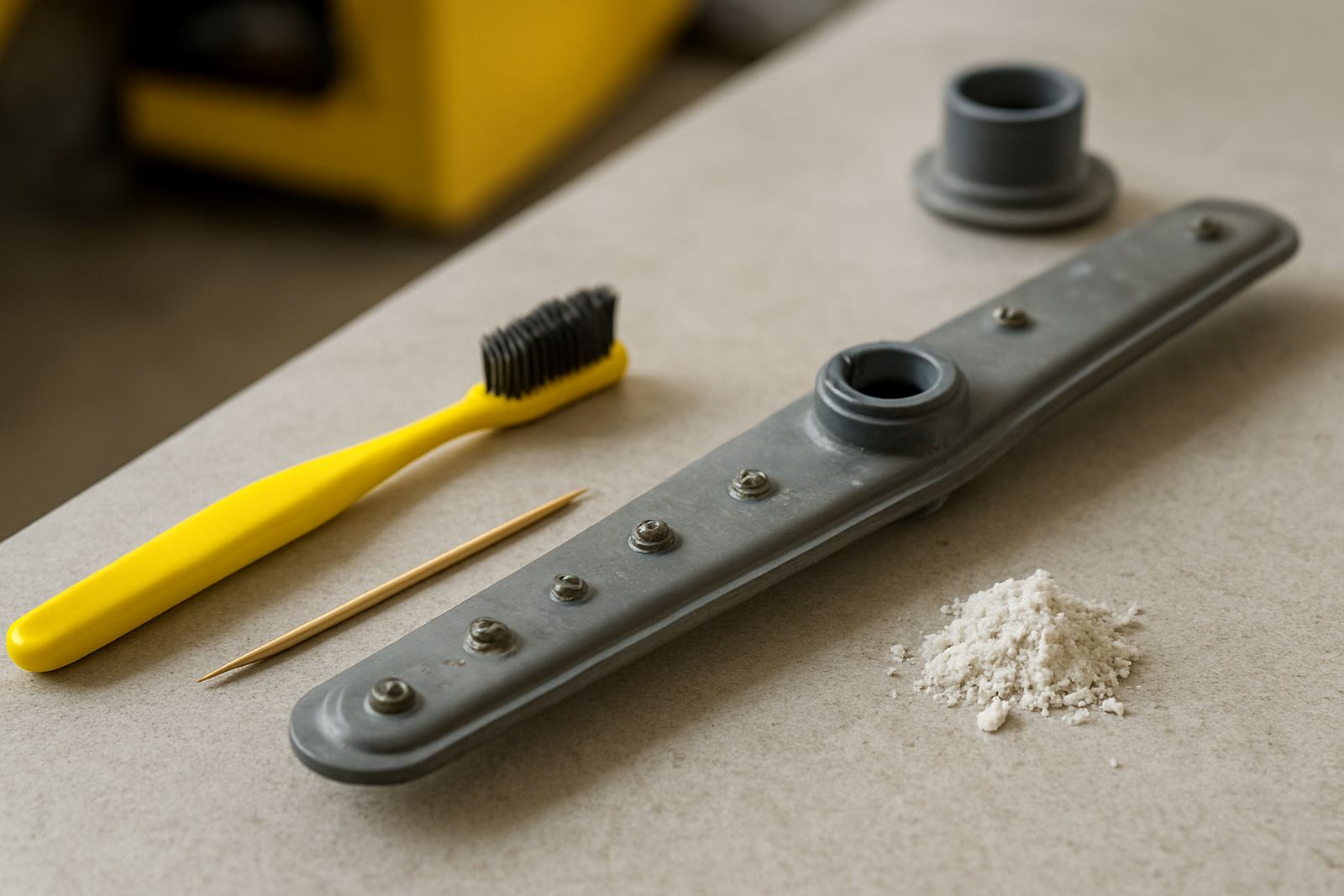
Rinse jets and spray arms carry a lot of the load. If the holes are blocked with starch, grease or small bits of bone and seed, the water pattern changes and the rinse cannot reach every surface. On hard-water sites the problem gets worse because scale narrows the openings and throws the spray off line.
Take the arms off and inspect the holes in daylight. If you see white crust, brown sludge or a few blocked nozzles, that is already enough to cause poor rinsing. Do not poke the holes with hard wire unless you know the arm material, because a damaged hole can make the spray pattern worse, not better.
- Check for scale around each jet hole
- Make sure the arm spins freely
- Look for cracked ends or loose caps
- Clean filters before blaming the pump
Valves, pressure and fill rate can starve the rinse
If the jets are clean but the rinse still feels weak, the machine may not be getting enough water at the right pressure. A tired inlet valve can open slowly, or a partially blocked strainer can limit flow. Some machines also depend on correct water level before the rinse starts, so a slow fill can mean the cycle begins before enough pressure is available.
In Midrand and other parts of Gauteng, kitchens often run during load-shedding recovery and that can expose weak supply pressure fast. When power returns, a machine may refill and start cycling before the line has fully stabilised, so the rinse appears patchy. If the valve coil is failing or the diaphragm is worn, the flow may sound normal but still underperform.
- Listen for a slow or uneven fill
- Check inlet strainers and water filters
- Confirm the supply pressure is consistent
- Inspect valve coils for heat damage or intermittent operation
Scale build-up makes a good machine rinse badly
Scale is one of the most common reasons for poor rinse results in South African kitchens, especially where borehole water or hard municipal water is used. It forms on jets, inside valves and around heater sections, then reduces water movement and heat transfer. Even when the machine still washes, the final rinse can leave mineral spots and a chalky finish.
This is often seen in coastal areas like Durban and Cape Town where humidity is high and machines sit wet between services, but inland sites are not spared either. If a dishwasher is left full of mineral deposits, the rinse side works harder for less result. Regular descaling matters, and so does checking whether the fitted parts are already worn from scale damage.
- White crust on stainless surfaces and jets
- Poor rinse after a machine has stood overnight
- More spotting on glasses than on plates
- Heater running but not improving rinse quality
When the fault is in the switch gear or control timing
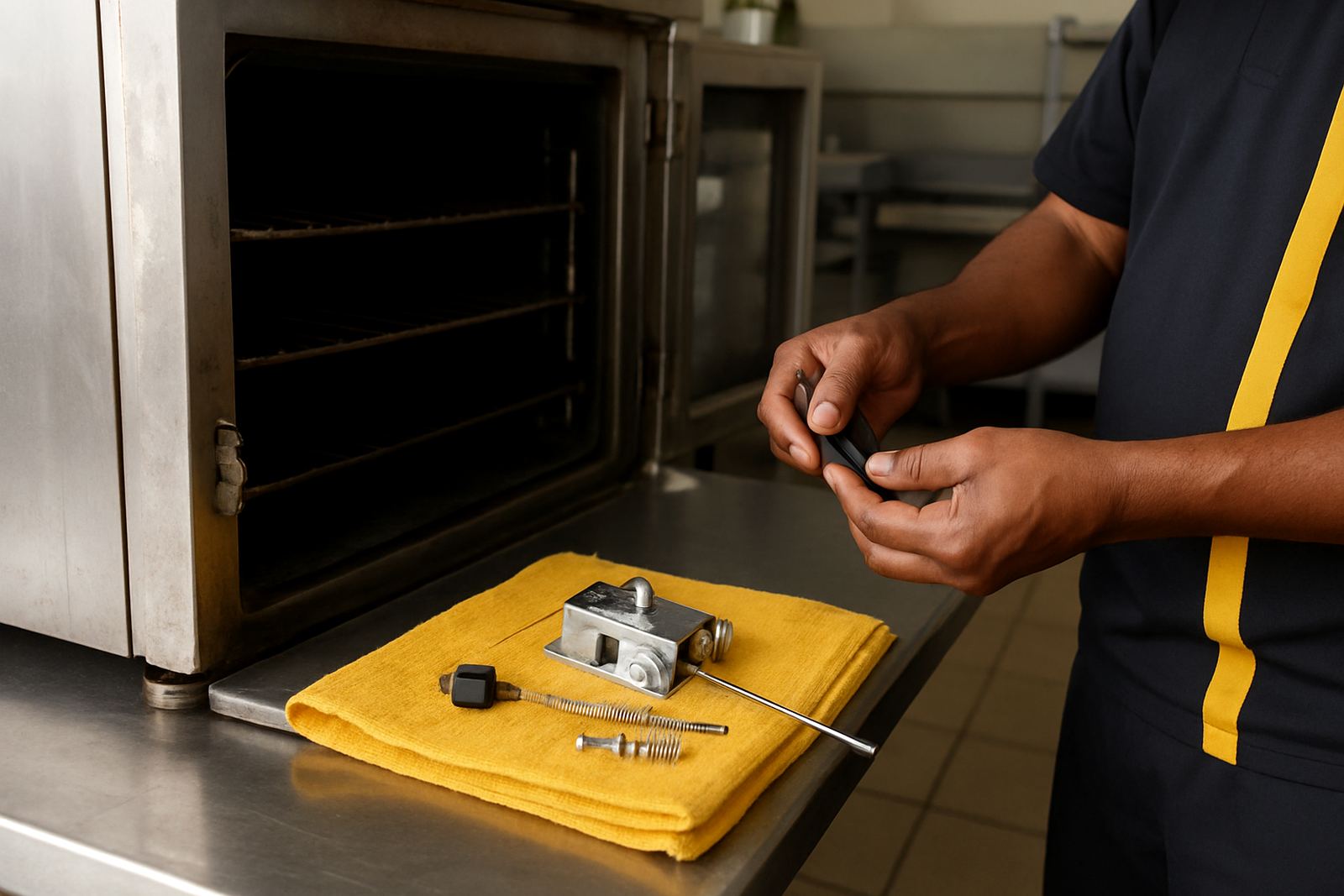
Not every poor rinse issue is mechanical. On some machines the rinse valve, booster pump or cycle timing is managed through switches, relays or control contacts. If a switch panel is worn, burnt or intermittent, the rinse stage may come on late, cut out early or not energise properly. That can leave the wash cycle looking normal while the final rinse never gets the time or pressure it should.
This is where proper testing matters. A part can look fine from the outside and still be failing under load. If the rinse only misbehaves when the kitchen is busy, the fault may be heat, vibration or a weak contact rather than a blocked jet. In that case, changing one part without testing the rest can waste time and money.
A practical case from a Pretoria service kitchen
A service kitchen in Pretoria called about cloudy glasses and plates with a gritty finish after every lunch run. The staff had already cleaned the filters and checked the detergent, but the rinse stayed poor. On inspection the spray arms were partly blocked, the inlet strainer had fine sand in it, and the rinse valve was filling slowly after a morning power interruption. The machine was not dead, just not delivering the rinse properly.
After the blocked parts were cleared, the valve was fitted and the water level checked, the rinse came back to normal. That kind of fault is common in kitchens that work hard all week, especially when water quality and power interruptions add extra strain. The lesson is simple: poor rinse is often a parts issue, and the cause sits in more than one place.
- Clean the spray system first
- Test the inlet valve and water pressure
- Check for scale on moving and heated parts
- Confirm the cycle is reaching the rinse stage fully
What to check before ordering parts
Before you order anything, record the machine model, the exact fault pattern and where the poor rinse shows up. Note whether the problem affects all racks, only hot cycles or only the first few loads of the day. That helps narrow the issue and prevents buying the wrong part. If the machine is in a busy kitchen, the same fault can look different at 7 am and 2 pm.
If you are unsure, parts identification and compatibility checks save a lot of back and forth. For fitted work, it also helps to confirm whether the issue needs element fitting, thermostat fitting, gasket fitting or switch panel repairs. A dishwasher that is rinsing badly may only need one part, but it should be tested properly before it goes back into service.