What a jet does and why it matters
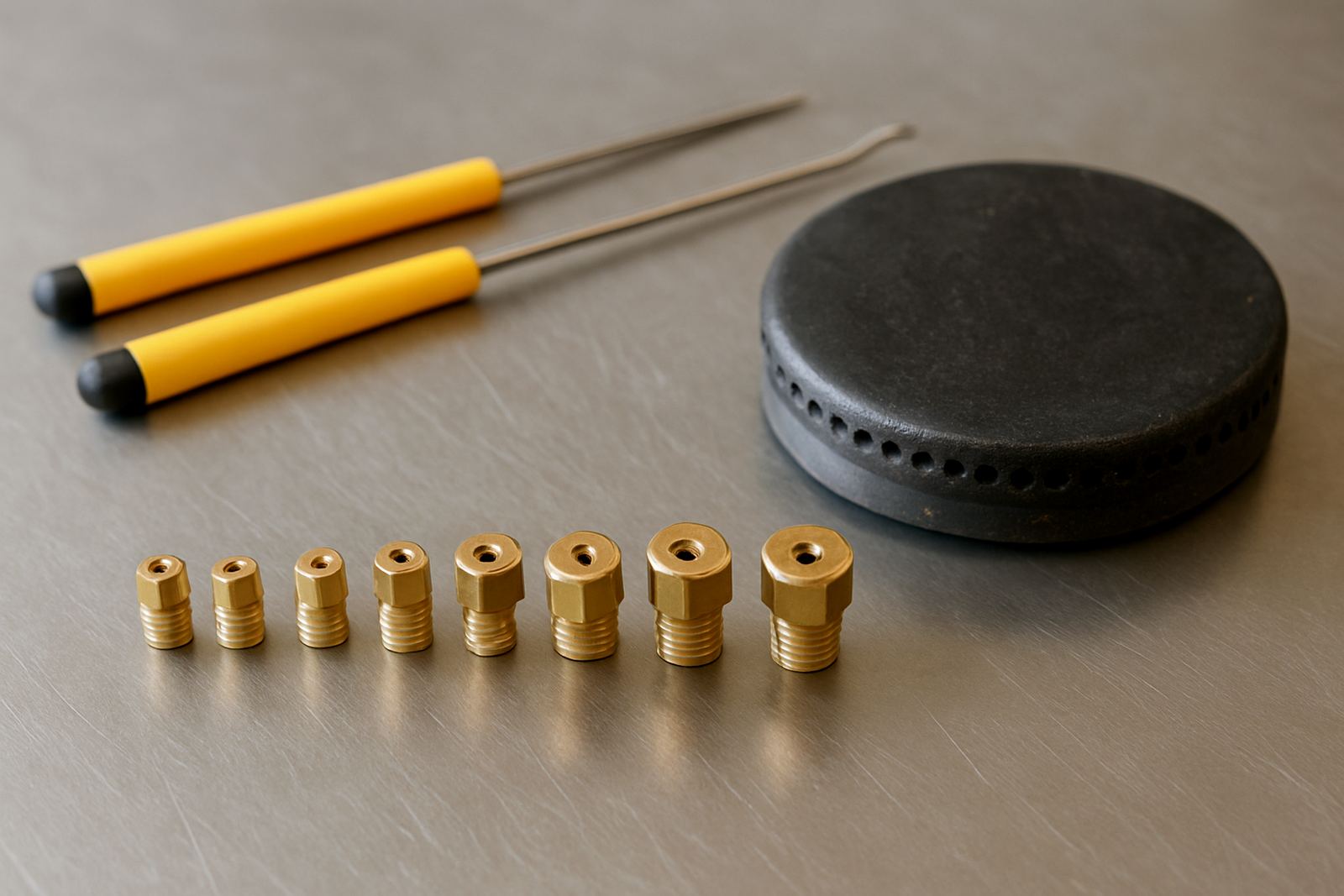
A burner jet is a small part, but it has a big job. It meters gas into the burner so the flame burns at the right size and shape. If the opening is worn, blocked or no longer matches the appliance setup, the flame can turn lazy, noisy or uneven. In a busy kitchen that means longer heat-up times, poor recovery after loading and more call-outs for equipment that seems to be "acting up".
On ovens, fryers and dishwashers the signs are often different, but the root problem is the same. The gas is not being delivered in a controlled way. Sometimes the jet is simply dirty. Sometimes it is damaged by repeated removal. And sometimes it has been drilled or fitted to suit the wrong gas type, which is a common issue in sites that have changed from one supply to another over the years.
Clear signs the jet should be changed
There are a few warning signs that tell you a jet is past cleaning and should be replaced. A good flame should be steady and mostly blue, with only a small yellow tip where the appliance design allows it. If the flame lifts off the burner, flickers hard, burns yellow or keeps going out, the jet may be worn or restricted. You may also hear a hiss that was not there before, or notice a smell of unburnt gas around the appliance.
In real kitchens, the first complaint is often performance rather than flame shape. Ovens take longer to recover after the door opens. Fryers struggle to keep temperature during a lunch rush. Dishwasher booster burners may cycle badly and leave water not hot enough. If the appliance was fine last month and now needs extra time to do the same job, the jet is worth checking before bigger parts are replaced.
- Uneven or dancing flame on one burner
- Delays in reaching temperature
- Black soot on pans, trays or burner area
- Repeated ignition failure after cleaning
- Gas use that seems higher than normal
When cleaning is not enough
Some jets can be cleaned and returned to service, but not every blocked jet should be reused. If the opening is enlarged, pitted or partly deformed, the gas flow will never be consistent again. You may clean out the dirt and still get a flame that is too strong one day and too weak the next. That is usually when replacement makes more sense than another round of poking wire through the hole.
Another clue is repeated failure after maintenance. If the same appliance keeps coming back with the same flame issue, the jet may be the weak point even if the rest of the burner looks fine. In those cases it is best to compare the jet against the appliance specification and check whether the correct size, thread and gas type are in place. A quick swap done properly can save hours of chasing the fault. It is also safer, because an oversized or damaged jet can lead to poor combustion and extra heat where it should not be.
How South African conditions wear jets faster
Local conditions can shorten the life of gas components. Coastal humidity in places like Durban and Cape Town can speed up corrosion on nearby fittings, especially where kitchens draw in damp air and grease. Inland, dust and fine grit can work their way into burners in busy production kitchens, bakeries and takeaway shops. Add load-shedding start-stop cycles and a lot of manual relighting, and small burner parts get handled more often than they should.
We also see jet problems after poor fitting work, usually where nozzles have been overtightened or mismatched during a hurried repair. In some older sites, equipment has had many years of changes and the paperwork is long gone. That is when part identification becomes important. A jet can look almost right and still deliver the wrong flow. On a gas line, almost right is not good enough.
- Coastal moisture can corrode nearby burner parts
- Dust and grease can block small openings quickly
- Repeated relighting increases wear from handling
- Wrongly matched parts cause unstable flame patterns
What to check before you order a replacement
Before changing a jet, confirm the appliance model, gas type and burner position. Ovens and fryers may use different jet sizes even inside the same kitchen. A pilot jet is not the same as a main burner jet, and a hob jet is not the same as a convection oven jet. If the appliance has been converted from natural gas to LP gas, or the other way round, the jet set must suit that conversion exactly.
It helps to note the symptoms before taking the part out. Is the problem on one burner or all of them? Does it happen only after warm-up? Does the flame improve after a clean and then fail again? These details make the job quicker, especially when a service team is matching parts for a site in Midrand, Johannesburg, Pretoria or farther out to Durban, Cape Town or Bloemfontein. Good information cuts down on wasted trips and wrong parts.
- Record the appliance model and serial details
- Check the gas type on site
- Look for one burner or multiple burner faults
- Compare the jet to the correct specification before fitting
A practical example from a busy kitchen in Gauteng
A small catering kitchen in Midrand had one oven that started taking nearly twice as long to recover after each tray change. Staff thought the thermostat was off, because the display and controls seemed normal. On inspection the flame on one main burner was lifting and burning unevenly. The jet was partly worn and had some residue, but the opening was also slightly enlarged. Cleaning helped for a day, then the fault came back.
Once the correct jet was fitted, the flame stabilised and the oven returned to normal working time. The team also checked the gasket and ignition points while the unit was open, which avoided another call-out later that week. That is the practical lesson: when a burner fault keeps returning, change the worn part instead of trying to nurse it along. In kitchen work, the cheapest fix is the one that lasts through a Friday service.
When to call for help with jet identification
If you are not sure whether the jet is the problem, get the part identified before ordering. The right replacement must match the gas type, thread and burner rating. That matters even more on commercial equipment, where a small mismatch can affect heat output across the whole appliance. A quick visual check is useful, but the final decision should be based on the correct part details and the fault symptoms on site.
FoodServ Parts Store supports commercial kitchens with part identification, compatibility checks and fitting support from our Midrand base. For ovens, fryers and dishwashers, the aim is simple: get the right part, fit it properly and test it after the job. If a jet is no longer giving a steady flame or the gas delivery is inconsistent, it is usually time to replace it rather than wait for a bigger breakdown.