What a healthy fan motor sounds like
In a convection oven, fan motors usually make a steady low hum and that is about it. The sound should stay fairly even through the cycle, with no scraping, rattling, or hard knocking when the unit warms up.
When the fan starts sounding different, treat it as a warning, not just background noise. A bearing can begin to fail, a blade may be touching the shroud, or a loose bracket may only show itself once the cabinet heats and expands.
On busy sites in Johannesburg, Midrand and Pretoria, operators often live with the sound for a few days because the oven still runs. That is a costly habit. A motor that is working harder than normal can pull more current, overheat and trip switches especially during peak meal prep.
Grinding, humming and wobble usually mean different faults
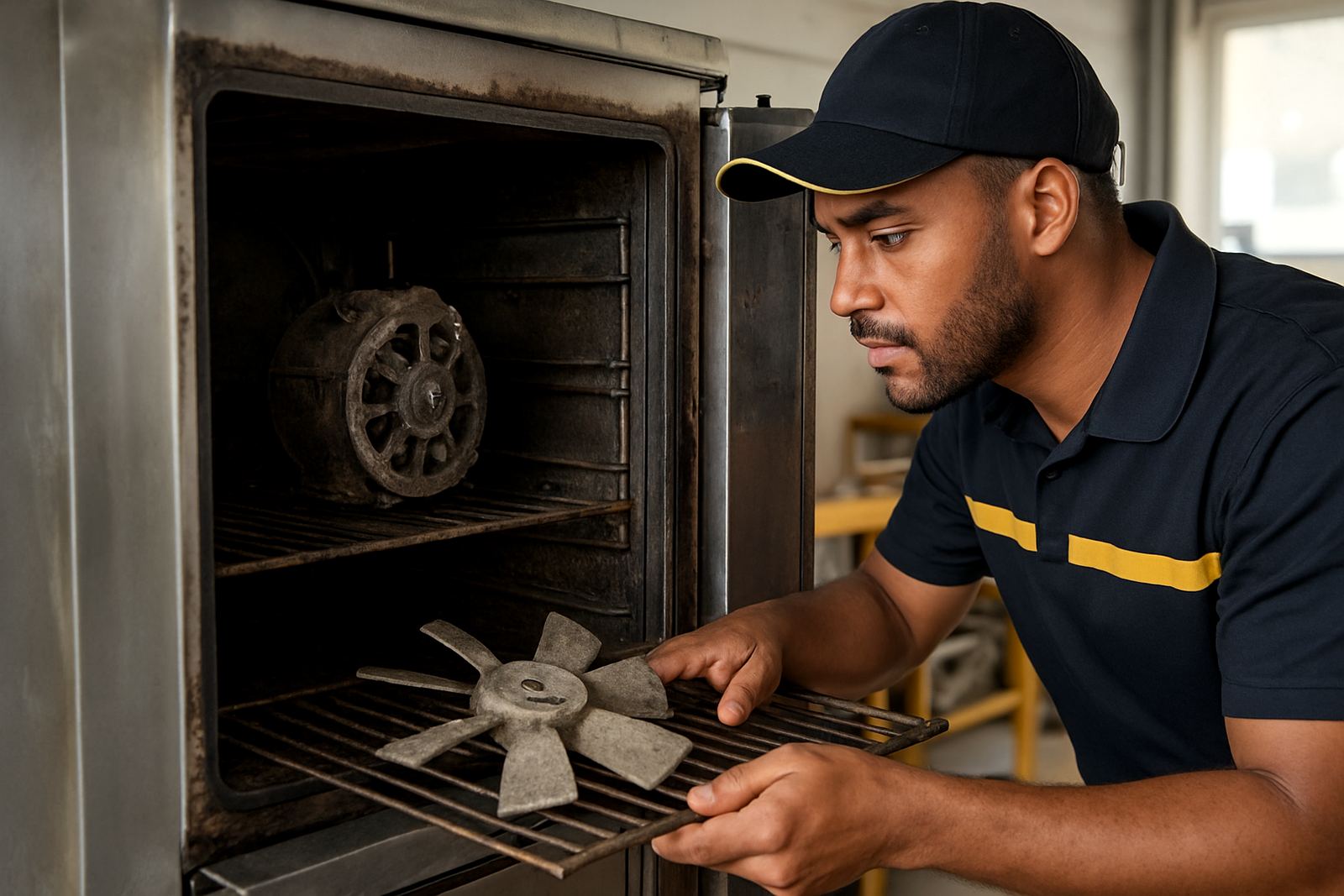
Grinding often points to worn bearings or a fan blade rubbing on the housing. Humming with little air movement can mean the motor is trying to start but not turning properly. A wobble or rhythmic thump can come from imbalance, bent blades, or a build-up of grease and flour dust on the fan assembly.
In coastal kitchens around Durban or Cape Town, humidity can speed up corrosion on fixings and shafts. In older units, that rust can make the motor sound rough long before it finally gives up.
- Grinding when the oven heats up can mean the shaft is binding as parts expand
- A dull hum with no normal airflow often points to a weak capacitor or motor issue
- Shaking at one speed but not another may mean a loose blade or bent fan hub
- Clicking or knocking can be a loose guard, bracket, or fan blade touching the casing
Why ignoring the noise can cost more than the motor
A noisy fan is not just an audio problem. If air is not moving properly, the oven cooks unevenly, thermostats cycle harder and elements can overwork. That means longer cooking times, more product loss and a higher chance of repeated breakdowns.
We see this often in schools, hotels and catering kitchens where one oven carries a heavy load through the day. A motor that starts humming on Monday may stop altogether by Friday, and once it fails the heat can build in the cavity and damage wiring, switches or insulation nearby.
If a dishwasher drying fan or extraction unit starts making the same kind of noise, the warning still matters. A bad motor in one machine can upset the whole line, and staff usually notice it first as poor drying, strange smells, or the unit tripping on start-up.
Checks your team can do before calling for parts
Before you order a replacement, switch the machine off at the isolator and let it cool down fully. Never put hands near a fan until you are certain the supply is isolated. After that, a quick visual check can tell you a lot.
- Look for grease, broken blade tips, loose screws or a fan guard that has shifted
- Check whether the noise happens only on heat up, only at start, or all the time
- Smell for burnt insulation or a hot electrical odour near the motor housing
- Inspect the gasket and door seal because air leaks can make the motor work harder
- Confirm that supply voltage is steady, especially where load-shedding and weak power back-up are part of daily life
If the noise is sharp and metallic, stop using the unit until it is checked. If it is only a low hum, the motor may still be trying to start and could be saved by the right part before it burns out.
A Midrand example from a lunch rush kitchen
A canteen client near Midrand called after hearing a rubbing noise from a convection oven every time the lunch run started. The staff thought it was only a loose panel. On inspection the fan blade was brushing the shroud because the rear bearing had worn and the motor shaft had dropped a few millimetres.
We matched the motor and fitted the replacement on site after checking the surrounding wires, thermostat function and blade clearance. The oven went back into service the same day, and the team avoided a second failure that would have hit the afternoon prep as well.
That kind of case is common. Small sound, small delay, then a bigger repair if nobody acts. The earlier you listen, the easier it is to keep the machine cooking evenly.
How FoodServ Parts Store helps you match the right motor or fitting parts
Our Midrand base supports national orders and parts identification for commercial ovens, fryers and dishwashers. If you have the old motor, a plate number, or even a photo of the housing and connector, we can help check compatibility before anything is dispatched.
- Part Identification for motors, blades, capacitors and mounts
- Compatibility Checks so the replacement suits the make and model
- Element Fitting, Thermostat Fitting and Gasket Fitting when related faults show up
- Onsite Parts Support and Post-Fit Testing in selected areas
We work across Johannesburg, Pretoria, Durban, Cape Town and Bloemfontein, with dispatch from Midrand. For advice or to send pictures of the fault, email parts@foodservparts.co.za and include the model details if you have them.