Why hotel kitchens need wider parts cover
A hotel kitchen carries more pressure than a single outlet. Breakfast starts early, lunch prep overlaps with functions, and evening service often runs while the dishwash area is already under strain. That means failures do not stay neat and simple. A burnt element, a weak thermostat or a split gasket can knock out more than one station at once.
We see this in Johannesburg, Sandton, Umhlanga and Cape Town hotels where equipment must recover after power dips, heavy use and long operating hours. The parts list needs to cover ovens, fryers, hot cupboards, dishwashers and prep gear, not just the obvious cooking items. One missing switch or faulty burner can slow a line down for hours.
FoodServ Parts Store has been supplying hotel kitchens since 2016 from our Midrand base, with national dispatch and coverage into Pretoria, Durban, Cape Town and Bloemfontein. The point is simple, keep the right spare part moving before service pressure turns into lost covers.
The parts hotel operators replace most often
The most requested items are usually the ones that take heat, steam and repeated cycling. In coastal kitchens, moisture also shortens the life of seals and control parts, especially where extraction is not ideal. The goal is not to stock everything blindly, but to know which parts fail often and keep them on hand.
- Heating elements for ovens, fryers and holding units
- Thermostats and temperature sensors for stable cooking control
- Door gaskets and seals for ovens and dishwashers
- Burners, ignition parts and pilot components
- Switches, selector knobs and control panel parts
- Dishwasher spray and drain related fittings
If your hotel runs banqueting as well as a daily restaurant, the same machine may cycle far more times than a stand-alone kitchen unit. That changes the wear pattern. A thermostat may still read, but it starts overshooting. A gasket may still close, but steam leaks slowly and cooking times drift.
How to identify the correct replacement before ordering
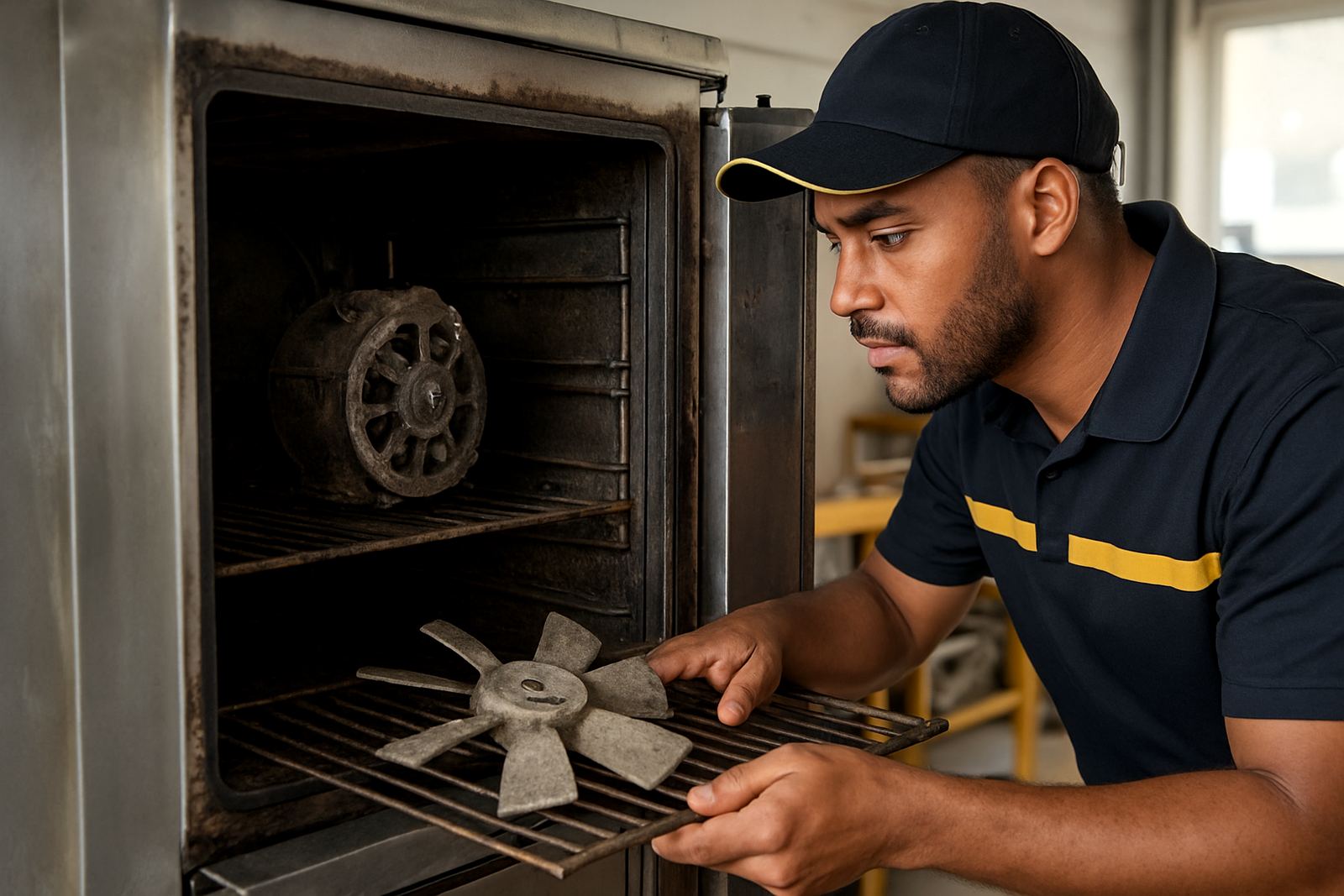
The fastest way to waste time is to order by guesswork. Two ovens that look alike can use different elements or switch panels. Dishwashers can share a cabinet shape but use different gasket profiles or pump fittings. Before placing an order, check the model details, plate labels, part shape and the old item itself.
Our team handles part identification and compatibility checks every day. Sibusiso Dlamini, our Technical Parts Lead, often works from clear photos, measurements and equipment notes to match the right item first time. If a fitter is already on site, a quick call can save a return trip and a second outage.
- Send the equipment model and serial details where available
- Take clear photos of the old part from front and side angles
- Measure length, diameter, thread size or gasket profile
- Note the fault, for example no heat, uneven heat, tripping, or leaking steam
- Check whether the issue started after cleaning, a power cut or a heavy service period
A small detail can matter. An element may look right but draw the wrong load. That can trip the unit, or blow again after a few cycles.
Keeping ovens, fryers and dishwashers working under pressure
Hotels tend to lose money in small chunks when equipment becomes unreliable. A fryer that takes too long to recover slows breakfast service. An oven with a weak seal burns more power and gives uneven results. A dishwasher with a worn gasket lets steam out and leaves staff with extra hand finishing. None of these problems look dramatic, but they add up quickly.
For this reason, we also support element fitting, thermostat fitting, gasket fitting, burner fitting and switch panel repairs. Where needed, we can assist with post-fit testing so the unit is checked before it is returned to full use. That matters in busy kitchens because a part that is fitted but not tested can create another call-out later in the week.
Hotels in Durban and along the coast often battle salt air as well as heat. Inland sites may deal more with dust and load-shedding related surges. The fault may be the same on paper, but the cause and repair timing can differ. Knowing the operating environment helps with the right part choice and the right spare stock level.
What to keep on site for fewer interruptions
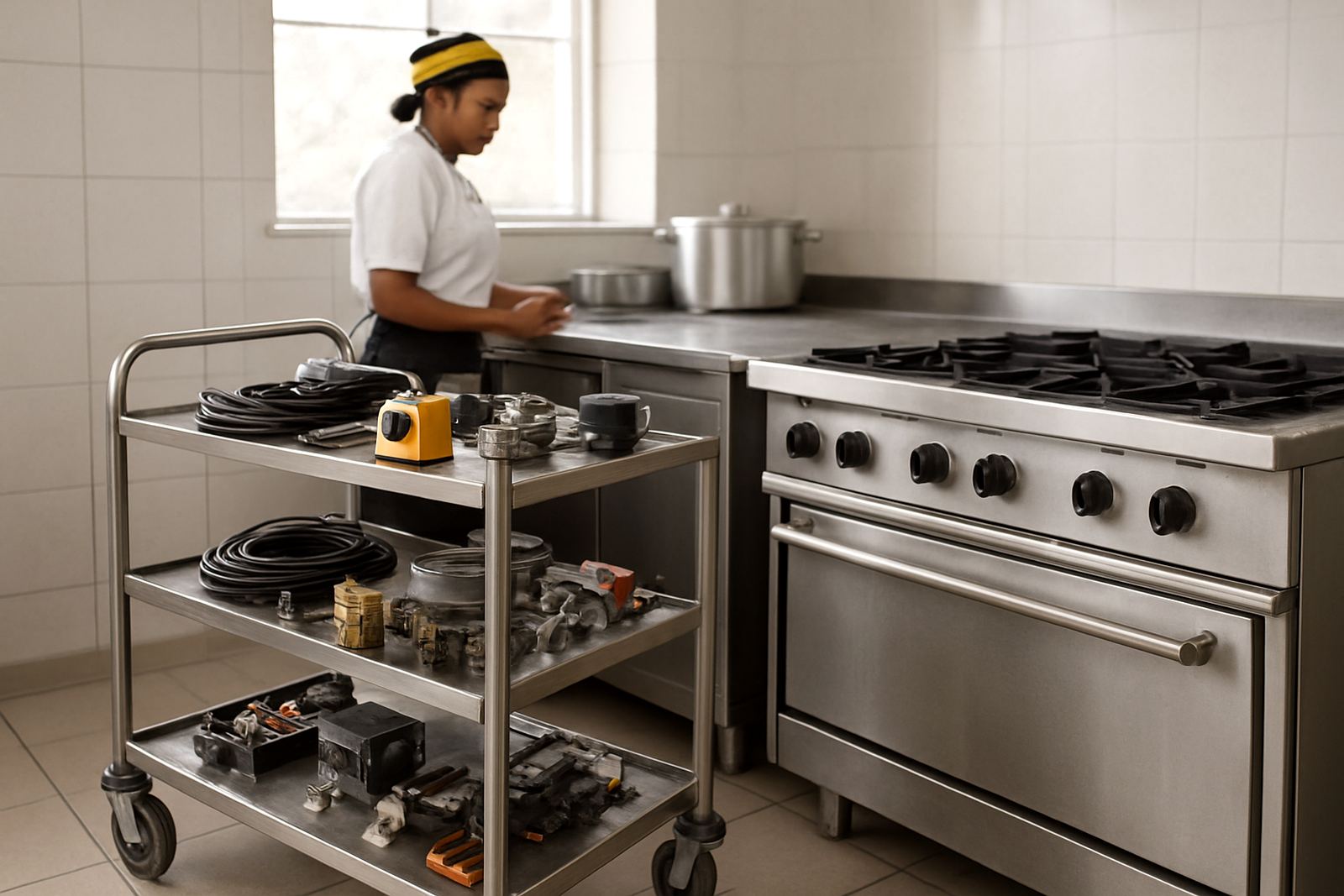
Not every spare needs to sit in a storeroom, but the right few can prevent a service panic. We usually suggest hotels keep the parts that are easy to store, regularly used and slow to source after hours. Megan Naidoo in customer support often helps sites decide what should stay in-house and what can be ordered as needed.
- One or two critical heating elements for each high-use unit
- Common thermostats or temperature controls
- Door gaskets for ovens and dishwashers that see daily cycling
- Ignition or burner items for gas lines with frequent use
- Extra switches for commonly used control panels
For bigger properties, the right stock plan depends on room count, function volume and whether the kitchen runs breakfast only or all day. A 40-room hotel in Pretoria will not carry the same spares as a beachfront property turning over three functions a day. Stock should match actual use, not just the equipment list.
A local example from a busy hotel kitchen
A Midrand hotel we assisted had a Friday arrival spike and two functions booked for Saturday. One oven began losing temperature, while the main dishwasher door seal was letting steam out. The kitchen team could still cook, but the recovery times kept slipping. In practical terms, the breakfast line was already running behind by the second tray of product.
We checked the faulty items from photos and measurements, matched the parts, and arranged dispatch from our Midrand depot. The fitting team replaced the seal, checked the thermostat, and tested both units before the next service block. That meant the hotel avoided a weekend shutdown, and the kitchen manager did not have to split staff across hand washing and service recovery.
That is usually the real value of part support in hotel work, not just getting a box delivered, but getting the right item fitted and back in use without dragging the whole kitchen into a longer interruption.