Project brief from a Centurion bakery on a tight bake cycle
This job came from a bakery in Centurion serving retail and wholesale orders, with two deck ovens doing most of the daily load. The team was seeing uneven bake colour, longer recovery times between trays and doors that had started to drop slightly on one side. That meant more attention from the bakers and less certainty around finish, especially on early morning runs when every minute counts.
The brief was clear. Find the right oven parts, confirm compatibility before anything was ordered and keep downtime as short as possible. We had to deal with two units, not one, and the client wanted a practical fix rather than a drawn-out investigation. The bakery also asked for parts that would cope with regular use in a warm kitchen, where doors are opened and closed all day and humidity from washing up can work its way into fittings.
- Client type: commercial bakery with daily production
- Town: Centurion
- Equipment: two deck ovens
- Problem areas: heat control, door alignment and wear on moving points
- Objective: restore even bake results and safer, cleaner door movement
What was wrong on the ovens and how we checked it
Our parts team started with the symptoms and the oven make-up rather than guessing by part name alone. On the first oven, the top and lower heat sections were not responding evenly, which pointed to ageing elements and a control issue around the limit circuit. On the second oven, the door was sagging enough to affect the seal, so heat was escaping around the edge and the hinge hardware had become tired.
We asked for a few clear photos, nameplate details and measurements of the existing components. That let us compare terminal positions, fixing centres and probe lengths before dispatch. In bakery work, a small mismatch can hold up the whole job. If the element fits but the terminals sit wrong, or the hinge kit lines up 4 mm out, the oven stays open longer than planned and the next batch starts late.
- Key checks included terminal layout, element rating and fixing points
- Limit controls were matched to the existing oven cavity setup
- Hinge kits were checked for door weight and pivot position
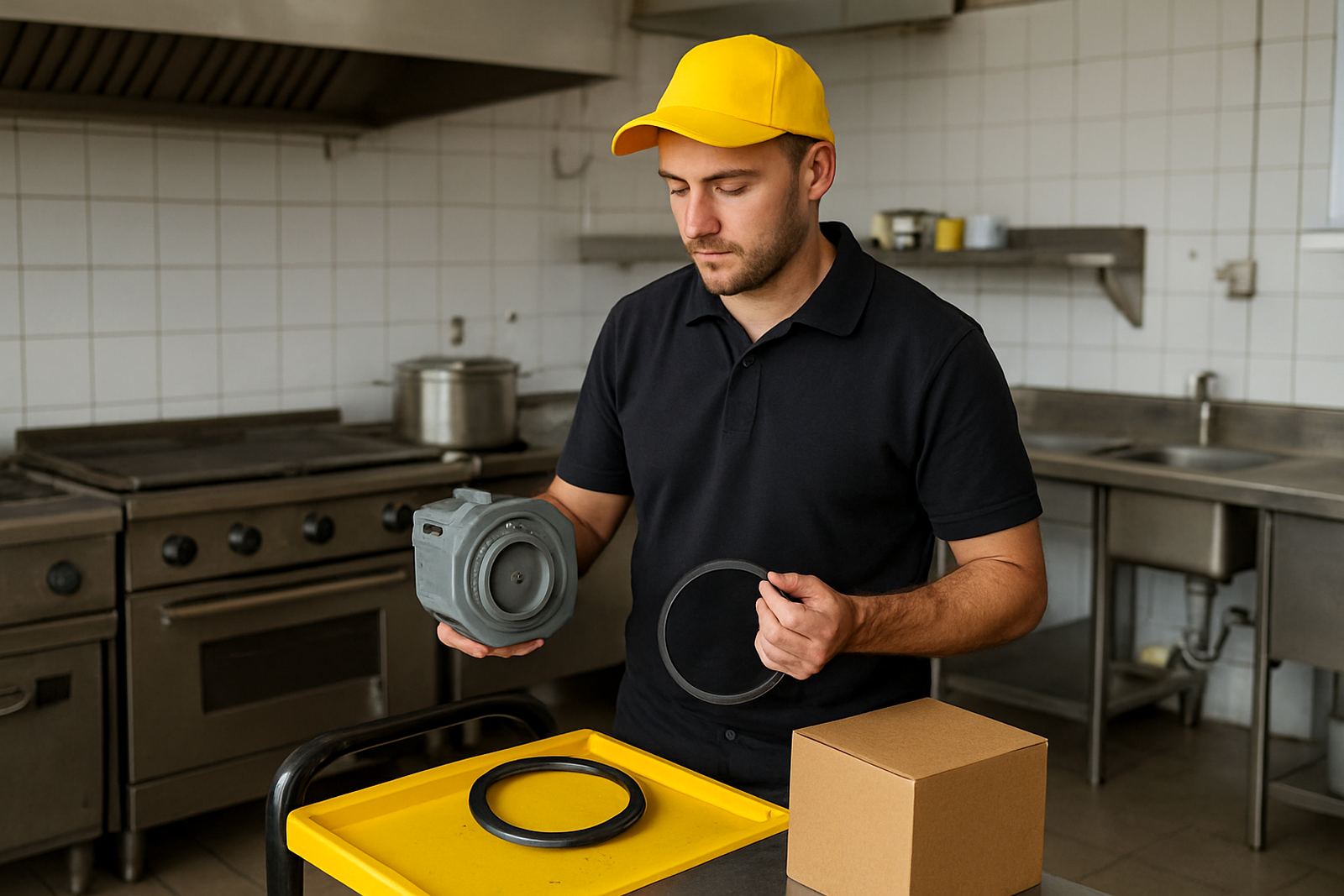
- We also confirmed gasket condition at the same time because a weak seal can mask other faults
Parts supplied for the two deck ovens
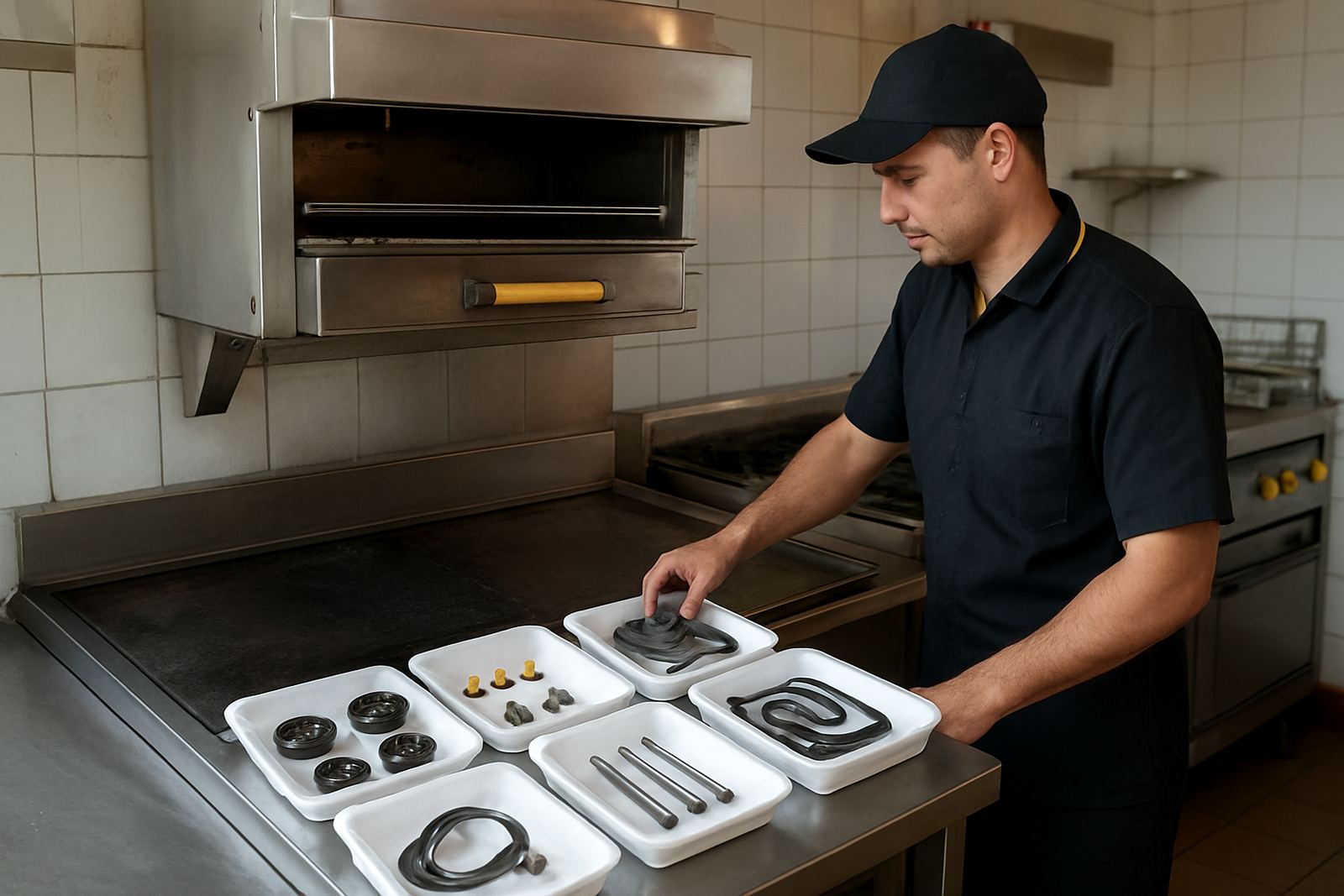
We supplied deck oven elements, limit controls and hinge kits for both units, with each set matched to the oven model and the physical measurements provided. The elements were selected to restore proper top and base heat balance, while the limit controls were chosen to protect the ovens from overheating during long production runs. The hinge kits included the wear items needed to bring the door back into alignment and improve the closing action.
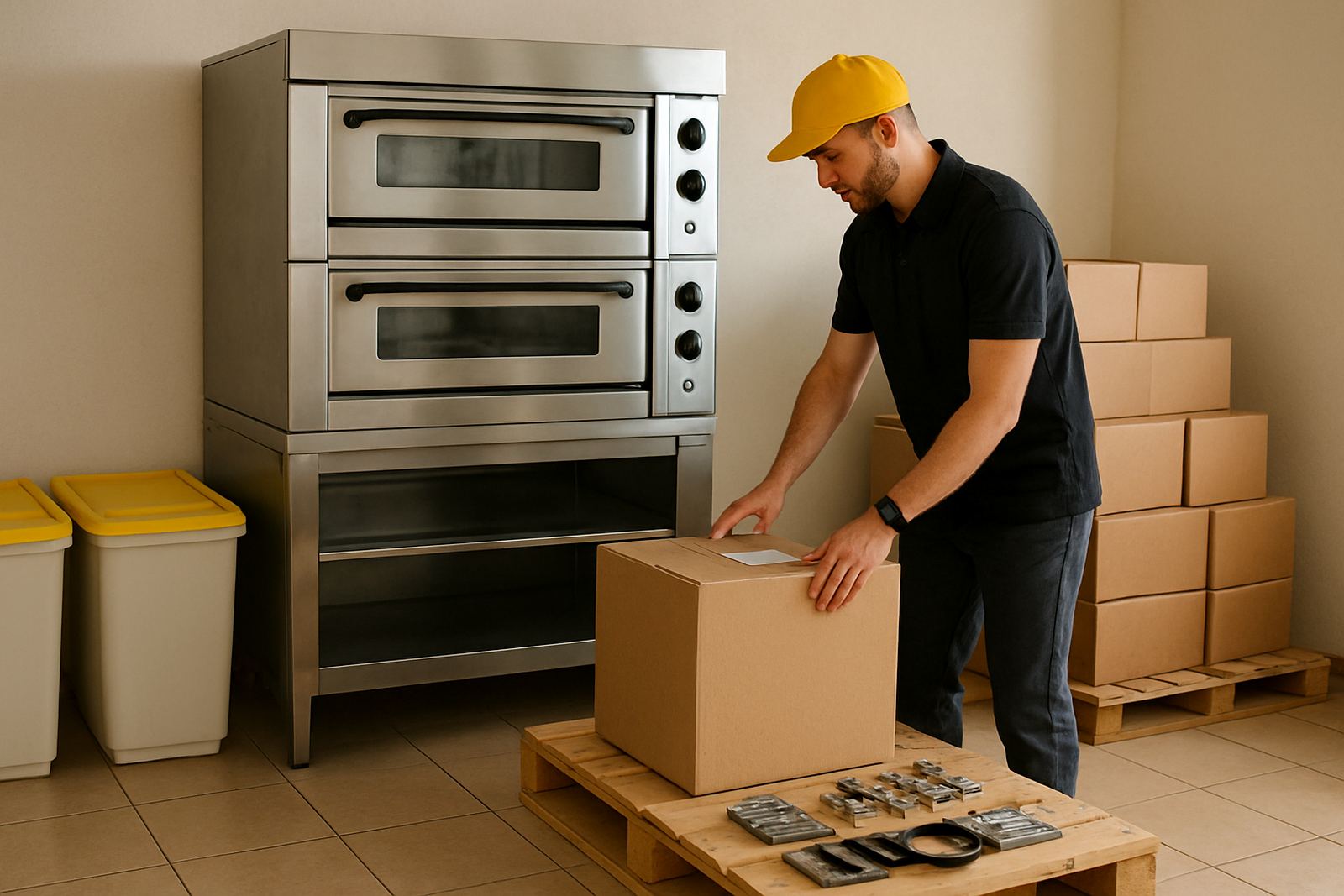
Because the bakery operates on an early start and late clean-down cycle, the customer wanted parts that could go straight in without extra machining. We packaged the order by oven, which saved time on site and reduced the chance of fitting the wrong set to the wrong unit. One of the practical gains here was simple: the team on site could open a box and know exactly which oven it belonged to.
- Deck oven elements for heat recovery and even tray colouring
- Limit controls to protect the oven during extended use
- Hinge kits to correct door drop and improve sealing
- Fitment notes supplied with the order for each unit
Fitting work and post-fit testing in the bakery
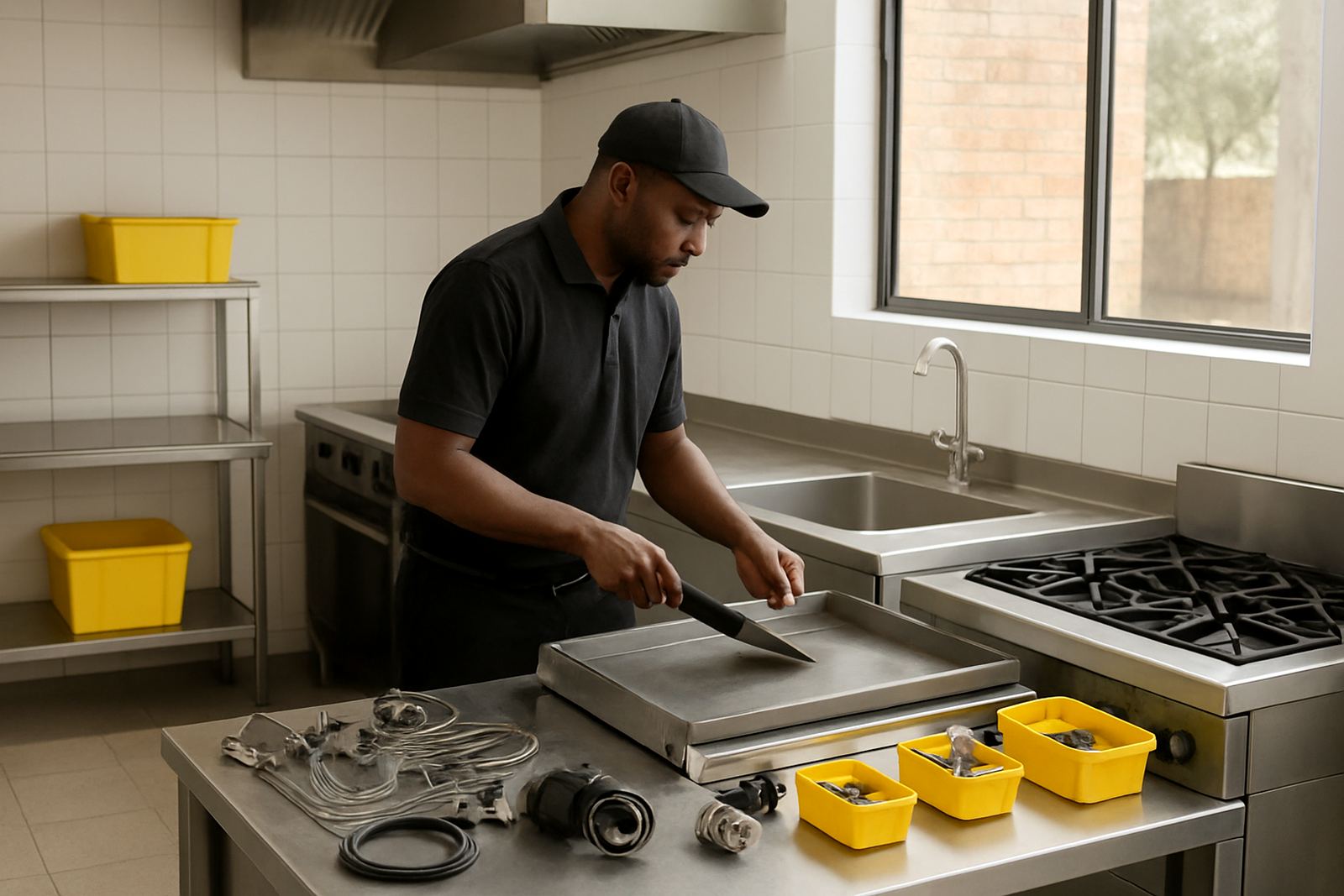
Our fitting team attended after delivery and worked around the bakery schedule so the ovens were down for the shortest possible window. Old components were removed, terminals were checked for heat damage and the new parts were fitted with attention to alignment, clearances and secure fixing. On one oven we also corrected a door issue that had been putting pressure on the seal, which is the kind of fault that can slowly pull a whole bake out of shape.
Once installed, we carried out post-fit testing. That included heat-up observation, thermostat response checks and a door-close test on both ovens. The aim was not only to confirm that the parts were in place, but that they were working as a set. Bakery ovens can look fine on first switch-on and still drift under load, so we watched the recovery after opening the doors and checked that the temperature came back without overshooting.
- Removal of worn elements and hinge wear parts
- Verification of wiring condition and terminal security
- Heat response and recovery testing after installation
- Final door alignment check and seal contact review
Timeline, constraints and the result on the floor
The project ran over two weeks from first contact to final handover. Week one covered identification, compatibility checks and ordering. Week two covered delivery, fitting and testing. The main constraint was production time. The bakery could not afford a long shutdown, and in Centurion traffic plus supplier lead time can quickly stretch a simple repair into a messy delay if the process is not managed properly.
After the work, the client reported steadier heat across both ovens, cleaner door action and less variation between batches. The bakers could load with more confidence, and the ovens were no longer losing heat through a weak hinge or running under strain from tired controls. The result was practical, not flashy: fewer adjustments during the shift, better consistency on deck colour and less pressure on the team during peak hours.
- Timeline: 2 weeks total
- Downtime: kept to the shortest practical window
- Result: even bake recovery improved on both ovens
- Result: door closure and seal contact improved on the problem unit
What we would do again for another bakery in Centurion
If we handled the same type of job again, we would follow the same order of work: identify first, confirm compatibility, then fit and test before signing off. That sequence keeps mistakes down and makes it easier to support a bakery that depends on steady output every morning. It also helps when the equipment has been in service for years and more than one part has started to show wear at the same time.
For bakery clients, we also recommend checking adjacent parts while the oven is open. A tired gasket, loose switch panel contact or early signs of terminal heat damage can be dealt with before they stop production. Around Gauteng, and especially where kitchens are busy from dawn, that kind of maintenance saves a lot of call-outs. It is often the small parts, not the big ones, that decide whether the oven holds up for the week.
- Check related wear items at the same visit
- Keep part numbers and photos on file for repeat orders
- Test under normal working conditions, not just on first power-up
- Plan around production hours to avoid avoidable delays
Key facts
| Project type | Bakery oven parts supply and fitting |
|---|---|
| Town | Centurion |
| Equipment | Two deck ovens |
| Parts supplied | Elements, limit controls and hinge kits |
| Timeline | 2 weeks |
| Services used | Part identification, compatibility checks, element fitting, post-fit testing |