Start With the Simple Drain Checks
Before you open panels or order parts, check the basics. A lot of drain problems are caused by food scraps, broken glass, labels, grease build-up or a hose that has been pinched behind the machine. If the unit is in a busy kitchen in Johannesburg, Durban or Cape Town, daily use and poor pre-rinsing can quickly block the drain path.
Switch the machine off at the isolator and let it cool down if needed. Remove the filter screens, sump cover and any loose baskets so you can see into the wash area. If there is standing water, scoop it out safely and look for debris in the sump, drain screen and outlet. Check that the outlet hose is not crushed, kinked or sitting too high, because that can stop gravity drain on some units. In coastal areas, salt in the air and damp conditions can also cause fittings to seize up or corrode.
- Look for food scraps, labels and broken glass in the sump
- Check that filters and screens are seated correctly
- Inspect the drain hose for kinks, cracks or blockages
- Make sure the outlet is not blocked at the sink or floor drain
Check The Drain Valve And Solenoid
Many commercial dishwashers use a drain valve or solenoid to open the waste path at the end of the cycle. If that valve sticks shut, the machine may wash normally but leave water behind. If it sticks partly open, you may hear odd flow sounds or see slow draining between cycles.
Listen during the drain phase. If you hear a click but no movement, the solenoid may be energising but not opening the valve properly. If there is no sound at all, the timer, control board or wiring may be at fault. On older machines, grease and scale can make the valve flap or spring stiff, especially on sites with hard water. A damaged seal can also stop full movement and cause a poor drain. Do not force the part open with tools unless the power is isolated and the machine is safe to work on.
- Listen for the valve click during drain
- Check for limescale, grease or food build-up
- Inspect the wiring connections for heat damage
- Replace cracked seals or damaged valve parts
Inspect The Pump, Impeller And Pump-Out Path
If the drain valve is working, the next area to check is the pump-out side. A weak pump, blocked impeller or worn shaft seal can leave water sitting in the base. Some machines use one pump for washing and draining, so a fault here affects both functions. If the machine hums but does not move water, the impeller may be jammed by debris or the motor may be struggling to start.
Open the access panel and check for signs of leakage, burnt wiring or unusual noise. If the machine trips a breaker when it tries to drain, the motor could be drawing too much current. In food courts and takeaways with heavy daily use, pump wear is common and sometimes the impeller blades chip or the housing blocks up with fat. A worn pump may still spin, but not with enough force to clear the line.
- Listen for humming, grinding or a struggling motor
- Check the impeller for debris or damage
- Look for leaks around the pump seal
- Test whether the motor starts and stops cleanly
Test The Hose Route, Air Gap And Drain Connection
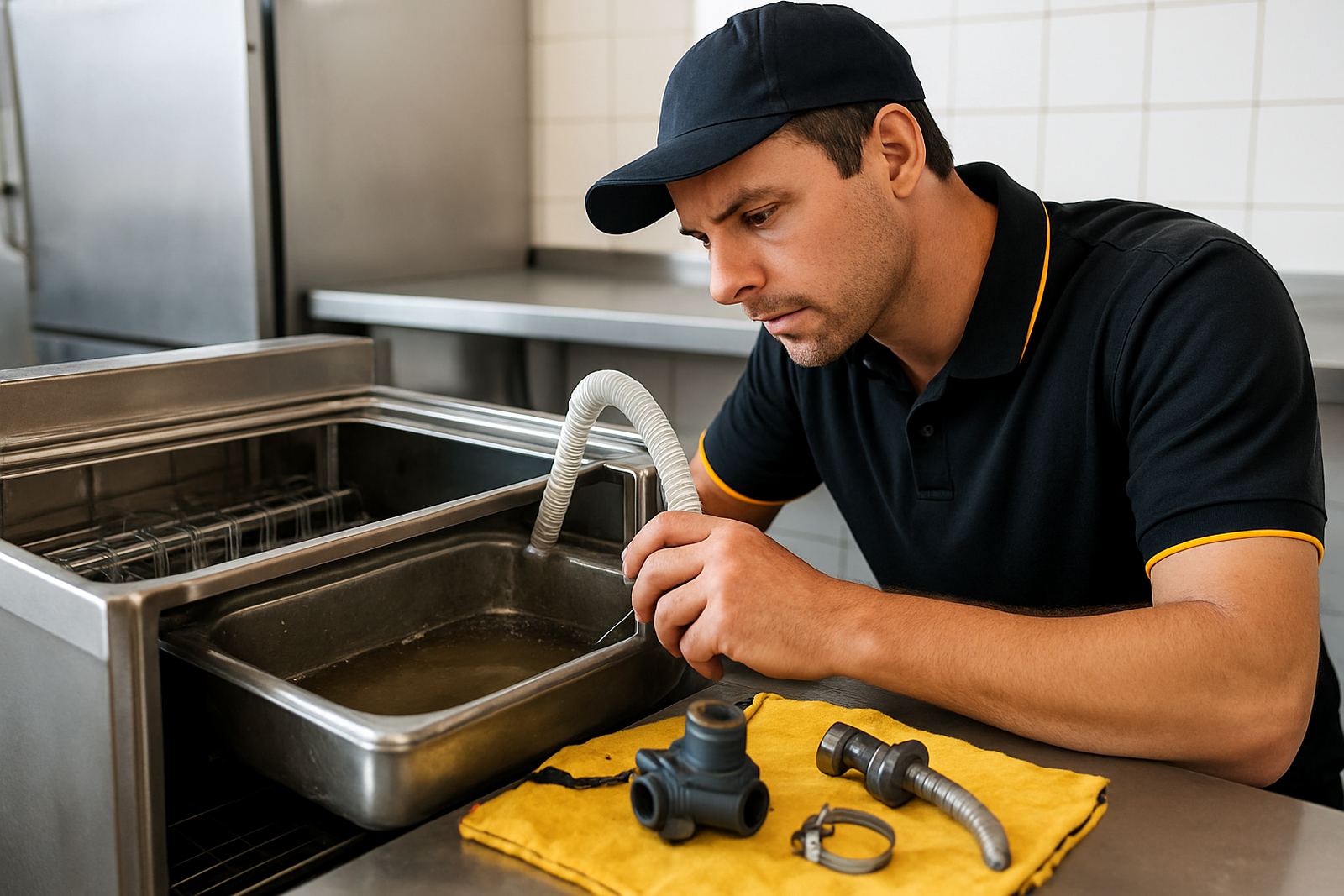
Even if the machine parts are fine, the drain route can still stop water leaving the unit. Hoses should have a smooth run with no sharp bends, heavy sagging or tight cable ties. If the drain hose dips too low and then climbs again, water can collect in the low spot and slow the drain. That is a common issue after a kitchen refit or when the machine gets moved for cleaning.
Check the connection to the sink trap, standpipe or floor waste. A clogged trap, blocked gully or badly fitted air gap can cause backflow and poor drainage. In some buildings, municipal drain rules or site hygiene rules mean the dishwasher cannot share a blocked line with other waste points. If the hose smells sour or looks slimy inside, clean or replace it. This is the kind of fault that gets missed until the machine starts overflowing or leaving dirty water behind.
- Check the hose for low points and kinks
- Confirm the outlet is clear and not backing up
- Clean slime, grease and scale from the hose
- Make sure the machine is connected to the correct drain point
Look At Switches, Timers And Float Controls
Drain faults are not always mechanical. Some machines rely on float switches, door switches, pressure switches or control timers to start the drain sequence. If one of these signals is missing, the machine may finish a cycle and still hold water. A faulty lid or door switch can also stop the drain phase from starting on certain models.
Check whether the machine thinks it is still full, even after a cycle should have ended. A blocked pressure tube, stuck float or damaged microswitch can create that false reading. If the control panel shows unusual lights or the cycle stalls at the same point each time, the issue may be in the signal path rather than the pump itself. This is where proper part identification matters, because a similar looking switch can have a different rating or fit.
When testing controls, isolate the power and follow the machine wiring diagram if available. If you are not sure which part is faulty, compare the machine serial plate, voltage and drain sequence before ordering replacements. A quick mismatch can leave the dishwasher out of service for another shift, and nobody wants that during a lunch rush in Midrand or Pretoria.
What To Replace, Repair Or Book For Fitting
Once you know where the fault is, replace only the worn or failed part. Common drain-related spares include valves, solenoids, pump seals, drain hoses, pressure switches and control switches. If a seal has swollen, a hose has split or a pump is noisy, that part usually needs attention before the next service run. In humid coastal areas and older kitchens with heat and steam, these parts wear faster than expected.
Our team can help with part identification, compatibility checks and dishwasher part fitting. We also assist with onsite parts support, post-fit testing and checks after replacement so the machine is draining cleanly before it goes back into service. If you are near Midrand, Johannesburg, Pretoria, Durban, Cape Town or Bloemfontein, parts can be dispatched nationally from our Midrand base. For help, email parts@foodservparts.co.za with the model details and a clear photo of the data plate.
- Gather the model number, serial number and voltage
- Send photos of the fault area and old part if available
- Confirm whether the issue is no drain, slow drain or partial drain
- Ask for fitment support if the machine has already tripped or leaked