Start with the simple heat-loss checks
If a door feels warm around the edge, do a quick inspection before changing parts. Open and close the door a few times, listen for scraping, and check whether it sits evenly against the frame. On ovens, fryers and dishwashers, a small gap can let out enough heat to cause slow recovery times and uneven cooking or washing.
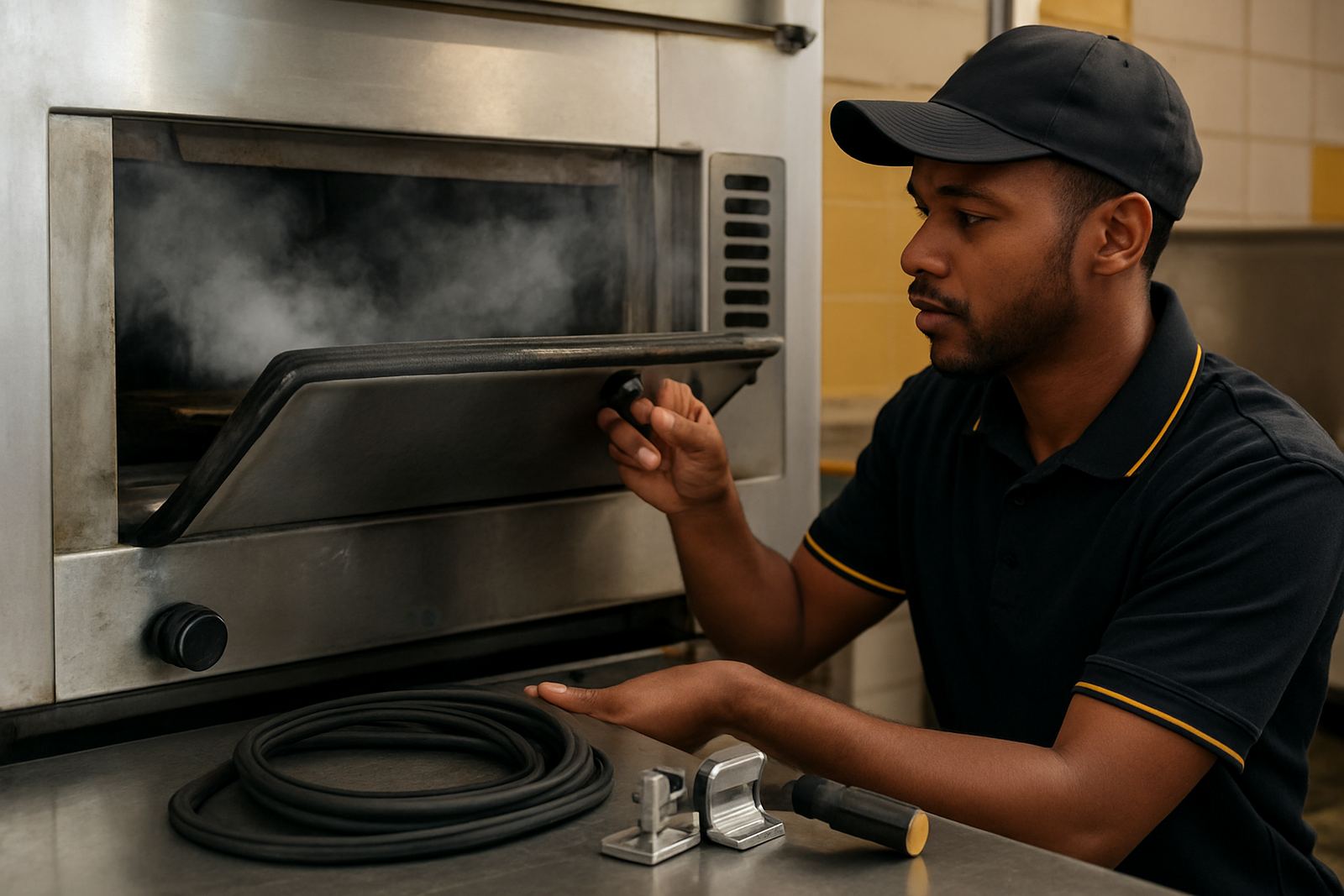
Look for signs like blackened seal corners, steam escaping, water drips from the top edge, or a latch that needs a hard slam. In coastal areas, humidity can soften gaskets faster, while in busy kitchens the door may get knocked enough to twist the hinges. If load-shedding has led to frequent restarts, heat cycling can also shorten seal life.
Inspect the seal before you blame the thermostat
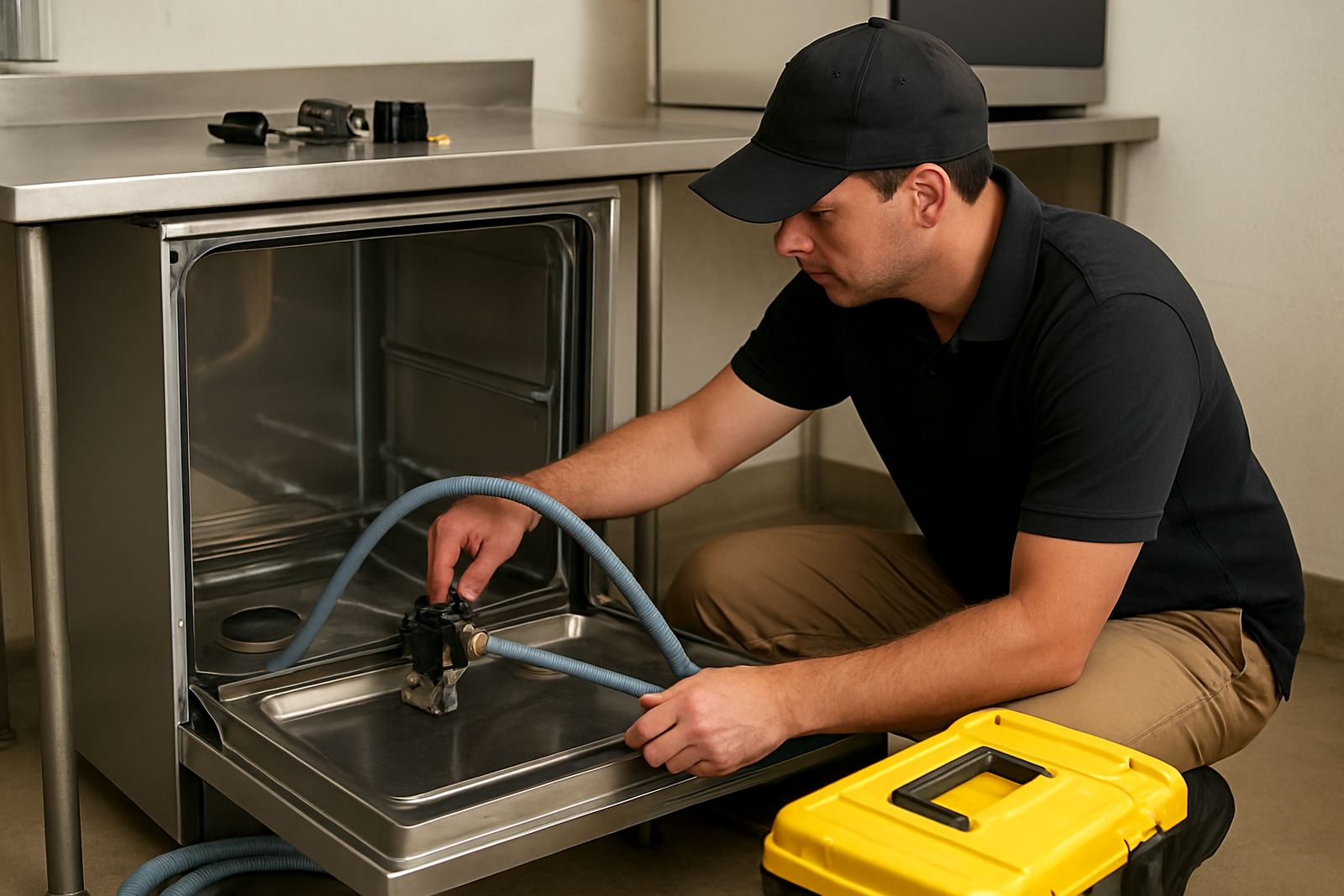
A door seal that has gone hard, split or flattened is the most common cause of heat leaking out. Run your hand around the frame and feel for cold or hot spots where the seal is no longer making full contact. On dishwasher doors, check for cuts, swelling, or a seal that has pulled out of its channel.
- Check the full length of the gasket for cracks, missing sections and glazing.
- Look at the corners first, because they fail early.
- Wipe away grease and food build-up, then test again.
- Compare the door closure after cleaning, sometimes the seal is fine but dirt is stopping it from seating.
If the seal is compressed unevenly or has gone brittle, replacement is usually the proper fix. A quick patch does not hold for long in a hot kitchen, and it can lead to higher electricity use plus more strain on elements and controls.
Check the latch, hinges and frame line
When a seal looks fine but the door still leaks heat, the problem is often mechanical. A loose latch, worn hinge pins or a slightly bent frame can stop the door from pulling in properly. This is common on equipment that has been opened thousands of times every week.
Stand square in front of the unit and watch the door as it closes. It should draw evenly against the frame, with no wobble at the top or bottom. If one side closes first, the door may be hanging out of line. You may also see a shiny rub mark where metal is touching metal, which points to movement or distortion.
- Test for play in the hinges by lifting the open door gently.
- Check that latch rollers, catches and springs are not worn flat.
- Look for bowed panels, especially after a knock from a trolley or pan.
- Make sure screws and mounting points are tight before fitting new parts.
Match the right spare part to the exact model
Door sealing problems are often made worse by the wrong part being fitted. Even a gasket that looks similar can have the wrong profile, length or corner shape. That is why part identification matters before ordering. A unit built for a 600 mm opening may use a very different seal from a 700 mm one, and a fryer lid seal is not the same as an oven door gasket.
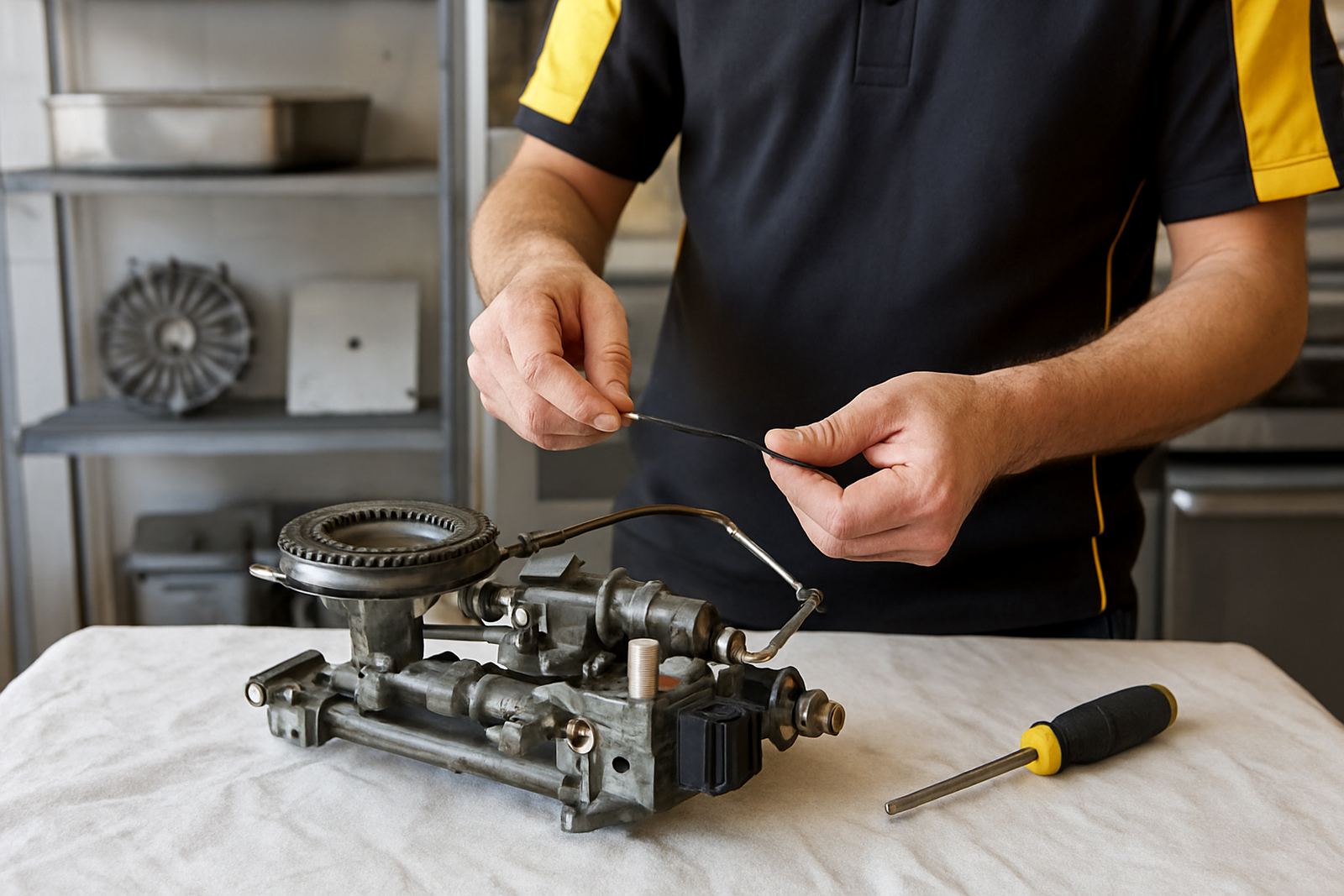
Use the rating plate details, measurements and clear photos of the old part. If the old seal has shrunk, measure the channel or frame as well, not only the removed item. For electrical door systems, check related switches too, because a faulty interlock or door switch can make it seem like heat is leaking when the real issue is poor closure or cycling faults.
When to fit a new seal, hinge or latch
Fit a replacement when the door no longer closes with even pressure, the seal has lost shape, or the latch no longer holds under normal use. On commercial units, a part that is nearly worn out usually fails completely at the worst time, often during the lunch rush or at supper service.
In many kitchens, replacing the gasket and checking the hinges at the same time saves a second callout later. If the frame is damaged, though, do not force a new seal onto a bad surface because it will wear out early again. If there is heat damage around the door edge, also inspect the surrounding insulation and any adjacent wiring for signs of overheating.
Callout, fitting and post-fit checks from Midrand
FoodServ Parts Store dispatches nationally from Midrand, with support for Johannesburg, Pretoria, Durban, Cape Town and Bloemfontein. We help with part identification, compatibility checks, fitting and post-fit testing for ovens, fryers and dishwashers. If a site is in a mall, school, hotel or takeaway kitchen, we can work around access rules and service windows.
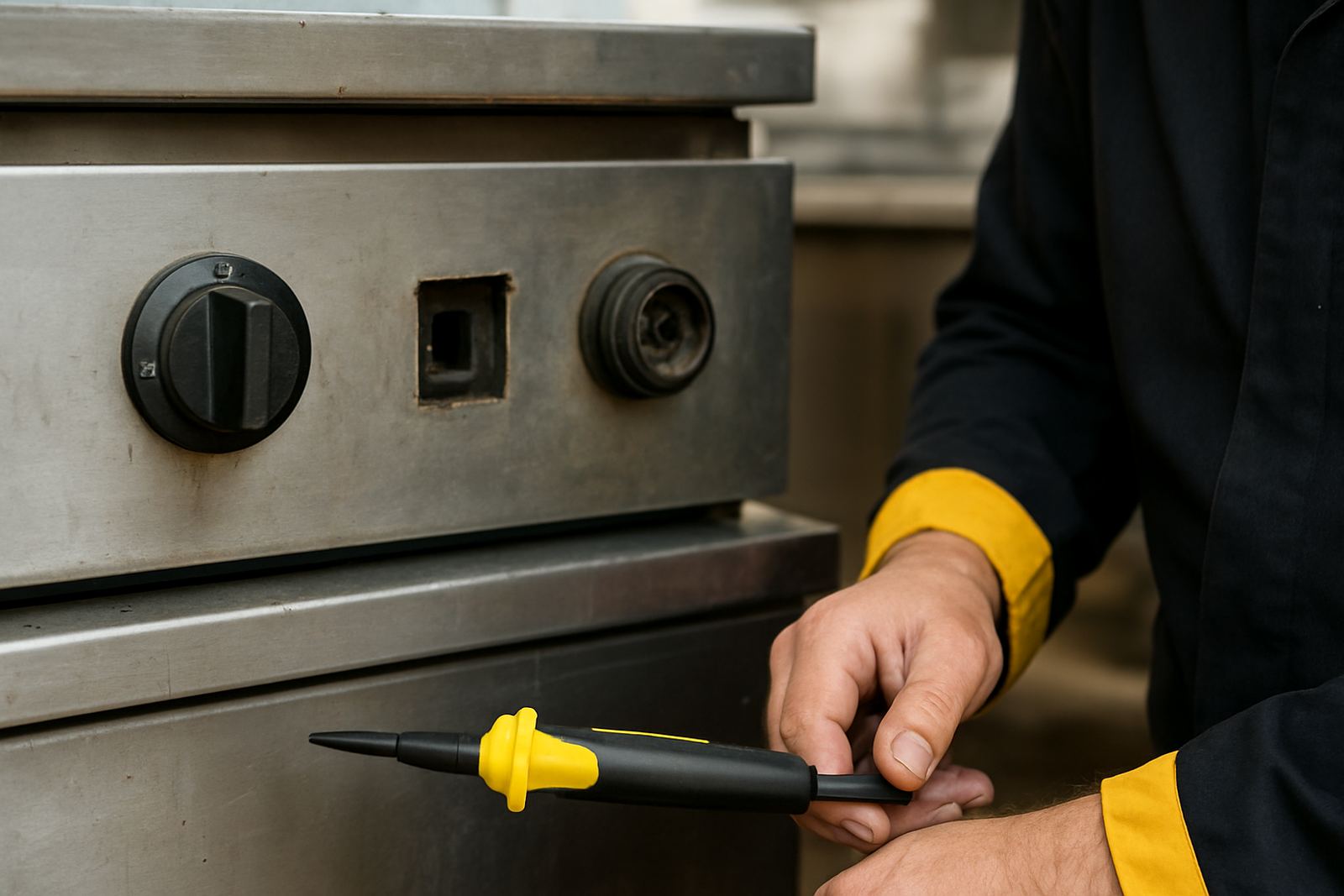
Our team can assist with element fitting, thermostat fitting, gasket fitting, burner fitting, switch panel repairs and dishwasher part fitting. After installation, the last step is to test door pull, heat retention and safe closure so the unit is ready for normal service. If you are unsure whether the fault is the seal, latch or frame, send photos and model details first, then we can advise the next step properly.
FoodServ Parts Store was founded in 2016 and continues the same online parts service from the Midrand base. For quick help, email parts@foodservparts.co.za and include the model number, a photo of the door edge, and a note on what the unit is doing.