Start with the basics at the water point
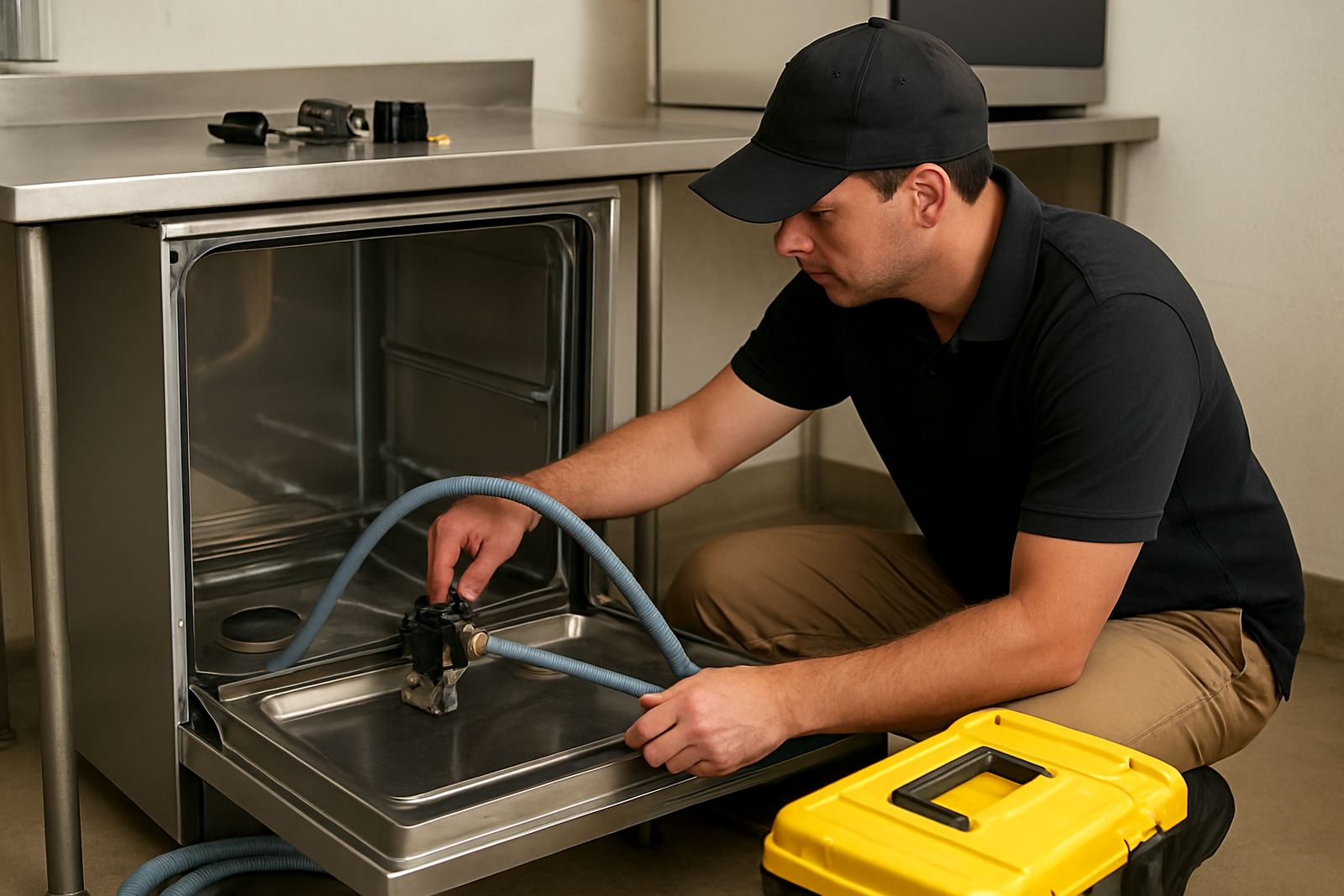
Before opening the machine, confirm that water is actually reaching it. A dishwasher can look dead when the issue is outside the cabinet, such as a closed valve, kinked hose, low pressure, or a blocked strainer at the tap. In South African kitchens, these small supply faults often show up after maintenance work, a municipal shutdown, or a change in water pressure during peak demand.
Check the wall tap, isolation valve, and hose route. Make sure the supply hose is not crushed behind the unit and that the water point is open fully. If the machine has been moved for cleaning, the hose can twist and restrict flow without anyone noticing. In coastal areas, especially around Durban and Cape Town, look for corrosion on fittings and water inlet strainers that are clogged with sand or scale.
- Confirm the tap to the dishwasher is fully open
- Check for a kinked or pinched supply hose
- Inspect the hose washer and inlet screen for dirt
- Make sure water pressure is not too low for the machine
Look at the inlet valve before anything else
The inlet valve is the part that opens and lets water into the dishwasher when the control board sends power. If the machine is waiting but not filling, the valve is one of the first parts to test. A failed coil, blocked valve body, or electrical fault can stop water entry even when the supply is fine.
Listen when the cycle starts. A healthy machine usually gives a clear fill sound. If you hear a buzz but no water, the valve may be stuck or not opening fully. If there is no sound at all, the coil may not be getting power, the connector may be loose, or the control side may be at fault. It is worth checking terminals for heat damage, oxidation, or a plug that has worked loose from vibration.
- Check the valve screen for grit and small scale pieces
- Inspect wiring for heat marks or burnt insulation
- Test whether the valve opens during the fill stage
- Replace the valve if it hums but passes little or no water
On busy sites in Johannesburg and Pretoria, repeated cycling and hard water can shorten valve life, especially where staff rinse off plates heavily before loading.
Make sure the float system is not stopping fill
Many dishwashers use a float or water level switch to stop overfilling. If that float is stuck in the raised position, the machine thinks it already has enough water and will not admit more. Grease, food debris and detergent build-up can hold the float up or slow its movement. This is a common problem when a machine has not been cleaned properly after a heavy service period.
Lift the float by hand and let it drop back into place. It should move freely and return without resistance. If it feels sticky, remove the cover and clean around the float chamber. Check the float switch itself for damage, loose wiring, or a snapped bracket. Some machines fail to fill because the switch is telling the control panel the water level is already correct, when the tub is actually empty.
- Move the float up and down by hand
- Clean away grease around the float housing
- Check the switch for continuity if you have a meter
- Replace cracked floats or bent linkages
Clear filters, strainers and narrow passages
A dishwasher may start a fill but stop short because water cannot pass through blocked filters or a clogged inlet path. Small pieces of broken glass, food scraps and scale can build up in the inlet screen, pump area, or internal filters. This is more common in kitchens that run hard all day and only get a quick rinse at closing time.
Take out the strainers and clean them properly. Do not just splash them with water. Scrub off grease and check for limescale on the mesh. If the machine is in a hard-water area, blocked passages can reduce fill enough that the timer moves on before the tub reaches its proper level. That leads to poor washing, dry spray action, and cold or patchy cleaning.
- Remove and wash all accessible filters
- Check the inlet mesh for sand and scale
- Look for debris in the sump and around the spray arms
- Inspect the water path for narrow blockages
Test the control side and safety switches
If the dishwasher has water pressure and the valve is good, the fault may be in the control side. Door switches, pressure switches, level probes and wiring faults can prevent the fill signal from being sent. A machine with a poor door latch may refuse to fill at all because the safety circuit is open. The same applies if a level sensor is reading incorrectly.
Check that the door closes squarely and the latch engages fully. Then inspect connectors on the control panel and around the base for loose plugs or dampness. In kitchens where steam is heavy, small amounts of moisture can travel into switch terminals and cause strange faults. If the machine fills only sometimes, the issue may be a loose harness rather than a dead part.
Simple fault check before you order parts
Use this quick sequence to avoid guessing. It saves time and helps you fit the correct part first, which matters when a kitchen is under pressure and staff are washing by hand while the dishwasher is down. If you can identify whether the fault is water supply, valve, float, or control related, the repair is usually quicker and cheaper.
- Is the tap open and the hose clear?
- Is the inlet valve clean, powered and opening?
- Is the float moving freely?
- Are filters and strainers clean?
- Is the door latch and level switch working?
If you are in Midrand, Johannesburg, Pretoria, Durban, Cape Town or Bloemfontein, it helps to match the part to the exact machine model before fitting. Even similar looking valves and switches can differ in size, voltage, connector type, and mounting. A wrong part can waste a full shift and still leave the dishwasher dry.
When to replace and when to call for support
Replace a part when it tests faulty, is physically damaged, or is clearly stuck after cleaning. Do not keep forcing a valve open or bypassing a float switch because that can cause overflow, electrical damage, or further breakdown. If the machine still will not fill after the supply, valve, float, and filters are checked, the fault may sit in the wiring, board, or a hidden pressure sensor.
For commercial kitchens, timing matters. A dry dishwasher can slow the whole pass, especially during lunch and dinner rushes. If the machine has repeated fill failures, make a note of the symptom, the cycle stage, and any sounds heard at start-up. That information helps with part identification and gets the repair moving faster.