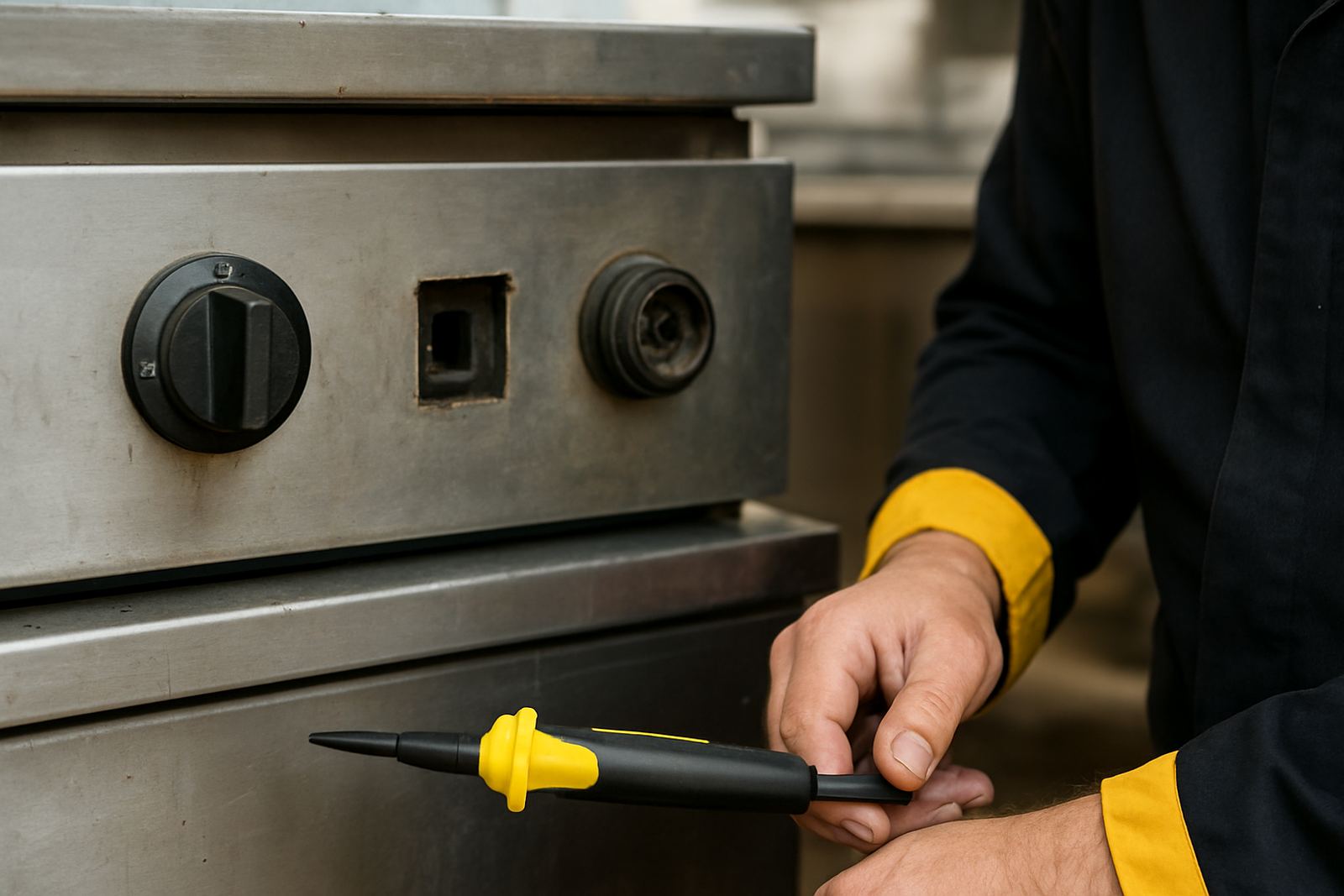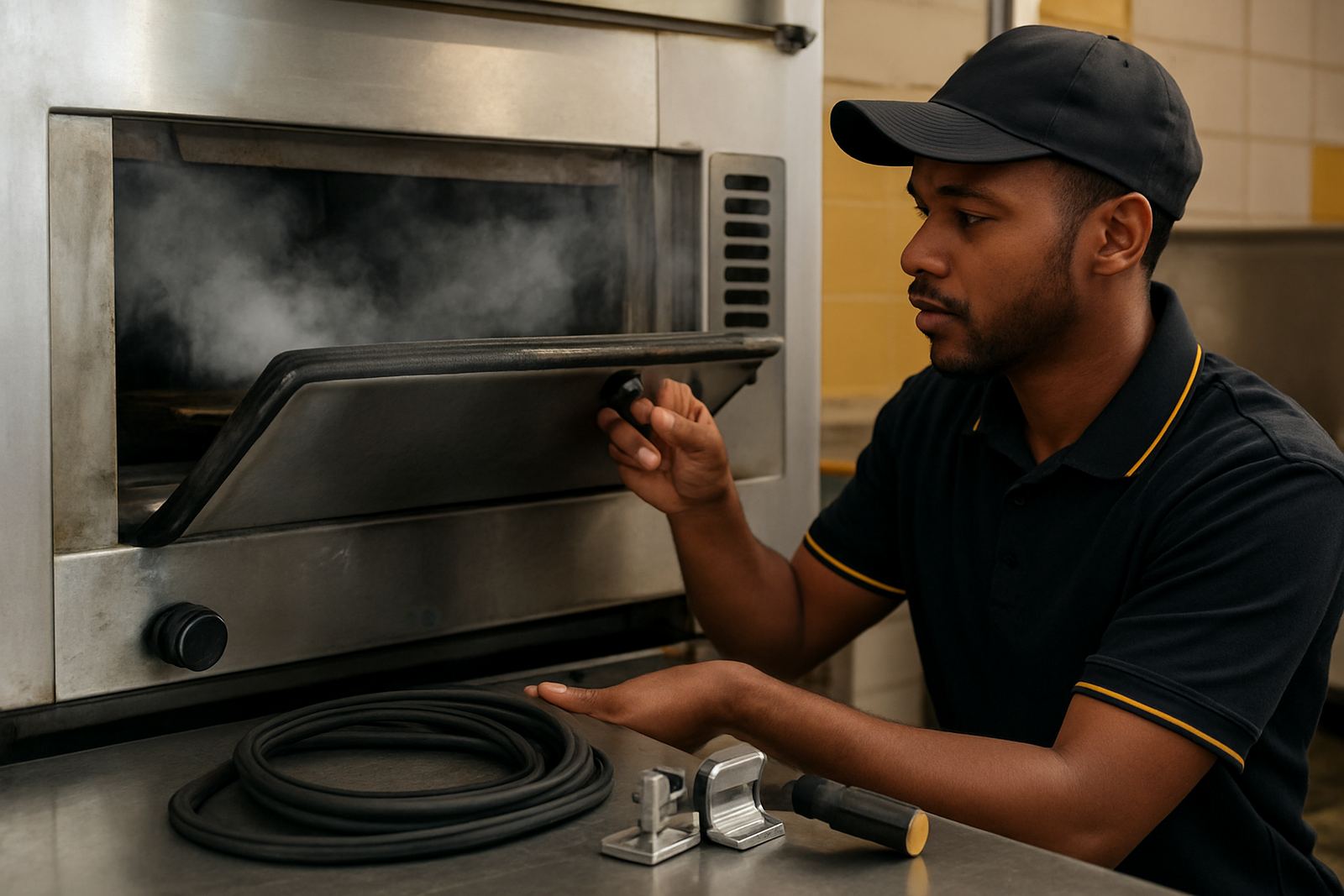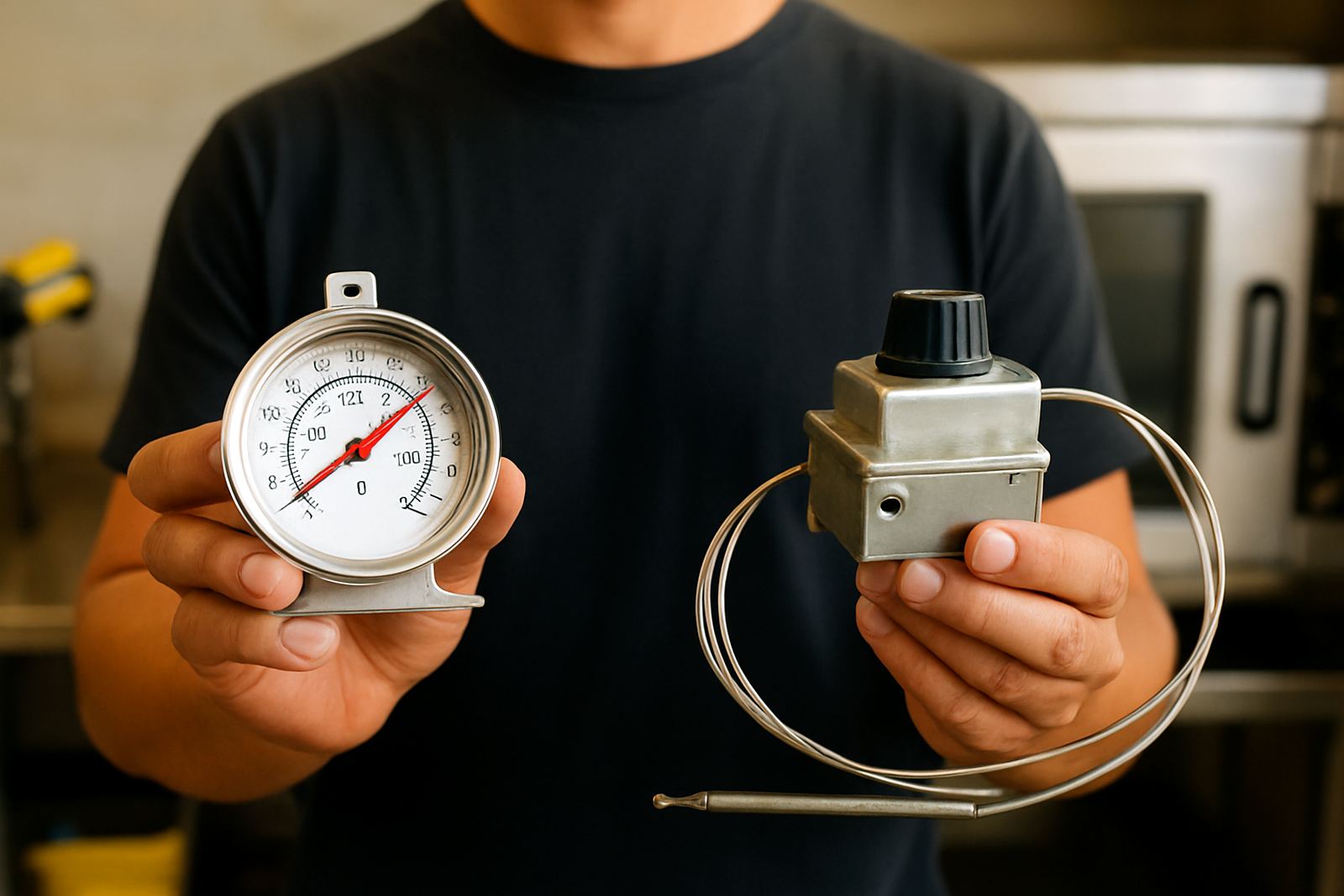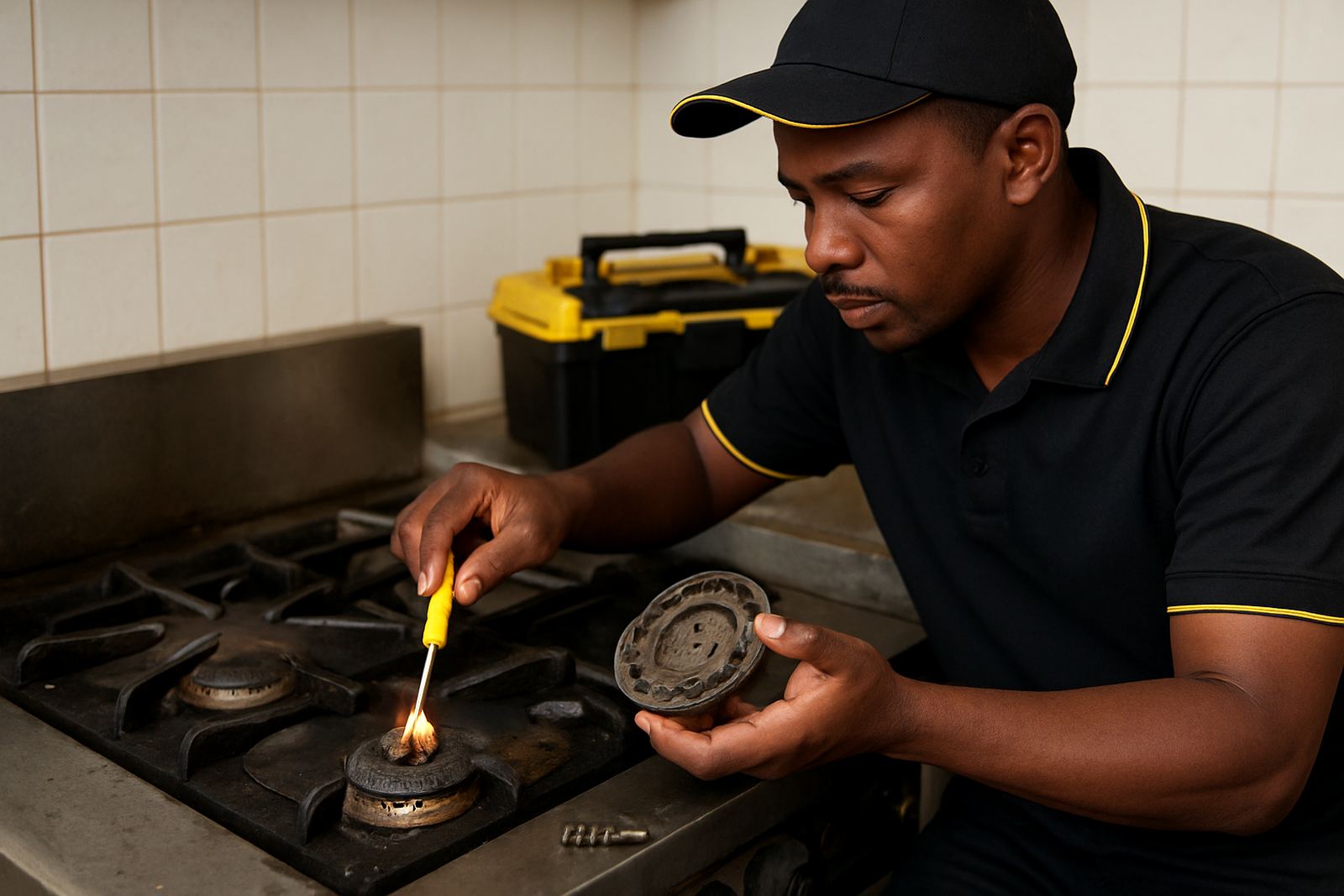
Start with the flame shape and the smell of combustion
Before you strip anything down, look at the flame itself. A healthy flame is steady and even, with a clear blue burn on most commercial gas equipment. If the flame is small, lifting off the burner, yellow at the tips or wavering badly, there is usually a supply or burner fault. If you smell unburnt gas switch the appliance off and isolate the supply first.
On ovens and fryers, weak flame can show up as long heat-up times, uneven cooking or a pilot that keeps dropping out. On dishwashers, the machine may run but never reach the correct wash temperature. That creates repeat calls, wasted gas and unhappy staff in the middle of service.
Check the jet, injector and air mix before replacing parts
Blocked jets are one of the most common causes. Grease, flour dust, rust flakes and even insects can narrow the opening enough to starve the burner. Do not poke the jet with a hard wire, because that can enlarge the hole and change the gas rate. Clean it properly and check for damage with a torch and magnifier if needed.
- Remove power and gas supply before opening the burner section.
- Inspect the jet for dirt, corrosion or visible damage.
- Check the burner venturi for blockages and loose fittings.
- Make sure the air shutter has not shifted out of position.
- Reassemble only when the burner parts are dry and clear.
If the burner is in a coastal kitchen or a site with steam and humidity, corrosion can build up faster than expected. In those cases the jet and burner head may need replacement rather than a quick clean.
Confirm gas pressure at the appliance, not just at the cylinder
Low pressure at the point of use will give a weak flame even when the gas bottle or line looks fine. A full cylinder, a tired regulator, undersized pipework or a partly closed isolation valve can all cut flow. In larger kitchens, pressure drop can also happen when several appliances fire at once during peak trading.
Have the supply checked at the appliance inlet with the correct test gear. If pressure is outside the maker’s range, the burner will never perform properly no matter how many times it is cleaned. That is where fitting the right regulator, hose or pipe section makes the difference.
- Check the regulator rating against the appliance requirements.
- Look for kinks, crushed hoses or loose unions.
- Confirm valves are fully open and not sticking.
- Test pressure under load, not only at idle.
Look for contamination inside the burner assembly
Burner heads, caps and mixing tubes take a beating in commercial kitchens. Grease, detergent residue, sugar spillages and food debris can coat the metal and upset combustion. A burner that has been washed down too hard may also hold moisture inside, which leads to misfiring or a weak lazy flame. Give it time to dry properly before restarting.
Damaged burner ports can make the flame uneven. Cracked castings, warped caps or missing clips will let gas escape in the wrong pattern. That often looks like a weak flame but the real issue is poor burner shape or contaminated parts. If the metal is pitted or distorted, replacing the burner components is usually the cleaner fix.
Use a simple fault checklist before you call for fittings
Most weak flame jobs can be narrowed down with a steady step-by-step check. That saves time for the kitchen team and helps avoid ordering the wrong part. Keep notes on what was cleaned, what was replaced and whether the fault moved after testing.
- Is the flame weak on one burner or all burners?
- Has the issue started after cleaning, a gas swap or a power cut?
- Is the appliance on LPG, natural gas or a mixed site supply?
- Are the jets, thermocouple, burner caps and seals in good condition?
- Does the flame improve after the burner cools and is cleaned?
If you are not sure which part matches your model, send clear photos of the burner, rating plate and existing part. That makes compatibility checks much faster and reduces downtime.
Fit the right spare and test the appliance under working load
Once the faulty part is identified, fit the correct spare and test the appliance as it will be used in service. A burner that looks fine on idle can still fail when the oven chamber heats up or when the fryer is drawing demand. Watch for stable flame, correct ignition and clean burner spread across the full head.
After fitting, check for leaks, confirm the flame is blue and even, and let the unit run long enough to prove temperature recovery. For dishwashers and other heated equipment, post-fit testing matters because a part can appear fine in a quick start-up but still trip or underperform after ten or fifteen minutes. In kitchens from Pretoria to Cape Town, that final check saves another callout later in the week.