What Thermostat Fitting Covers on Site
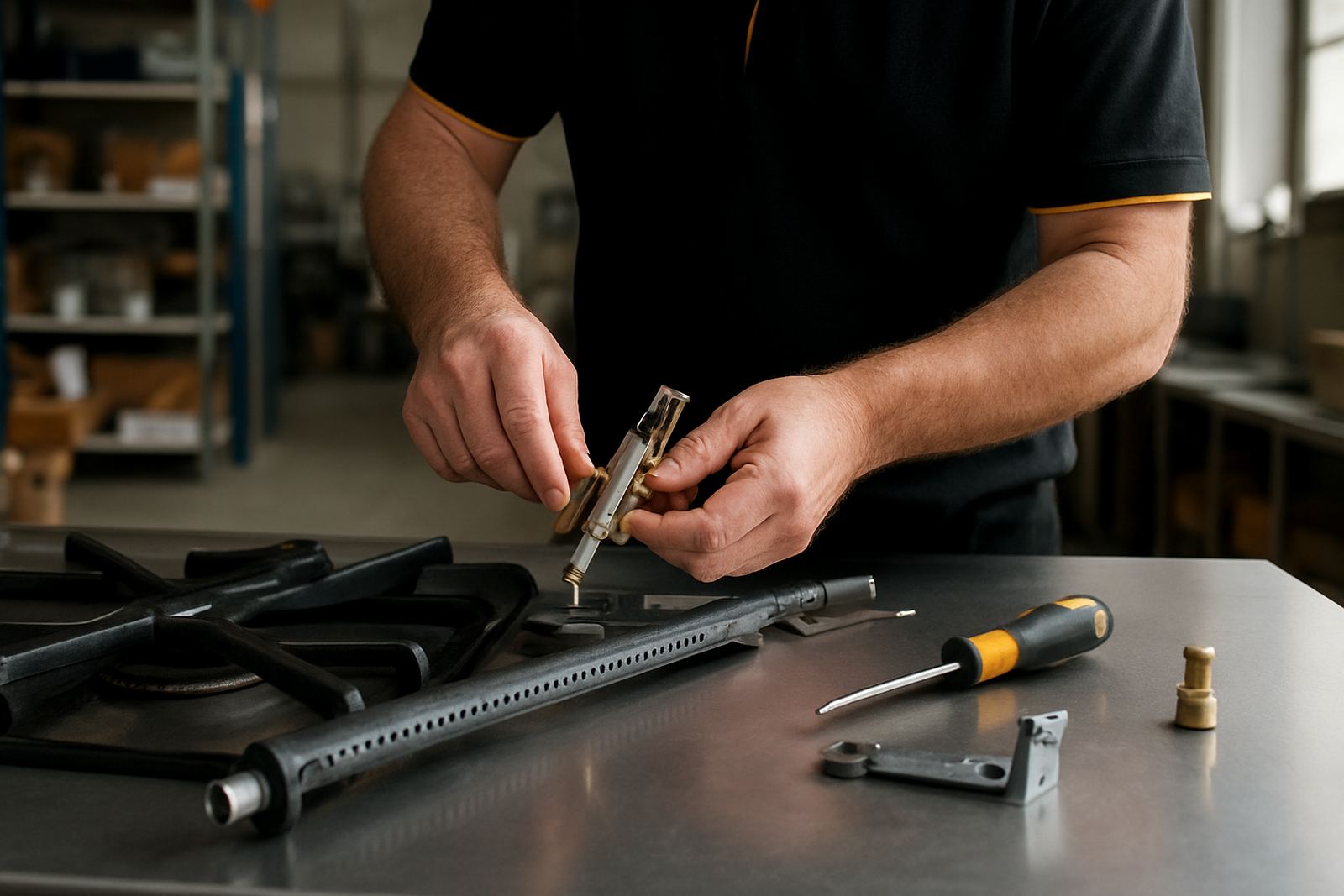
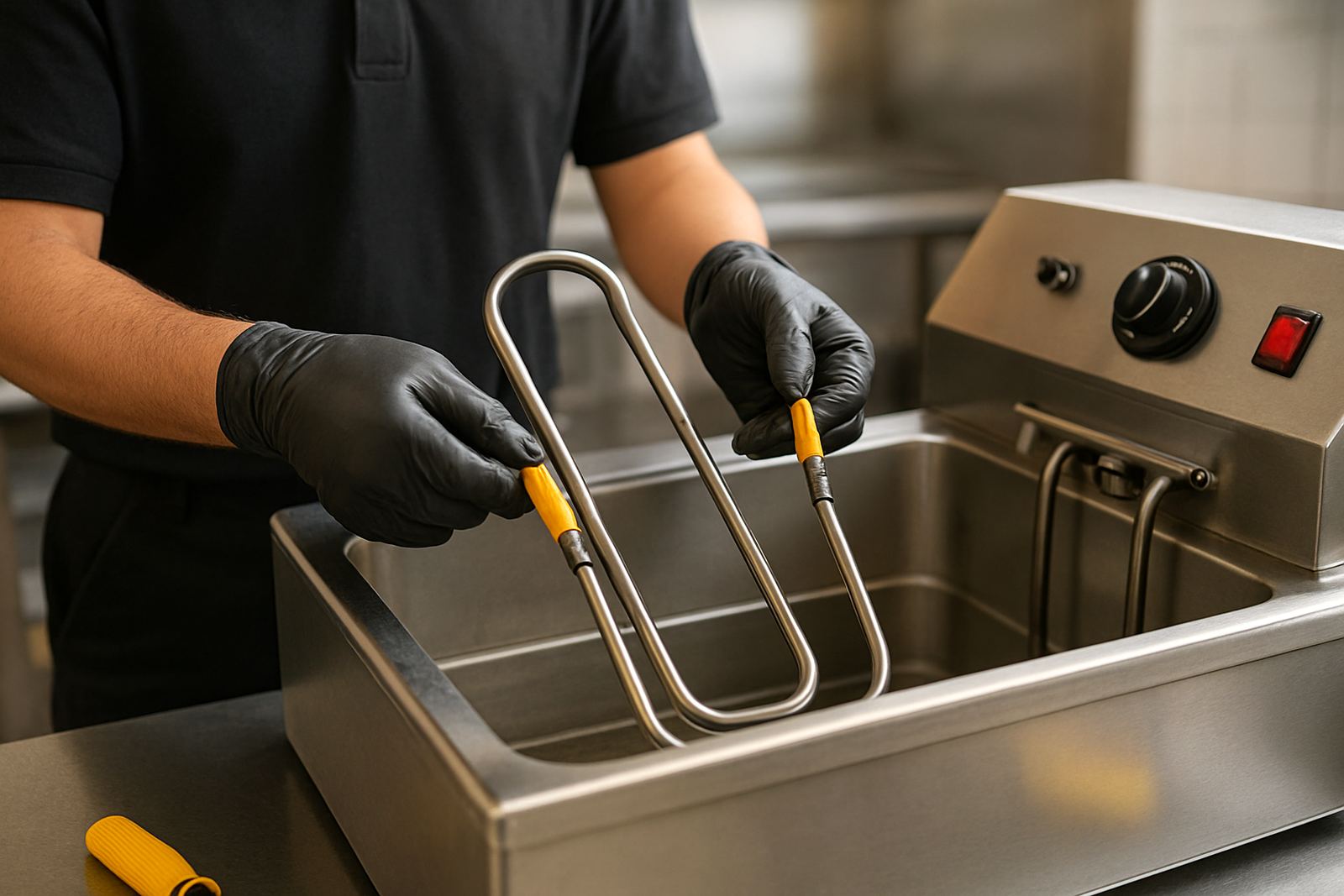
Our thermostat fitting service is for commercial ovens, fryers, bain maries and dishwashers that are running too hot, not reaching temperature, or cycling unevenly. We handle mechanical and capillary style thermostats, plus matching sensor bulbs, clips and mounting hardware where the unit uses them. The aim is simple, fit the part properly, test the control range, and leave the appliance ready for normal service.
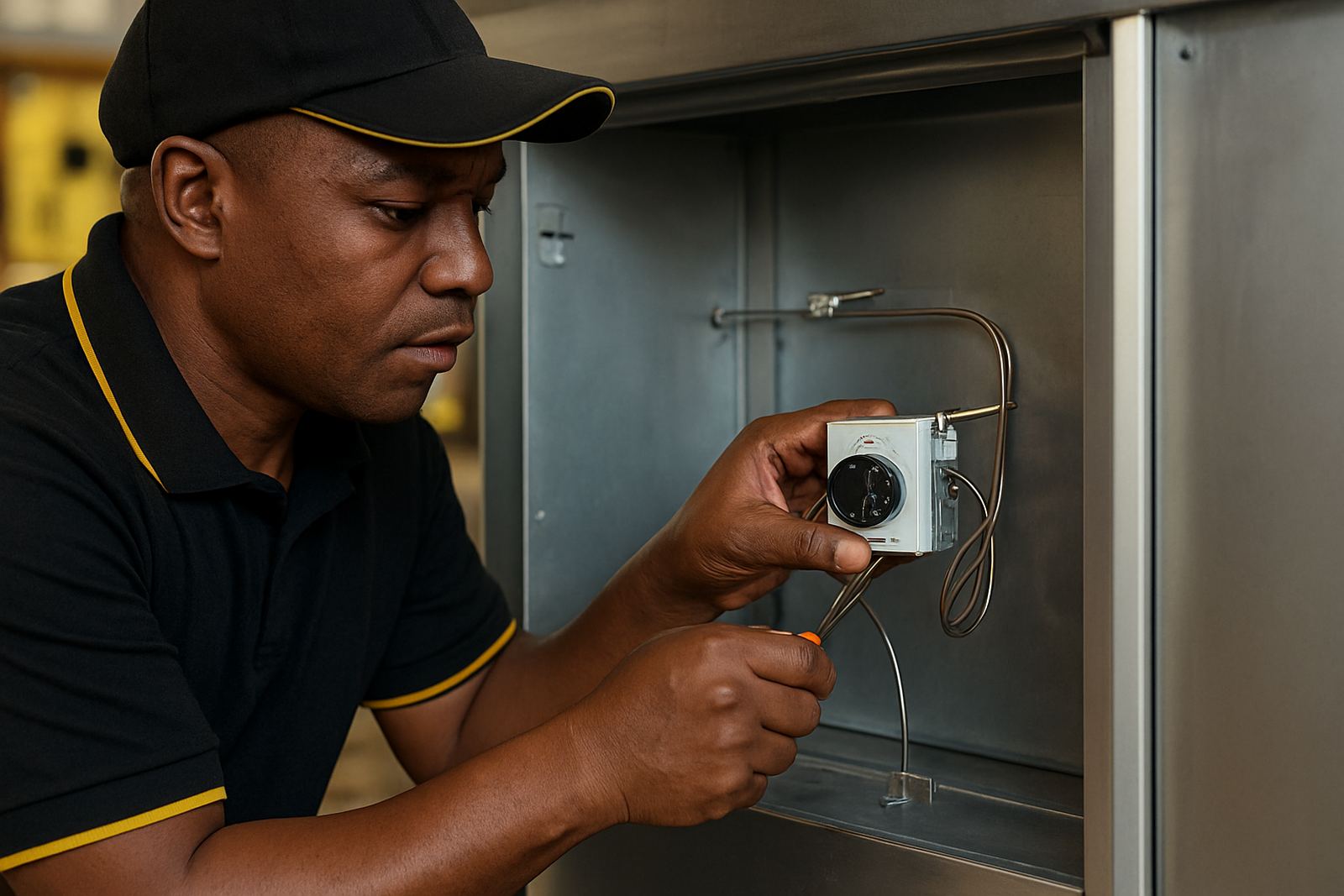
Fitting is not only about swapping a part. The capillary tube has to be routed without kinks, the bulb must sit in the correct pocket or well, and the dial has to read correctly after refitting. On some units a small offset can throw the whole cycle out by 10 to 20 degrees C, which means wasted gas or power and food that is not cooking right.
- Removal of faulty thermostat assemblies
- Capillary routing and securing
- Sensor bulb positioning and clamping
- Dial alignment and temperature mark checks
- Cut-out verification and basic safety testing
How We Fit and Test the Replacement
We start with part identification and a compatibility check against the equipment model, serial plate, and control style. If the thermostat is in stock we can move quickly, but on older ovens or imported fryers we first confirm capillary length, probe shape, thread size, and operating range. That saves repeat visits and the wrong part being fitted.
The fitting process is handled in steps so nothing is rushed:
- Isolate power, gas if applicable, and allow the appliance to cool down
- Remove control knobs, bezels, and access panels
- Disconnect the faulty thermostat and inspect for heat damage or loose terminals
- Fit the new thermostat and route the capillary neatly away from sharp edges
- Align the dial to the correct temperature reference point
- Run cut-out and recovery checks, then confirm operation under heat
Where a fryer or oven has had repeated thermostat failure, we also look for poor earthing, burnt connectors, blocked ventilation, or sticky relays that can cause the new thermostat to fail early.
Thermostat Specs We Check Before Fitting
Commercial kitchen thermostats are not one-size-fits-all. Some units use narrow control bands, while others need a wider operating range for heavy daily use in school kitchens, takeaways, hotels, and canteens. We check the key specs before fitting so the new part suits the duty cycle and the product temperature needs. If a unit is used in humid coastal conditions, we also check for corrosion on terminals and moisture ingress around the control panel.
- Operating range, such as 50 to 320 degrees C depending on the appliance
- Capillary length and bulb diameter
- Sensor type, mechanical or probe based
- Mounting thread, bracket, or clip style
- Terminal layout and connector size
- Cut-out point and reset behaviour where fitted
A correctly matched thermostat gives steadier cooking, fewer callbacks, and less product loss. It also makes life easier for kitchen staff because the knob setting actually means something after the repair, not just a best guess.
Turnaround Across Midrand and Major Routes
For parts collected from our Midrand depot, many thermostat jobs can be turned around same day or next day, depending on stock and access to the appliance. Nationally, we dispatch replacement parts to Johannesburg, Pretoria, Durban, Cape Town and Bloemfontein, with timing based on courier service levels and site location. If the unit is on an operating kitchen line, we plan the visit to reduce downtime and get you back into production as quickly as possible.
Urgent breakdowns are common after load-shedding or power spikes, especially on electronic control panels and older fryers. We aim to move fast, but the real speed comes from correct diagnosis first. A thermostat problem can look like a faulty element, switch, or relay, so we check the whole temperature control path before fitting a new part.
What the Pricing Approach Includes
Pricing depends on the appliance type, the thermostat spec, whether the part is supplied by us, and whether the fitting is onsite or workshop based. We keep it practical: you pay for the correct part, the labour involved, and any extra materials needed for safe installation. There are no vague bundles with hidden add-ons. If we need to inspect, quote, and return, we say so up front.
- Part supply or fitting only, depending on your needs
- Labour for removal, installation and testing
- Travel for onsite work in Metro and outlying areas
- Minor consumables such as clips, terminals, heat sleeve, or sealant where needed
For kitchens with several outlets, we can group work to lower call-out costs. If more than one unit is down, it is often more economical to have thermostats checked together instead of sending separate technicians out for each fault.
Maintenance Intervals That Help Thermostats Last
Most thermostat failures do not happen without warning. Drift, slow recovery, uneven heating and control knobs that feel loose are usually early signs. In busy kitchens we recommend checking temperature controls at least every 6 months, and sooner if the appliance runs all day or is exposed to steam, grease, and heavy cleaning.
Good maintenance includes keeping control panels dry, cleaning grease build-up around the front face, and avoiding hard knocks on the knob area. On dishwashers, steam and detergent vapour can work into the control housing if seals are worn. On fryers, heat stress and oil splash can age the wiring fast, so the thermostat and nearby terminals should be inspected when the unit is serviced.
- Check temperature accuracy every 3 to 6 months
- Inspect capillary routing after major cleaning or moving the unit
- Replace brittle seals, gaskets, or damaged terminals early
- Log repeated trips or overheating so a pattern is easy to spot
If the same thermostat keeps failing, there is usually a cause in the appliance and not just the part itself. We help trace that cause so the repair lasts.
Key facts
| Service | Thermostat fitting for ovens, fryers and dishwashers |
|---|---|
| Key checks | Capillary routing, dial alignment, cut-out verification |
| Typical temperature range | 50 to 320 degrees C depending on equipment |
| Turnaround | Same day or next day for in-stock parts in Midrand |
| Coverage | National online with Midrand dispatch and onsite support |
| Contact | parts@foodservparts.co.za |