What a burner head does in daily kitchen use
A burner head sits at the business end of a gas burner assembly and shapes how gas and air are distributed before ignition. When it is in good condition, the flame spreads evenly across the ports, giving steadier heat and less hot spotting under pots, pans, fryer pots and oven chambers. If the head is cracked, warped or blocked with carbon, the flame can lift, burn yellow, or cut out when a kitchen is busy and the gas line pressure shifts.
In commercial kitchens around Johannesburg, Pretoria, Durban and the coastal strip, this part works hard. Grease, salt air, cleaning chemicals and repeated heating cycles all shorten service life. A replacement burner head restores the flame pattern without forcing you to replace the whole burner assembly, which can save time and money during a breakdown.
Sizes, layouts and fit options to compare before ordering
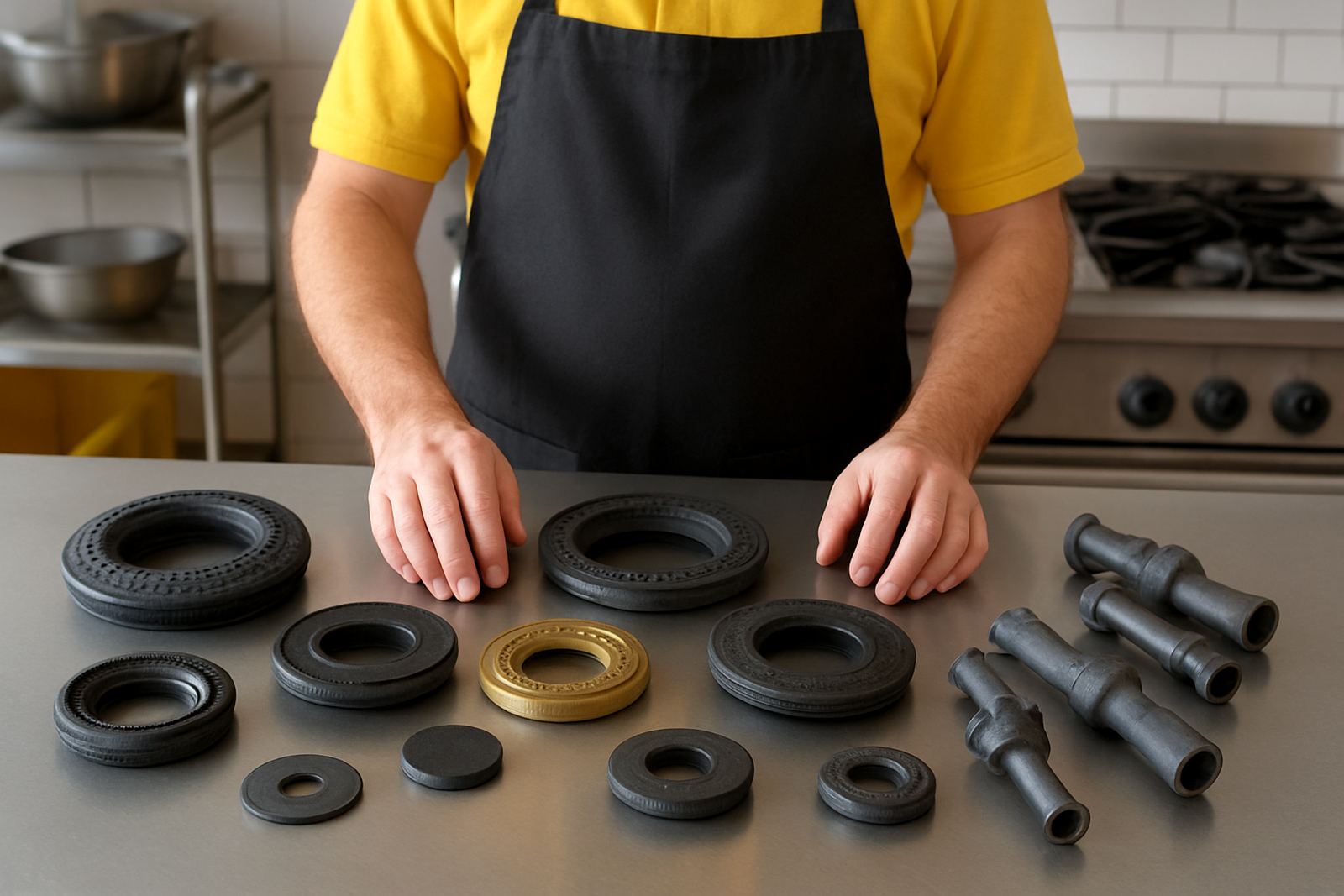
Burner heads are not one-size-fits-all. The right match depends on the burner style, the number of ports, the diameter of the head and the way it locks into the burner body. Some units use a round head with a central fixing point, while others use a shaped head that sits under a cap or ring. On heavier equipment, the flame ports may be spaced wider to suit higher gas flow rates.
- Common diameters: 60 mm, 80 mm, 100 mm and larger commercial formats
- Port styles: fine multi-port, standard ports, and heavier duty openings
- Mounting: centre screw, clip-on, seated ring or fixed base styles
- Material options: cast metal, plated metal, and heat-resistant alloy types
- Application fit: ovens, fryers, stock pots, griddles and selected dishwashing heaters
When a head looks close but not exact, it is worth checking the measurements rather than guessing. A mismatch can change flame spread, waste gas and affect ignition reliability, especially on equipment that sees full-day use.
Where replacement burner heads suit best
These parts suit commercial gas equipment that needs a clean, even flame to hold temperature within a working kitchen. In practice, they are often used on ovens that must recover heat after the door opens, fryers that need a stable boil line, and washer units that rely on consistent gas heat for water temperature. In takeaway shops, school kitchens, canteens and small hotels, a tired burner head often shows up as slow heat-up times or uneven cooking on one side of the chamber.
They are also useful in coastal areas where salt and moisture can shorten the life of burner components. In Durban, East London and other humid locations, corrosion can start around the ports and fixing points. If the flame has started to roar, pop, pulse or burn patchy, the head should be checked along with the injector, air shutter and gas supply pressure.
Installation and gas supply points to keep in mind
Burner head fitting should be done by a competent technician who understands commercial gas equipment and local safety requirements. Before fitting, isolate the appliance, shut off the gas supply and allow the unit to cool fully. The burner body, injector and air intake must be clear of grease, rust flakes and old sealant so the new head seats properly. If the underlying assembly is damaged, a new head alone will not fix the fault.
- Check inlet pressure against the appliance spec before commissioning
- Make sure the injector size matches the burner output
- Confirm the flame is blue, stable and evenly distributed after fitment
- Test for leaks with approved methods after reassembly
- Recheck ignition and flame hold under normal load
Gas work in kitchens also needs to line up with site safety rules, especially in malls, schools and municipal buildings where inspection records may be required. If you are fitting after load-shedding, allow time to confirm the ignition system, because weak batteries, damaged electrodes or low supply pressure can look like a burner head fault when it is really another part in the chain.
Care, cleaning and service life in South African conditions
Burner heads last longer when they are cleaned as part of normal kitchen servicing. Carbon build-up, flour dust, oil mist and cleaning residue can block the flame ports and change the burn pattern. A soft brush, careful wiping and routine inspection usually keep them in service better than harsh scraping. On plated or treated heads, abrasive pads can strip the surface and invite faster corrosion.
For kitchens near the coast, or where steam and detergent are part of the day-to-day cleaning cycle, it helps to inspect burner heads more often. A quick look for pitting, warped edges or blocked ports can prevent a service call later. If the flame is lifting off the head or leaving black marks on pans or oven surfaces, that is a sign the part needs attention or replacement.
- Clean ports regularly, but do not enlarge them
- Inspect for rust, cracks and distortion after heavy use
- Keep spillages and grease from hardening on the burner body
- Replace heads that no longer hold a steady blue flame
What to check when ordering the correct replacement
Getting the right burner head starts with a few clear measurements and a good photo of the old part. The best checks are the diameter, fixing style, port pattern and the appliance make or model number where available. If the old head has burnt away at the edge or snapped at the fixing point, measure the matching burner body as well, not only the damaged part. That avoids ordering something that looks right but sits loose or seals badly.
It also helps to note the appliance type and duty cycle. A fryer head does not always match an oven burner, and a part used in a high-output line may be different from a lower-output warming unit. Send the model details, a clear image of the burner top, and any old part numbers to parts@foodservparts.co.za, and the team can assist with compatibility checks before dispatch from Midrand.
- Measure outer diameter and fixing centres
- Confirm appliance type and gas type
- Note the number and layout of flame ports
- Check whether the head sits under a cap or ring
- Share photos of the existing burner setup
Parts support, dispatch and post-fit checks
FoodServ Parts Store supports national orders from the Midrand base, with coverage for Johannesburg, Pretoria, Durban, Cape Town and Bloemfontein. If you are replacing more than one part during the same service call, it is often worth checking the injector, igniter, thermocouple and gas valve while the unit is open. That saves repeat labour and helps the appliance return to service properly first time.
Where needed, the team can assist with part identification, compatibility checks and post-fit testing. That is useful on busy sites where equipment cannot stay offline for long, and where a burner fault may be part of a wider service issue rather than a single broken component. A correct burner head should give a clean blue flame, even spread and dependable ignition, with no lifting, popping or heavy yellowing.
Key facts
| Product type | Replacement burner heads for commercial gas equipment |
|---|---|
| Typical fitment | Ovens, fryers, griddles, stock pots and selected dishwashers |
| Common sizes | 60 mm, 80 mm, 100 mm and larger commercial formats |
| Material | Cast metal or heat-resistant plated metal, depending on model |
| Installation note | Fit by a competent gas technician and test for leaks after installation |
| Dispatch base | Midrand, with national delivery across South Africa |