What a door gasket does in a busy kitchen
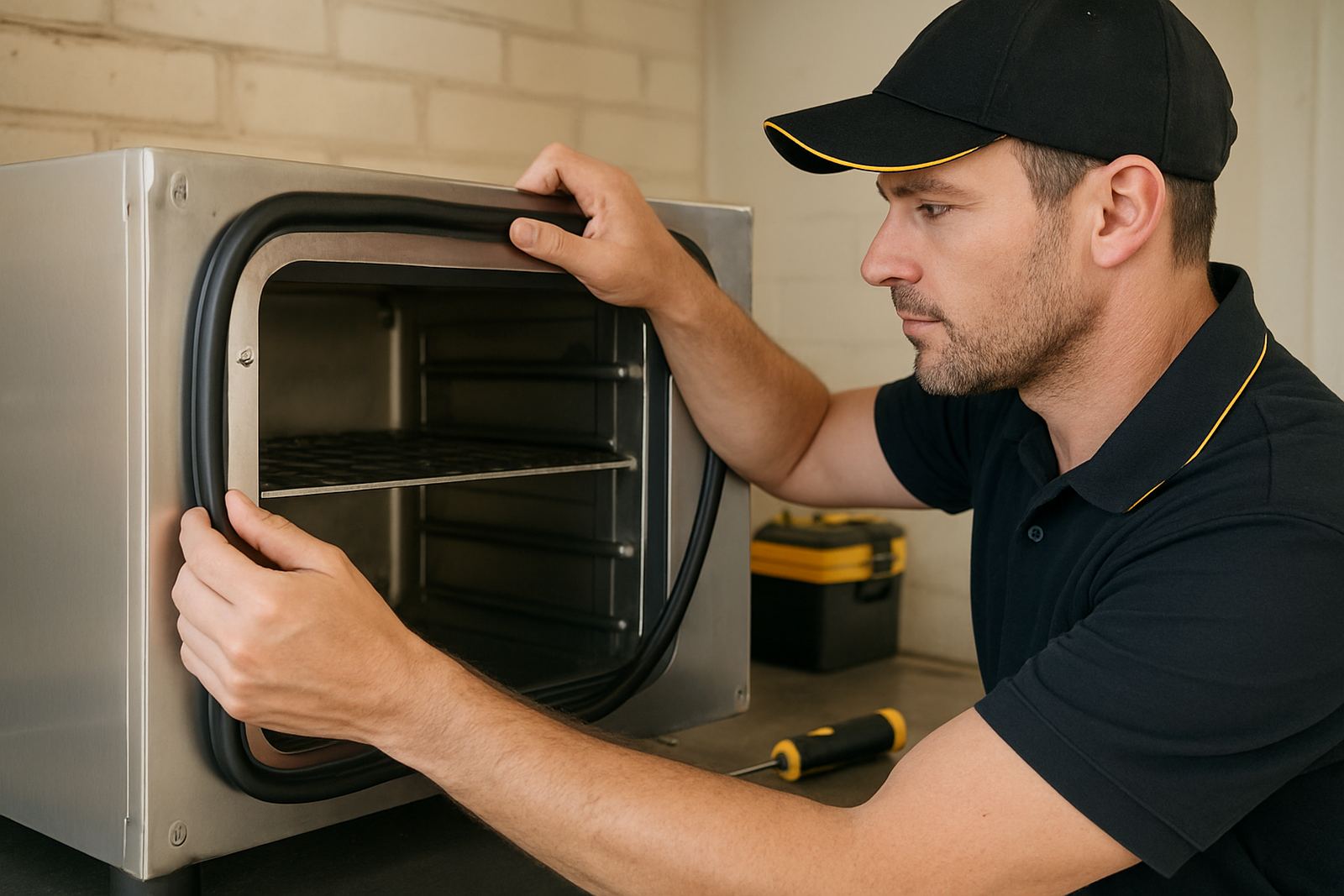
A door gasket is the sealing strip that runs around the edge of an oven or hot cabinet door. Its job is to close the gap between the door and the body of the unit so hot air stays inside and outside air stays out. When a gasket is worn, flattened or torn, the appliance works harder, temperature swings become more common, and power or gas use can climb. In a kitchen that runs from breakfast through supper, that extra loss shows up fast.
For bakeries, takeaway stores, hotel kitchens and contract caterers, a good seal matters as much as the heating element or burner. A door that does not seal properly can lead to uneven cooking, longer warm-up times and more strain on thermostats, fans and hinges. In humid coastal areas like Durban or Gqeberha, gaskets can also age faster if they are exposed to constant steam and regular wash-downs.
We stock replacement gaskets for common commercial oven and hot cabinet applications, including units used in food prep areas, holding cabinets and warming lines. The right profile, corner shape and length must match the door frame, otherwise the seal will not sit correctly and it may pull loose after a few heat cycles.
Sizes, profiles and material options to match your unit
Door gaskets are not one-size-fits-all. They are supplied in different lengths, widths, profiles and fixing styles depending on the make and model of the equipment. Some are fitted into a channel, others clip into a groove, and some seal with a magnetic strip or push-in edge. Getting the profile right is just as important as getting the length right.
- Lengths: supplied by the metre or cut to match a full door frame
- Profiles: square, bulb, lip, channel-fit and push-in types
- Materials: heat-resistant silicone, rubber blend or high-temp composite
- Temperature range: selected for oven heat, holding heat or light-duty warming use
- Colour: commonly black or grey for commercial units
- Fixing style: clip-in, slide-in, glued, or retained by a gasket carrier
For hot cabinets and holding units, the seal usually needs to stay flexible over long periods of moderate heat. For ovens, the gasket must handle repeated high heat and door slamming without hardening too quickly. If you are ordering for older equipment, check whether the existing gasket has a corner moulding or a joined end. That detail can change the fit completely.
Where these door seals are used
These gaskets suit commercial kitchen equipment that needs a tighter door seal to keep temperatures steady. They are commonly used on convection ovens, static ovens, proving cabinets, hot cupboards, holding cabinets and some undercounter heated units. In kitchens with load-shedding backup, a good seal can help equipment recover temperature faster after power returns.
They are also useful where staff open and close doors all day. A canteen in Pretoria, a school kitchen in Bloemfontein or a fast-moving deli in Johannesburg may open an oven or cabinet dozens of times during a shift. That repeated use can flatten the old seal and leave it brittle around the corners. If steam escapes or the door needs to be pressed shut harder than before, the gasket should be checked.
- Ovens used for roasting, baking and reheat cycles
- Hot cabinets and plated meal holding units
- Proving and warming cabinets
- Food service lines in hotels, hospitals and staff canteens
- Back-of-house kitchens with frequent door opening
Fitting, power checks and what to expect on site
Most gasket replacements are straightforward, but the door should be inspected before fitting. A worn hinge, bent frame or damaged latch can stop a new seal from working properly. If the door is out of square, the new gasket may compress unevenly on one side and leave a gap on the other. That is why a quick check of the frame, hinge alignment and latch pressure is worth doing before the new part goes on.
Power and gas supplies do not normally connect to the gasket itself, but the appliance should be isolated before any work starts. For electric ovens, the supply must be switched off at the isolator and the unit left to cool. For gas equipment, the gas valve should be closed and the area ventilated before fitting begins. If the door seal sits close to the heating chamber, the unit can retain heat for a while after switch-off, so do not rush the job.
Our team can help with compatibility checks, element fitting, thermostat fitting and post-fit testing when needed. If the gasket is part of a larger fault, such as heat loss, slow recovery or poor door closure, it helps to look at the full unit rather than the seal alone.
Care, cleaning and when to replace the seal
Door gaskets last longer when they are cleaned gently and kept free of baked-on grease. Harsh scrapers, strong chlorine cleaners and rough cloths can damage the surface and make the material harden sooner. A soft cloth with warm water and mild degreaser is usually enough. On equipment in coastal kitchens, regular cleaning helps reduce the effect of salt air and moisture on the seal and the door frame.
Replace the gasket when you notice cracking, splits, a shiny flattened edge, loose corners or steam escaping from the door line. If the cabinet feels hotter on one side than the other, or the oven takes longer to reach temperature than it used to, the seal may be part of the problem. In some cases the old gasket still looks acceptable but has lost its spring. That can be harder to spot, so a simple finger press test helps: if the seal does not bounce back, it may be due for replacement.
- Check weekly for tears, hard spots and loose joints
- Wipe away grease before it builds up on the seal line
- Do not slam the door shut
- Check latches and hinges during routine servicing
- Replace sooner if heat loss affects cooking times or holding temperature
What to check before ordering a replacement gasket
To make sure the part fits first time, gather the model details and compare the old gasket carefully. If the old seal has stretched, measure it when laid flat and do not rely only on the worn length. Take note of the fixing style, corner shape, profile width and any join in the rubber. A quick photo of the door edge often helps when the original part number is missing.
Useful order details include the appliance type, door opening size, the number of sides on the seal, and whether the gasket sits on the door or the cabinet body. If the unit is used in a bakery, restaurant, butcher shop or school kitchen, mention that as well because the heat duty and opening frequency can help narrow down the correct option. When in doubt, send the old gasket, or clear pictures of the door edge, to our team for identification.
FoodServ Parts Store dispatches from Midrand and supports customers nationally, including Johannesburg, Pretoria, Durban, Cape Town and Bloemfontein. If you need help matching a door seal to an oven, warmer or hot cabinet, our parts team can check the fit before you order, which saves time and avoids another return trip.
Key facts
| Product type | Replacement door gasket for commercial ovens and hot cabinets |
|---|---|
| Common fitment | Ovens, hot cabinets, holding cabinets, warming units |
| Material options | Heat-resistant silicone, rubber blend, high-temp composite |
| Fixing styles | Push-in, clip-in, slide-in, glued or carrier-mounted |
| Typical supply | Per piece, cut length, or by the metre depending on profile |
| Support available | Part identification, compatibility checks, fitting and post-fit testing |