What a rocker switch does on kitchen equipment
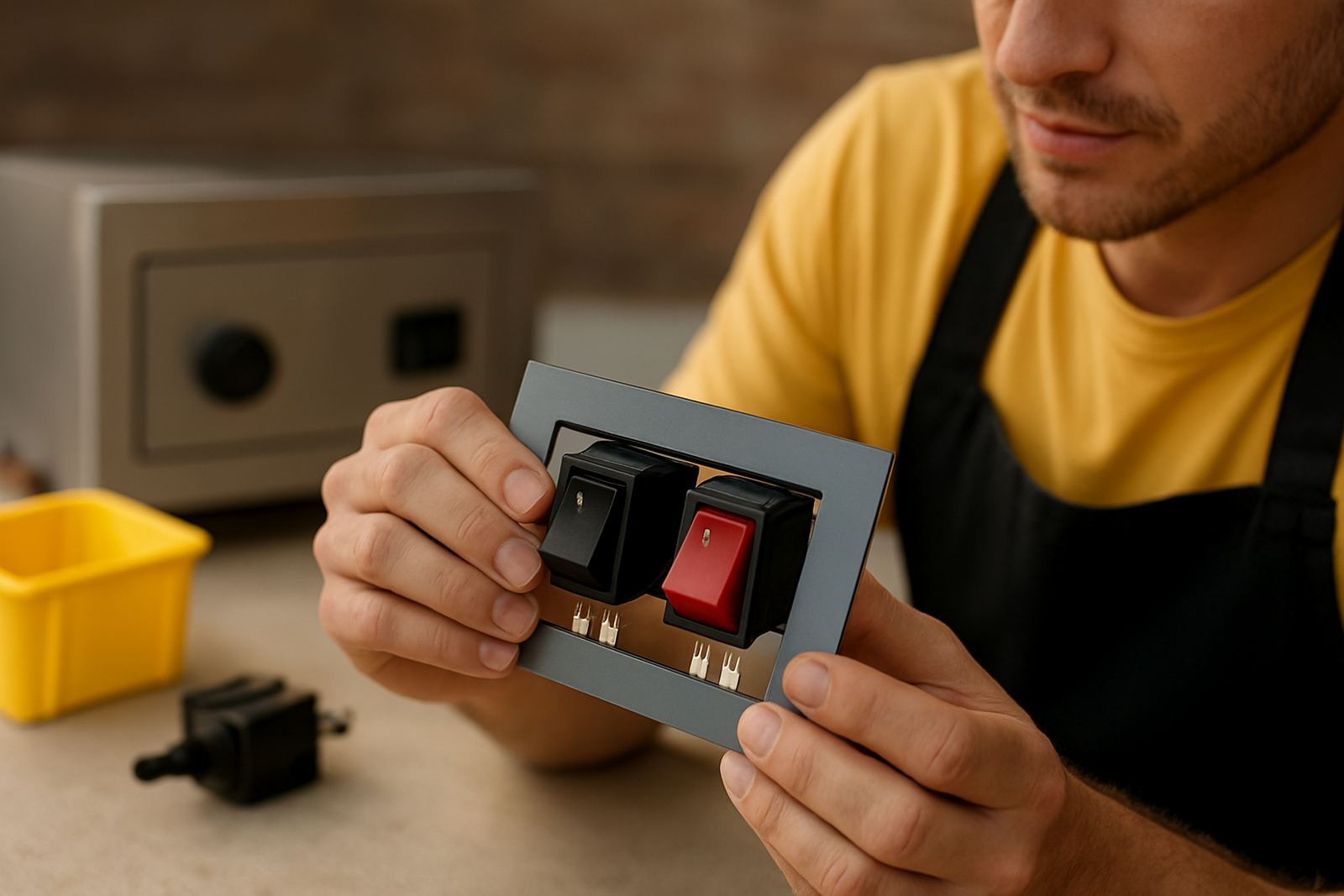
A rocker switch is the on and off control you see on many commercial ovens, fryers, hot cupboards and dishwashers. It works by opening or closing an electrical circuit with a simple press at one end of the switch, so the operator can bring a heater, pump, lamp or auxiliary function into service without handling loose wiring.
In a kitchen, the switch often carries a daily load of heat, steam, cleaning spray and constant finger traffic. That is why the body, terminals and actuator need to match the appliance and the duty cycle. A switch that is fine on a light indicator circuit may fail early on a heating load, especially where power dips, load-shedding restarts or loose connections cause arcing.
Sizes, ratings and common options
Rocker switches are not all the same. The visible size, panel cut-out, terminal type and electrical rating must line up with the appliance. Most commercial units use rectangular panel-mounted switches with clip-in or screw-fixed bodies, and the actuator may be marked with a line, lamp symbol or plain on off positions.
- Panel cut-out sizes commonly range from about 19 x 13 mm to 30 x 22 mm
- Typical ratings include 16A, 20A or 25A at 250V AC, depending on the load
- Some switches are single pole, others double pole for safer isolation
- Illuminated versions are used where the operator needs a clear status light
- Terminal types may be quick-connect spades or screw lugs
- Heat resistant bodies suit oven and fryer fronts better than light duty plastic
If the old switch was fitted behind a fascia with a bezel or weather seal, match that detail as well. A switch that is 1 mm too wide can sit proud, rattle, or simply not lock into the panel correctly.
Where rocker switches suit best
These switches are used across many commercial appliances where a simple manual control is needed. On ovens, they may control cavity lamps, fan motors, heating stages or isolating functions. On fryers, they are often used for mains control or ancillary items like lights and timers. On dishwashers, they can switch pumps, rinse functions, heaters or service modes depending on the machine design.
They also suit prep counters, bain maries and hot holding equipment, provided the electrical rating is correct. In coastal kitchens around Durban or in busy sites in Cape Town, switch failure can happen faster because humidity, cleaning chemicals and salt air work into the terminals. In Gauteng, the bigger issue is often heat build-up behind crowded control panels, plus repeated power interruptions.
- Commercial ovens and combi units
- Deep fryers and oil warmers
- Glasswashers and dishwashers
- Hot cupboards and bain maries
- Extractor controls and lamp circuits
Installation points and electrical requirements
Fitting a rocker switch is straightforward for a trained technician, but the details matter. Always isolate the appliance at the supply before opening the panel. Check that the switch rating meets the appliance load, and remember that high inrush currents can be higher than the normal running draw. A switch used on a heater circuit may need a higher margin than the amp draw printed on the nameplate suggests.
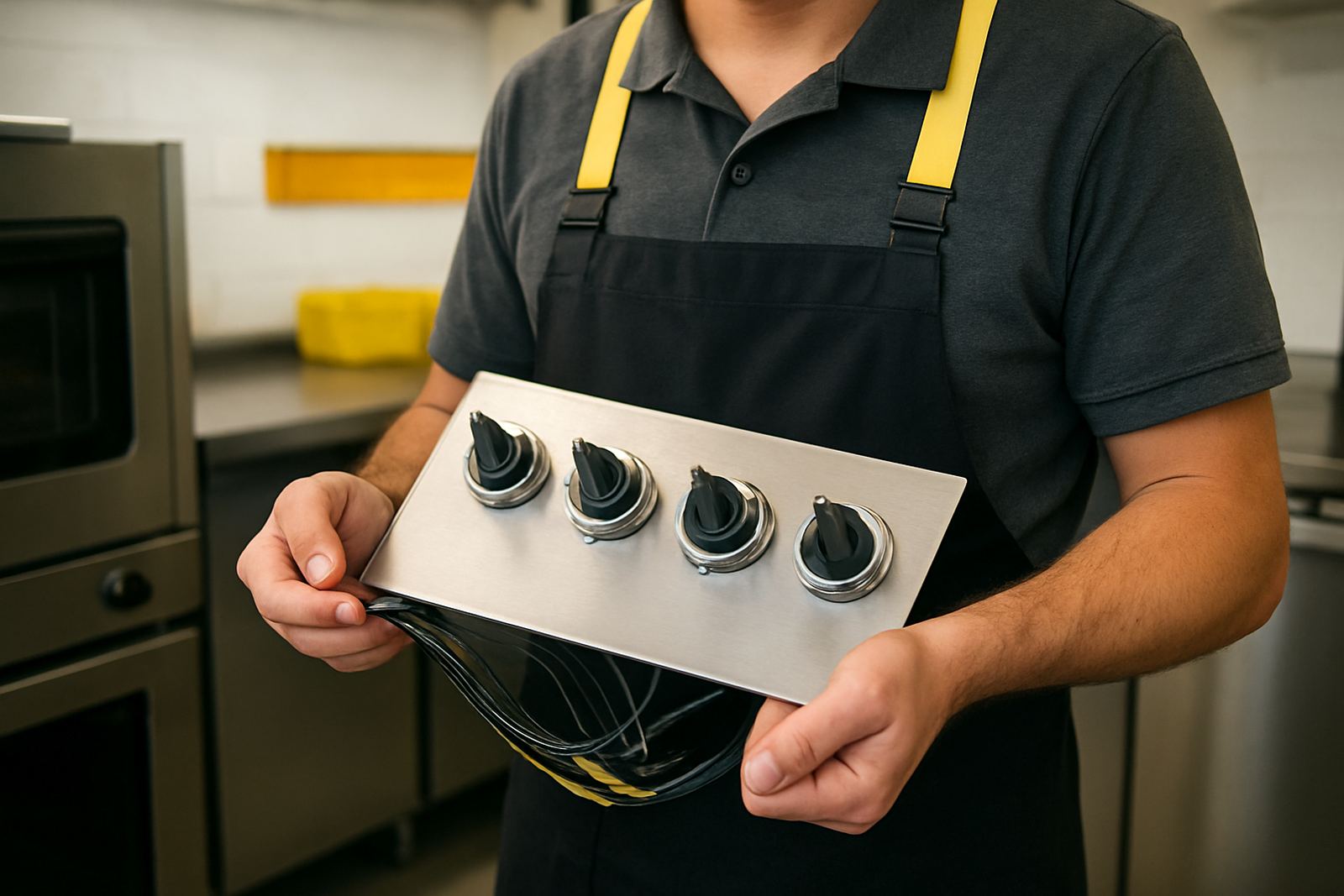
The wiring should be tight, correctly crimped and routed away from hot surfaces. Loose terminals cause heat damage and intermittent faults, and those faults are hard to trace later. If the appliance has multiple controls on one faceplate, photograph the original layout before removal so the wiring returns to the same positions. That saves time when a site is short-staffed or trying to get back online after a shutdown.
For gas appliances, the switch itself does not handle gas, but it may control ignition, fans or safety circuits linked to the gas train. Any sign of scorched insulation, repeated tripping or a switch that feels soft or sticky means the fault should be checked before the unit is put back into service.
How to care for switches so they last longer
Rocker switches last better when the panel stays clean and dry. Wipe away grease, detergent residue and steam build-up during normal kitchen cleaning, but avoid soaking the switch face with water jets. High-pressure cleaning can force moisture into the housing and cause tracking across the terminals.
During planned service visits, check for discolouration, loose fitment and worn actuator movement. A switch that rocks unevenly or has to be pressed twice is usually near the end of its life. If a site experiences load-shedding, it is worth checking for damaged contacts after repeated restarts, as the inrush surge can pit the internal contacts over time.
- Keep the panel dry and clean
- Check for heat marks around the terminals
- Do not force the actuator sideways
- Replace cracked bezels and loose mounting clips
- Test the circuit after any repair before returning the appliance to service
What to check before you order a replacement
To match a rocker switch correctly, start with the old part. The best check is the part number on the body, but if that is unreadable, measure the panel cut-out and note the terminal arrangement. Also check whether the switch is latching or momentary, illuminated or plain, and whether it is single pole or double pole.
Send clear photos of the front, back and side of the part, together with the appliance make, model and serial if available. If the switch sits next to a thermostat, indicator lamp or breaker, a photo of the full control area helps us confirm the layout. It is a small step, but it avoids wrong dispatch and another day lost while the kitchen waits for the correct fitting.
- Appliance make, model and serial number
- Old switch photo, front and back
- Cut-out size and panel thickness
- Voltage and amperage rating on the old switch
- Number and position of terminals
- Illuminated or non-illuminated style
Key facts
| Product type | Panel-mounted rocker switch |
|---|---|
| Use | Power and heating control on commercial appliances |
| Typical ratings | 16A, 20A or 25A at 250V AC |
| Mounting | Rectangular panel cut-out, clip or screw fit |
| Terminal styles | Quick-connect spade or screw lug |
| Common applications | Ovens, fryers, dishwashers, hot cupboards |