What a convection fan motor does in day to day kitchen use
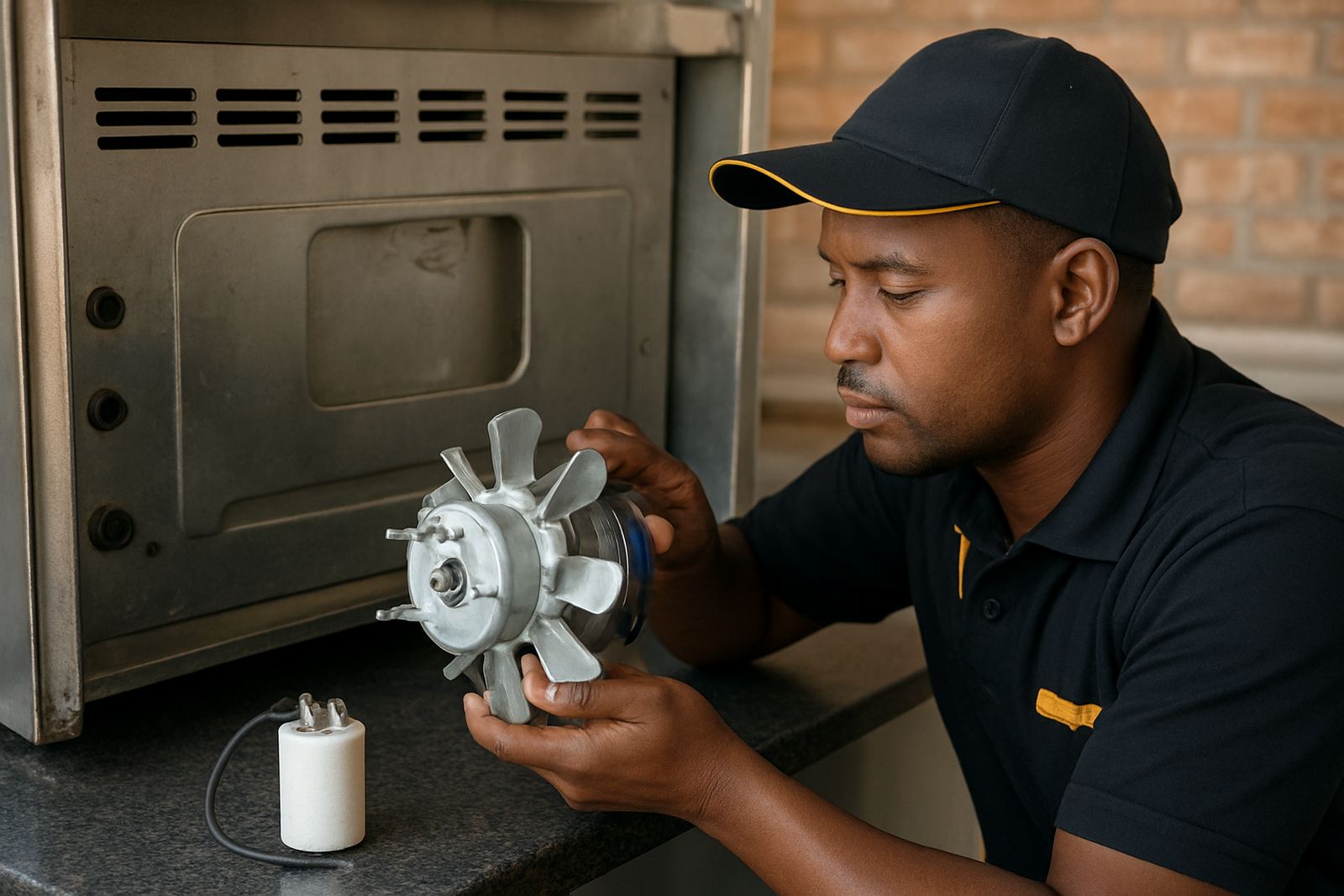
A fan motor sits behind the fan blade and drives the air movement inside a convection oven or heated holding cabinet. In a busy kitchen it helps spread heat across the cavity, which cuts down on hot spots, improves recovery after the door is opened, and keeps trays baking more evenly. When a motor starts to wear, staff often notice a rattling sound, slow start up, poor circulation, or food that browns unevenly on one side.
These motors are used on commercial ovens, combi style cabinets, proving units and some warmers where forced air is part of the heating setup. If the element is working but the cabinet still feels uneven, or the fan is turning but sounding rough, the motor, bearings or capacitor may be the issue. A faulty motor can also strain the rest of the system and lead to higher repair costs if it is left too long.
Sizes, shaft types and fitment points to match before you order
Fan motors are not all the same. The important details are the physical size, mounting pattern, shaft length, shaft diameter and whether the unit turns clockwise or counter clockwise. Some motors are compact units for smaller ovens, while others are larger frame motors made for heavier duty use in bakeries, canteens and hotel kitchens. You also need to match the voltage, frequency, and speed rating so the replacement works properly on your supply.
Common options include single phase motors for standard kitchen supply and different speed ratings where the cabinet design calls for specific airflow. Check whether the original motor uses a round or square flange, foot mounts, or a bracket set. On some cabinets the fan blade sits close to the motor body and even a few millimetres can make the difference between a proper fit and a return job.
- Voltage: usually 220 V to 240 V single phase on many kitchen units
- Frequency: 50 Hz for local supply
- Speed: often around 1 300 to 1 600 r/min, depending on the cabinet
- Mounting: flange, foot mount or bracket type
- Shaft: length and diameter must match the blade hub
- Rotation: clockwise or anti clockwise, as specified by the machine
Where fan motors suit best in commercial kitchens
These motors are used where controlled airflow matters, especially in ovens that bake trays of meat pies, pastries, bread products or roasted items. They are also common in heated holding cabinets where food needs to stay warm without drying out too quickly. In takeaways and catering kitchens, a weak fan motor can slow service because the oven takes longer to recover after each door opening.
They suit kitchens in Johannesburg, Pretoria, Durban, Cape Town and inland towns where equipment runs for long hours. Coastal humidity can accelerate corrosion on terminals and bearings, while dust and flour build up inland can clog the fan area. If a site is using the oven through load-shedding with backup power, it is worth checking that the supply is stable because voltage swings can shorten motor life.
- Convection ovens used in bakeries and restaurants
- Heated cabinets and hot holding units
- Commercial warmers with forced air circulation
- Some specialised pastry and roasting equipment
Installation checks, wiring needs and safe power supply
Fan motor replacement should be done with the unit isolated from power, with the cavity cooled down first. Before fitting a new motor, check the fan blade for cracks, bent fins or food build up, because a damaged blade can overload the motor and create noise again very quickly. The mounting screws must be tightened evenly and the shaft should sit straight so the blade does not rub against the shroud or inner panel.
Most motors are connected through the oven control circuit and may work together with a thermostat, door switch or speed control. Confirm the wiring layout before disconnecting anything and make sure the earth connection is sound. If the cabinet runs on gas with electric fan circulation, the burner side and the fan side both need to be in good condition. A motor that draws too much current can trip protection devices or keep the unit from reaching temperature as expected.
If your site has weak supply, long extension leads or frequent changeovers during load shedding, ask for a check on the incoming voltage and control board. A motor may look failed when the real issue is low voltage or a faulty capacitor. That is why proper testing saves time and prevents another callout two days later.
Care and servicing that keeps airflow even
Regular cleaning makes a real difference to fan motor life. Grease and flour dust collect on the fan blade and around the motor housing, and that build up can create extra drag. On busy sites, a monthly check is a practical starting point, with more frequent cleaning if the kitchen runs high volume frying, baking or roasting. Wipe the cavity, inspect the blade, and listen for scraping, humming or a change in pitch when the unit starts.
Bearings, bushes and capacitors wear over time. If a motor becomes hot to the touch, starts slowly, or has a burnt smell, it should be tested before it fails fully. Keep the area dry where possible, especially in coastal towns where damp air can affect terminals. A small amount of preventative care helps the oven keep steady temperature and reduces the risk of a full shutdown during service.
- Clean fan blades and nearby guards regularly
- Check for loose mounts and vibration marks
- Listen for squeal, hum or scraping at start up
- Inspect wiring for heat damage or brittle insulation
- Replace worn capacitors and damaged blades at the same time where needed
What to confirm when ordering a replacement motor
Ordering the correct fan motor starts with the old unit details. Send the model number from the appliance plate if it is still visible, then compare the motor label, shaft size and mounting style. If the label is missing, measure the body, shaft and flange carefully. Photos from the front, side and terminal end are very useful and can prevent the wrong part arriving. If the fan blade is also worn, include that information too so the full assembly can be checked.
It helps to note whether the fault is weak airflow, loud bearing noise, failure to start, or a breaker tripping problem. Those symptoms point to different causes and may change the part needed. We also check compatibility with the cabinet type and supply voltage before dispatch, which is important for ovens and heated cabinets used in restaurants, hotels, butcheries and schools. A clear order saves time and keeps the kitchen moving.
- Appliance model and serial number if available
- Motor voltage, speed and rotation direction
- Mounting type and shaft measurements
- Blade size and hub style
- Fault symptoms and any tripping or noise
Key facts
| Product type | Convection fan motor for commercial ovens and heated cabinets |
|---|---|
| Supply | 220 V to 240 V single phase, where specified |
| Frequency | 50 Hz |
| Speed range | Approx. 1 300 to 1 600 r/min depending on application |
| Mounting options | Flange mount, foot mount or bracket fitment |
| Common issues | Weak airflow, noisy running, slow start, vibration or no rotation |