What Door Glass Does In A Busy Kitchen
Door glass is the viewing panel fitted into an oven or heated cabinet door so staff can check food without opening the door every few minutes. On commercial units this glass works hard, with repeated heat cycles, steam, grease and cleaning chemicals all taking a toll over time.
When the glass is chipped, crazed, shattered or browned from heat stress, the door can lose insulation and the operator loses clear visibility. In a busy kitchen that means longer cooking times, more heat escaping into the room and a higher chance of a full breakage at the wrong time.
We supply replacement viewing glass for common oven door setups used in restaurants, takeaways, hotel kitchens, school kitchens and canteen facilities. If the door frame, seal or retaining clips are still sound, a correctly sized replacement panel can get the unit back in service without changing the full door assembly.
Sizes, Thicknesses And Glass Options
Door glass is ordered by the opening it must cover, the fixing method and the heat rating needed for the appliance. Some doors use a single flat panel while others use a double layer with an air gap for better insulation. We also see units with rounded corners, drilled fixing points or a fitted frame channel.
- Common thicknesses: 4 mm, 5 mm and 6 mm depending on the door design
- Heat resistance: standard oven viewing glass or higher temperature rated panels
- Shapes: square, rectangular and custom cut with rounded corners
- Edge finish: polished, safety ground or factory finished to suit the frame
- Glass type: clear viewing glass, tinted glass or laminated options where specified
For best results, measure the visible opening and not only the old broken piece. The retaining strips or seal can hide part of the panel, so a quick check before ordering avoids a return trip and keeps the job moving.
Where This Glass Suits Best
This product suits commercial ovens, combination cooking units, warming cabinets and some fryer enclosures with a fitted viewing section. In kitchens around Johannesburg, Pretoria, Durban and Cape Town we often see heat damage caused by long service hours, regular door slamming and cleaning while the glass is still hot.
It is especially useful in sites where cooking must continue through load-shedding or on generator supply, because staff need to monitor products closely without opening the chamber and losing heat. Coastal kitchens should also keep an eye on corrosion around the frame, as moisture and salt air can work into the door hardware faster than expected.
If the old panel broke because the door was twisted, the hinges dropped or the latch is not pulling tight, the glass may be only part of the problem. Check the full door before fitting the replacement so the new panel is not stressed from day one.
Fitting Notes, Power And Gas Checks
Door glass itself does not use power or gas directly, but it sits on equipment that can be electric, gas or dual fuel. Before fitting, switch off the appliance, isolate power at the supply and close off gas where relevant. The unit should be cool enough to handle safely, not just switched off for a few minutes.
Correct fitting depends on the glass sitting flat in the frame with the right clips, packers or high-temperature seal. If the panel is forced into a warped opening it can crack again quickly, sometimes within days. We always tell customers to check the door alignment, hinge wear and latch pressure before final tightening.
- Isolate electrical supply before removing the door or panel
- Allow the appliance to cool fully to avoid thermal shock
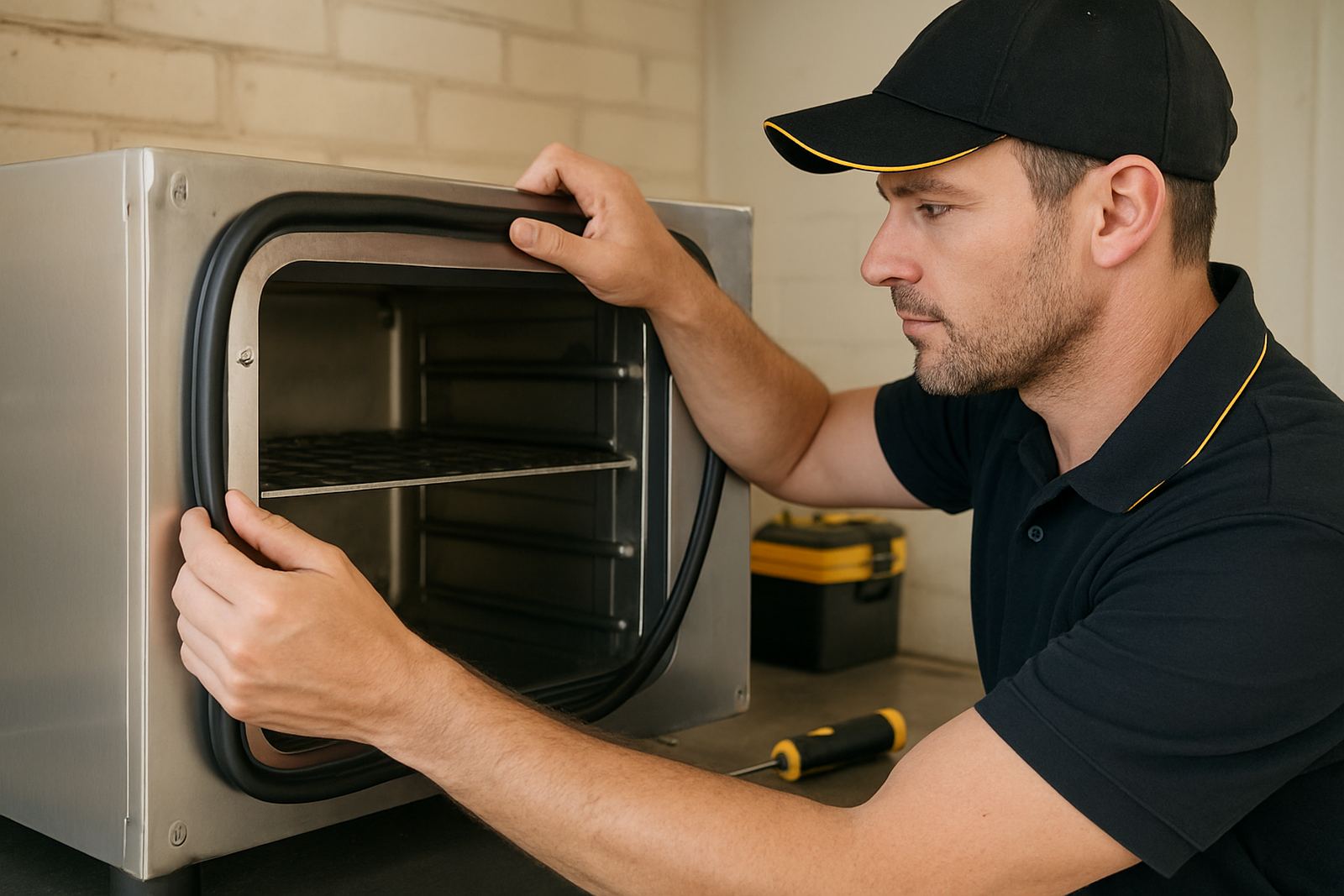
- Replace damaged seals and brittle retaining strips at the same time
- Test door closure and heat retention after fitting
Care, Cleaning And Ongoing Servicing
Good care extends the life of door glass and keeps the viewing area clear. Use non abrasive cleaner, soft cloths and regular wipe downs before grease builds up. Harsh pads and heavy scraping can scratch the surface and make future cleaning harder.
On high volume sites, schedule a quick inspection during routine equipment servicing. Check for hairline cracks at the corners, discolouration near burner zones, loose clips and any signs the seal is shrinking. If a door is closing too hard or bouncing open, sort the hinge or latch fault before the next panel gets damaged.
For kitchens near the coast or in humid storage areas, a little extra care helps stop frame corrosion and moisture getting trapped behind the glass. It’s a small detail, but it saves money when you do not want repeat call-outs.
What To Check Before You Order
Getting the right door glass means checking more than one measurement. A panel that is 3 mm too wide or has the wrong corner radius will not seat properly, and on a hot door that can become a safety issue very quickly.
- Appliance make, model and serial details if available
- Overall glass size, visible opening and thickness
- Shape of the panel and whether corners are square or rounded
- Type of fixing used, such as clips, channel, seal or frame strip
- Any tint, coating or double-glass arrangement on the original door
- Reason for replacement, like crack, thermal damage or impact breakage
If the old glass is shattered, send clear photos of the door, frame and any remaining retaining parts. That makes it easier to confirm the correct panel and avoid a delay while the kitchen is waiting for parts.
Key facts
| Product type | Replacement door glass panel for commercial kitchen equipment |
|---|---|
| Typical thickness | 4 mm to 6 mm |
| Common shapes | Rectangular, square and custom cut |
| Heat use | Suitable for oven door viewing applications |
| Fitment methods | Clips, channel, seal or framed retention |
| Dispatch base | Midrand with national coverage |