What a control relay does in daily kitchen use
A relay is an electrical switch that lets a low power signal control a higher load. In service equipment it is often used in timer circuits, heater circuits and motor circuits, where the control side is separated from the working side for cleaner switching and better protection of the control board. When a relay starts sticking, chattering or burning its contacts, the machine may heat late, not cycle properly, or trip during busy service times.
On commercial kitchens in Johannesburg, Durban or Cape Town, that small part can be the difference between a fryer staying ready and a lunch rush turning into a delay. Relays are used in ovens, fryers, dishwashers, hot cupboards and related service units that need repeated switching through the day. If a unit is in a coastal site with salty air or a back room that runs hot, the relay can age faster than expected, especially where dust and grease build up around the control area.
Relay sizes and options we supply
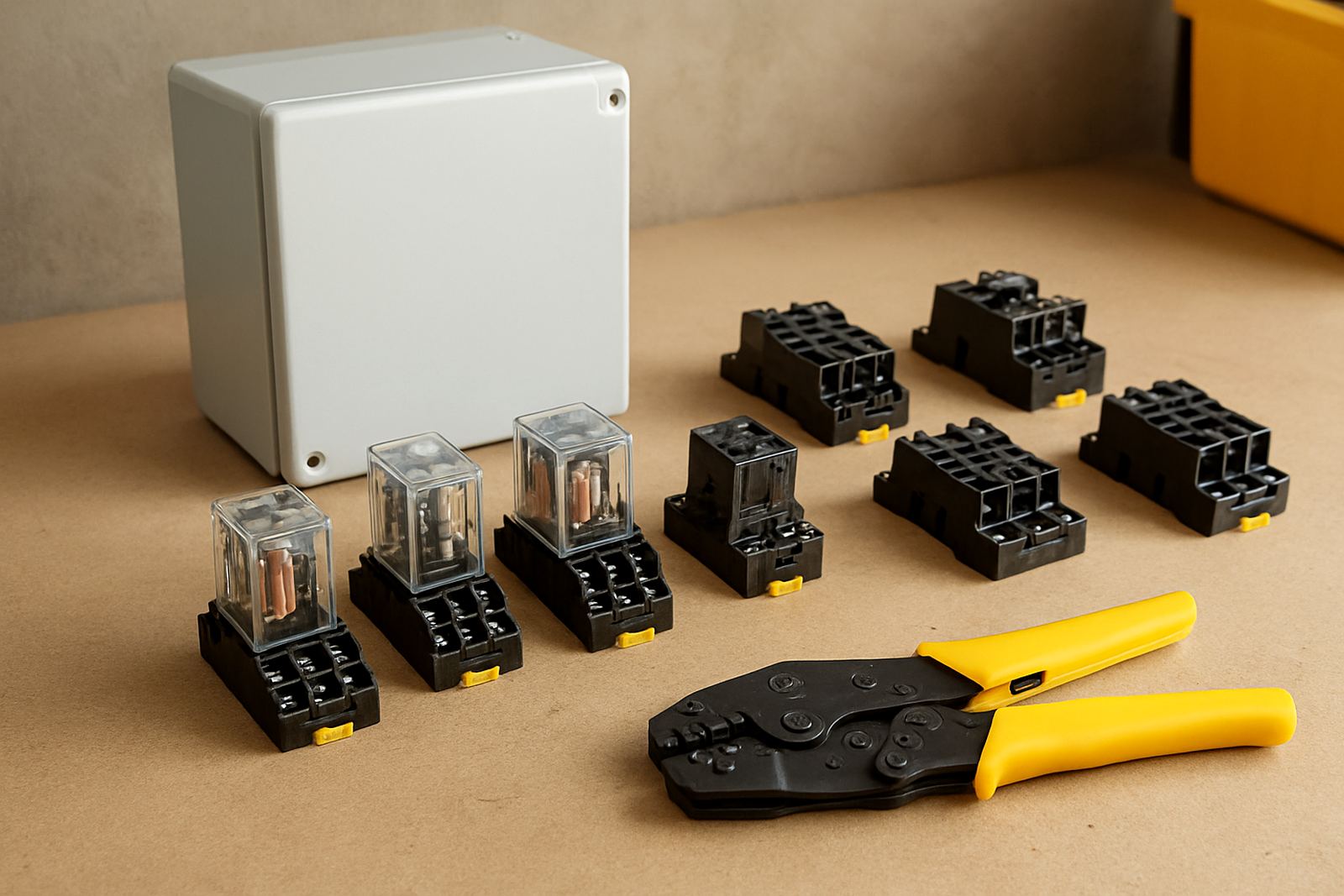
Relays are not all the same. The main points are coil voltage, contact rating, contact arrangement and mounting style. A small timer relay may suit light switching on a control board, while a heavier duty relay may be needed for heater or motor loads. We stock relays used in common commercial kitchen applications and help confirm whether you need normally open, normally closed, or changeover contacts.
- Coil voltages commonly used: 12 V, 24 V, 110 V and 230 V AC or DC, depending on the circuit
- Contact ratings commonly seen: 10 A, 16 A, 20 A and higher, depending on load type
- Mounting styles: plug in base, PCB mount, or panel fitted styles
- Contact forms: SPST, SPDT and DPDT for different control needs
- Indicators and test tabs on some units for quicker fault checking
If you are replacing a relay in an older oven or dishwasher, the physical size matters as much as the electrical rating. A relay can look similar but still have a different pin layout or coil specification, so checking the markings on the old unit before ordering saves time. We often see this on equipment that has had previous repairs and the fitted part is not the original type. A quick photo of the label and terminals usually helps us confirm the right part.
Where relays suit best on ovens, fryers and dishwashers
Relays are used wherever a control signal needs to switch a heater, pump, fan or motor. In ovens they are commonly found in timer and heating circuits. In fryers they may control heating stages or safety interlocks. In dishwashers they can switch pumps, drain systems, fill valves and cycle functions. The relay itself is only one part of the circuit, but when it fails the fault often looks like a bigger problem because the machine stops responding as expected.
For kitchens running through load-shedding or generator changeover, relays can also be affected by voltage swings. A coil that is outside its correct range may buzz, drop out, or pull in weakly. That is why it is important to check the supply level and not only the symptom at the machine. If you are dealing with repeated relay failures, the root cause may be a loose terminal, overheated wiring, a weak supply, or a control board issue rather than the relay alone.
- Use in heating circuits where precise switching is needed
- Use in motor or pump circuits where frequent cycling happens
- Use in timer systems where contact reliability matters
- Use in service equipment exposed to heat, steam and grease
Installation points and power checks before fitting
Relay fitting should always start with the correct isolation and a clear check of the circuit. Switch off supply, confirm the machine is dead, and inspect the socket or board for heat damage before pushing in a new relay. If the pins are blackened, the base is loose, or the board tracks are burnt, a new relay alone will not hold up. In those cases the surrounding wiring, terminal crimps and control board should be checked too.
For electrical work, the mains supply must match the coil and the switched load must sit within the relay rating. Where the relay is controlling gas equipment, it often works as part of an electric safety or ignition circuit, so the gas side must still be checked for safe operation after the repair. Keep clear of wet floors and steam areas during testing because a damp socket or connector can cause false readings and again, a failed part may be masking a connection issue. After fitting, run a full cycle test and watch for chattering, delayed pull in or excess heat at the terminals.
Care, servicing and signs the relay is wearing out
Relays are simple parts, but they do wear. Repeated switching under load, heat from nearby components and vibration all shorten service life. A relay that has been asked to handle too much current may show pitted contacts, melted plastic or intermittent operation. If a machine works for part of the day and then stops until it cools, the relay may be opening under heat stress.
Basic care is mostly about keeping the control box clean and dry. Grease and flour dust should not be left to build up around terminals, and steam leaks should be repaired fast. On site in Durban or other humid areas, corrosion can creep into connector pins and create a weak circuit even when the relay itself tests correctly. During scheduled service, it is worth checking for loose spades, heat marks and brittle wiring so the new part does not fail for the same reason. A relay is often cheap compared with lost service time, but only if the cause is found properly.
- Watch for clicking without switching
- Check for burnt terminals or a hot relay body
- Look for intermittent heating or pump cycling
- Inspect for moisture, grease or loose connectors
What to check when ordering the right relay
To match the correct relay, have the old part in hand if possible and note the markings on the case. The key details are coil voltage, contact arrangement, current rating, terminal layout and mounting style. If the equipment model is known, send that too, since a relay that fits one control board may not fit another board from the same machine family. We also ask about the fault, because a relay that failed on a heater circuit may need a different contact duty than one used on a timer signal.
FoodServ Parts Store has been supplying parts online since 2016, with dispatch from Midrand and support for kitchens across Gauteng, KZN, the Western Cape and beyond. Our team handles part identification, compatibility checks and post-fit testing support for service jobs that need the right component first time. If you are unsure, send a clear photo of the relay face, terminals and any burnt marks, plus the equipment model and the supply type. That small step can save a wasted callout and a second strip down.
Key facts
| Product type | Control relay for commercial kitchen service equipment |
|---|---|
| Typical use | Timer, heater and motor circuits |
| Common coil voltages | 12 V, 24 V, 110 V, 230 V AC or DC |
| Common contact ratings | 10 A to 20 A and above, depending on application |
| Mounting styles | PCB mount, plug in base, panel fitted |
| Typical equipment | Ovens, fryers, dishwashers, hot cupboards and related units |