How a thermocouple works on gas kitchen equipment
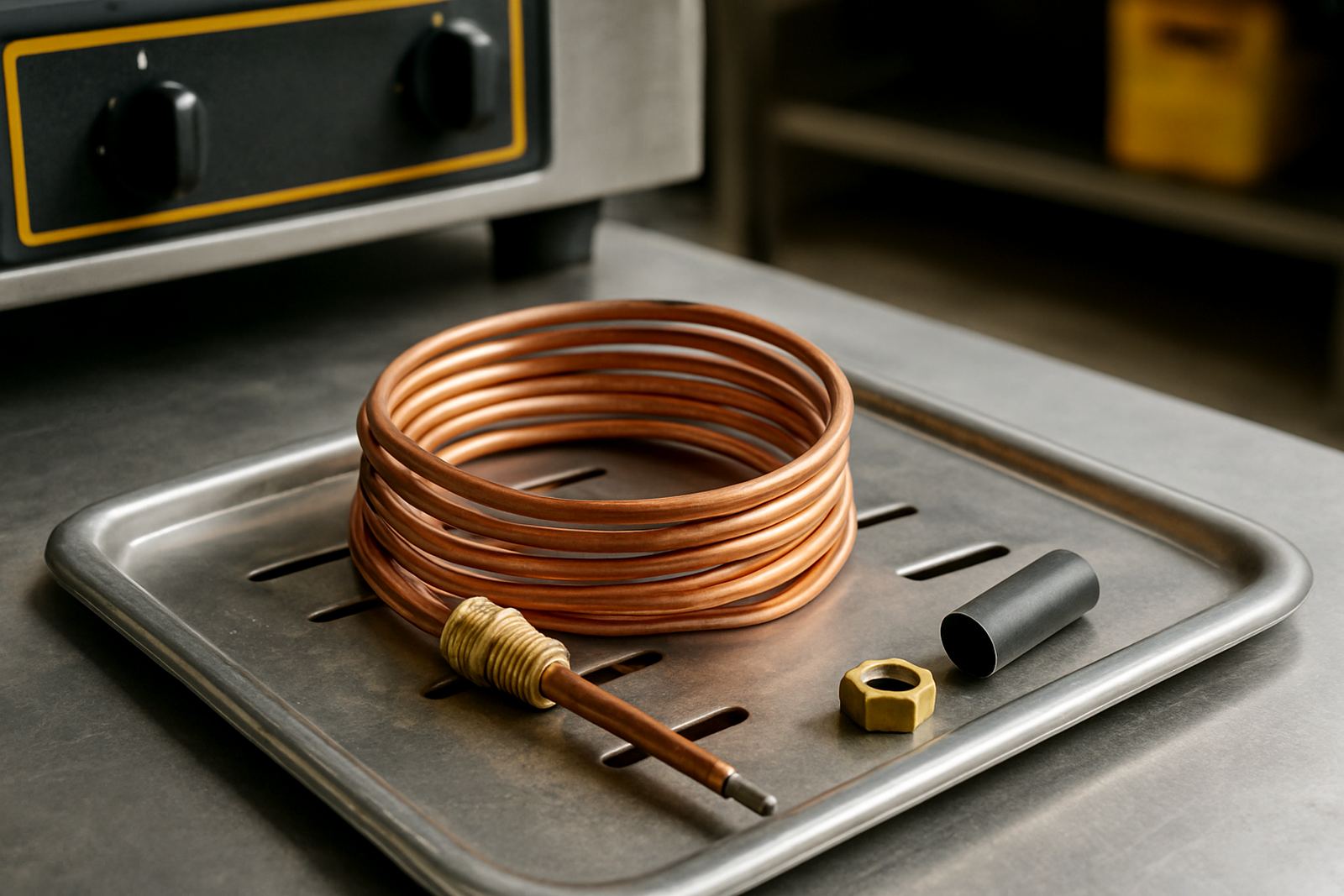
A thermocouple is a small metal probe fitted near the flame on a gas appliance. When heated it generates a tiny electrical signal that holds open a safety valve or proves flame on the control system. If the flame is lost, the signal fades and the gas supply should close, which is why these parts are used on many commercial ovens, fryers, griddles and some dishwashing units with gas heat.
In daily kitchen use, a thermocouple is one of those parts that gets noticed only when it starts failing. You may see a pilot that will not stay lit, a burner that cuts out after a few seconds, or a unit that needs repeated relighting during the lunch rush. In coastal kitchens, heat, grease and damp air can shorten service life, while heavy use in busy canteens and takeaways often leads to metal fatigue over time.
FoodServ Parts Store supplies replacement thermocouples for commercial kitchen equipment, with national dispatch from Midrand. We support operators in Johannesburg, Pretoria, Durban, Cape Town and Bloemfontein, plus outlying areas where turnaround matters because every hour of downtime costs money.
Thermocouple sizes, fittings and common options
Thermocouples are not one-size-fits-all. The important points are the probe length, thread size, terminal style and the way the tip sits in the flame. Some units use a short probe for compact burners, while others need a longer reach to get into the hottest part of the flame. A poor match can give weak voltage, nuisance shutdowns or repeated pilot failure.
Common options include:
- Probe lengths from short appliance types to longer reach versions for deep burner trays
- Threaded ends in the common sizes used on commercial gas valves and brackets
- Ring terminal or push-on connections for the control side
- Rigid, semi-flexible and capillary style mounting arrangements
- High-temperature insulation suited to oven cavities and fryer zones
When you order, it helps to compare the old part against the new one by length, fixing point and connector style. A part that is only a few centimetres out can still fail to read the flame properly, especially on older ovens where brackets have shifted a bit over time.
Where thermocouples are used in the kitchen
Thermocouples suit gas appliances where flame proofing matters. They are commonly fitted to standing pilot systems and other gas safety circuits on commercial ovens, open burners, chargrills, fryers and some hot holding equipment. They are also found on certain imported units and older local machines that still use a manual pilot flame.
Typical signs that a thermocouple may be the issue include a pilot that lights but will not stay on, a burner that dies when the control knob is released, or an appliance that works for a few minutes then shuts down once the metal warms up and weakens. In some cases the thermocouple is fine and the fault sits with the gas valve, pilot flame position or wiring, so it pays to check the full circuit before ordering parts.
- Ovens with pilot safety circuits
- Gas fryers with flame supervision
- Grills and salamander units
- Hotplate burners and boiling tops
- Some dishwasher heating systems with gas fired components
For kitchens in areas with load-shedding, remember that repeated restarts after a power cut can expose weak safety parts sooner. If a unit was already temperamental before the outage, the next start-up often shows it up properly.
Installation needs, gas supply and electrical points
Most thermocouples themselves do not need mains power, but they work as part of an appliance safety circuit that may rely on ignition modules, valves or control boards. That means the full unit still needs the correct gas pressure, sound wiring where fitted, and a clean flame path. If the pilot flame is lazy, yellow or blowing off the tip, the thermocouple may not heat correctly.
Before fitting, isolate the gas supply and make sure the appliance is cool. Check the bracket position, burner alignment and pilot flame height. If the connection uses compression fittings or a threaded nut, do not overtighten because that can damage the seat. After fitting, test for leaks and confirm the flame remains stable when the control is released. If the unit is in a commercial kitchen, post-fit testing should be done before the equipment goes back into service.
If you are replacing a thermocouple on a busy line, plan the work outside service hours where possible. In a restaurant or hotel kitchen, even a small gas fault can disrupt breakfast prep, lunch service or a banquet turn-round.
Care, cleaning and when to replace it
Thermocouples are small, but they work in harsh conditions. Grease build-up, food spills, corrosion and repeated heating cycles all affect performance. A regular wipe during planned maintenance can help, but if the tip is pitted, bent or heavily discoloured, replacement is usually the safer call. In humid coastal areas, terminals and fixings may corrode faster than inland sites, so inspection intervals should be shorter.
Watch for these warning signs:
- Pilot flame will not stay lit
- Burner cuts out after releasing the knob
- Intermittent safety shutdowns on warm-up
- Visible damage, kinks or corrosion on the probe
- Loose or heat damaged terminals
If a thermocouple has failed more than once, the root cause may be elsewhere. A misaligned pilot, blocked injector, poor bracket earth or excess grease around the burner can all shorten the life of a new part. That is why a proper fault check saves money and avoids repeat call-outs.
What to check before ordering the right part
Ordering the correct thermocouple starts with the old one in hand if possible. Measure the probe length from the tip to the mounting point, note the thread size or clip style, and photograph both ends. If the appliance plate is still readable, record the model number and gas type. If it has been fitted with a modified burner or local repair over the years, the original part may have changed, so confirm against the actual appliance rather than guessing from memory.
Useful details to send with your enquiry:
- Appliance type and model number
- Probe length and fitting type
- Terminal style and lead length
- Whether the unit is LPG or natural gas
- Any visible fault symptoms or error lights
FoodServ Parts Store can assist with part identification and compatibility checks before you order. If needed, we can also help arrange fitting support, post-fit testing and related gas safety parts for the same job. That saves time when you are sorting out a fryer, oven or dishwasher that must be back online without delay.
Key facts
| Product type | Flame-sensing thermocouple for commercial gas safety circuits |
|---|---|
| Use | Pilot and burner flame proving on ovens, fryers, grills and related equipment |
| Common lengths | Short, medium and long probe options |
| Connections | Threaded, compression and terminal styles, depending on appliance |
| Material | Heat-resistant metal probe with insulated lead |
| Service support | Part identification, compatibility checks and fitting support from Midrand |