Timers that keep cycles on schedule
A timer is the control that tells a machine how long to heat, wash, pause or hold. In a busy kitchen that may mean a fryer basket lift, an oven bake period, a dishwasher wash stage, or a holding cabinet timing run. When a timer starts drifting, sticking or losing power, the whole line feels it straight away and staff end up guessing instead of working to a set cycle.
We stock mechanical and electronic timers used on commercial ovens, fryers, dishwashers and related catering equipment. Some units are simple count-down types with a knob or dial, while others link to control boards and relay outputs. If your machine is in a school, hotel, butcher shop or take-away, the right timer keeps repeat results and cuts waste from overcooked product or unfinished wash cycles.
Mechanical and electronic options for different machines
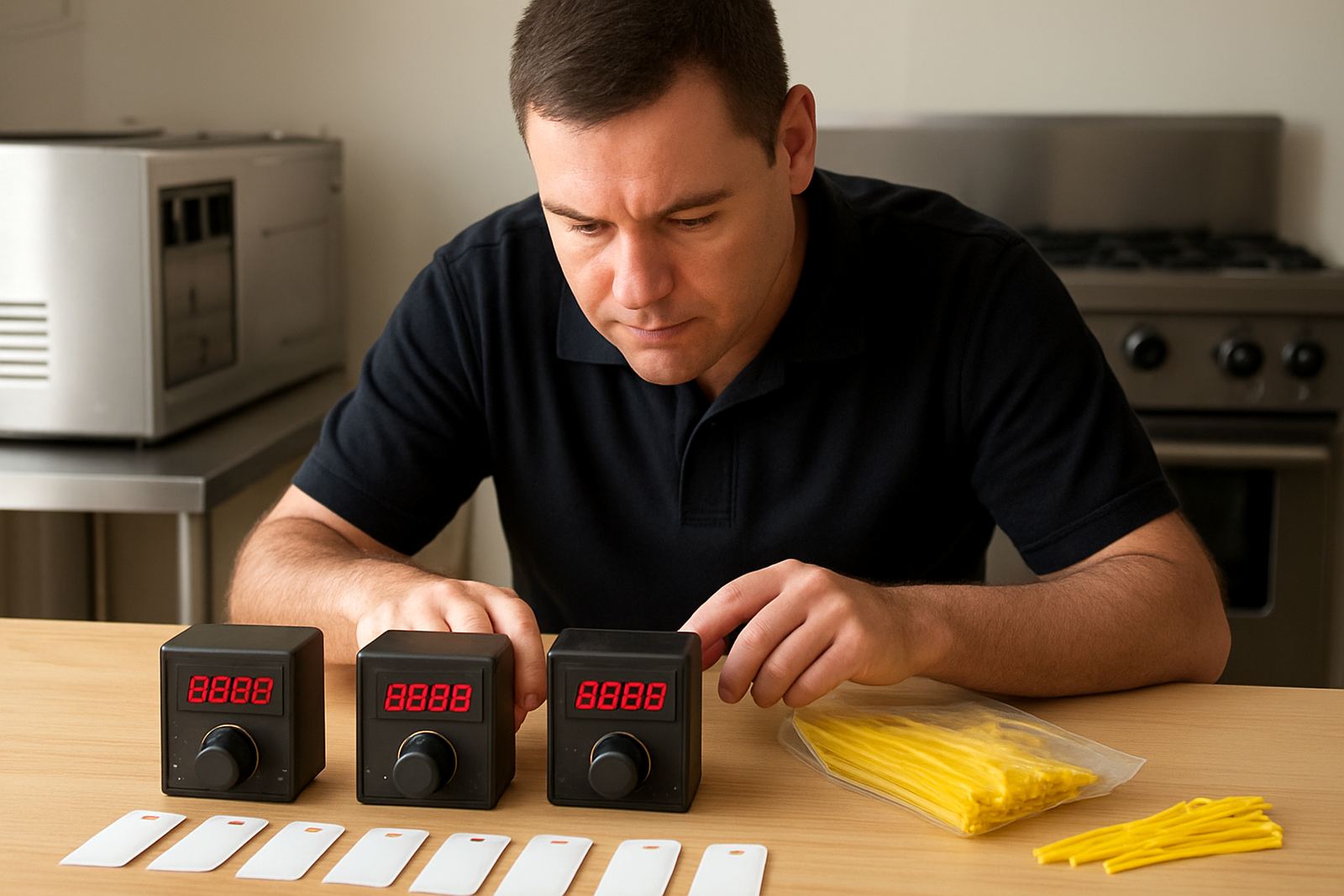
Mechanical timers are usually chosen for straightforward jobs where a staff member sets a time by hand. They are common on older ovens, fryers and some holding units. Electronic timers are used where the machine needs a display, memory, repeat cycle or a signal to another control function. On dishwasher equipment, timers may be part of the wash sequence control, rinse pause or drain timing.
- Mechanical count-down timers for manual cycle control
- Electronic timers with display and push-button setting
- Multi-function timers for staged cooking or wash cycles
- Timers with buzzer, relay output or indicator light function
- Units for front-panel mounting or bracket mounting
We also help match the timer to the exact machine application, because two timers can look close yet use different terminals, shaft sizes or voltage ratings. That is where compatibility checks save time and prevent a return trip.
Sizes, terminals and control details to match
Timer sizes vary by face size, shaft length, fixing holes and the back section depth behind the panel. Some units are small enough for tight control spaces, while others need more room for wiring and a clear display. On imported and locally assembled equipment alike, the key is not only the visible front size but also the terminals, switch layout and power rating.
Check these details before ordering:
- Timer type: mechanical or electronic
- Voltage: 220 V to 240 V AC on many kitchen units, some controls use different supply needs
- Terminal count and layout
- Shaft size or knob fitting style
- Face diameter or panel cut-out size
- Cycle range in minutes or hours
If the original label is faded, send the model details, a photo of the old unit and a clear picture of the back terminals. That makes identification much faster, especialy on older equipment where replacements have been changed over the years.
Where timers are used in kitchens and wash areas
Timers are fitted across a wide mix of commercial equipment. In cooking areas they help manage bake times, grill periods, fry cycles and holding periods. In dishwashers they control wash and rinse timing, while some sanitation systems use timing for pumps and delay starts. In take-away kitchens around Johannesburg and Pretoria, the timer often needs to cope with long trading hours and repeated use through the day. In coastal areas like Durban and Cape Town, humidity and salt air can shorten the life of poor contacts if the unit is not kept clean and dry.
Typical applications include:
- Ovens and combi-style cooking equipment
- Deep fryers and chip fryers
- Dishwashers and glasswashers
- Holding cabinets and warming units
- Special-purpose prep equipment with timed cycles
If your machine trips during load-shedding recovery or behaves oddly after power returns, the timer may need checking together with the supply side, relay path and terminal condition. A timer can fail on its own, but loose wiring or heat damage often shows up at the same point.
Installation, power needs and wiring checks
Most timer replacements are straightforward, but the wiring must be done carefully. Always isolate the machine, confirm the supply is off and check that the replacement has the same voltage and contact arrangement. Some timers switch only one circuit, while others need multiple connections for a signal, indicator or buzzer. On ovens and fryers the surrounding heat can affect terminals, so tight clean connections matter.
For fitting, check the panel opening, secure the timer firmly and confirm the knob or push controls move freely. If a machine uses a gas burner section, the timer normally does not handle gas directly, but it can still control ignition stages, safety pauses or the sequence around the burner. After fitting, test the cycle under normal operating conditions before full service resumes.
We offer timer identification and fitment support through our Midrand base, with parts dispatch for Johannesburg, Pretoria, Durban, Cape Town and Bloemfontein. Where needed, we can assist with post-fit testing so the machine is checked under actual working conditions, not just on the bench.
Care, servicing and signs of wear
Timers last longer when panels are kept clean and dry, and when staff avoid forcing knobs or buttons past the set limit. Grease, steam and detergent splash can work into the front or rear housing and cause sticky movement or weak contacts. On dishwashing equipment, regular cleaning around the control face helps reduce corrosion from moisture and chemical residue.
Watch for these signs:
- Timer does not count down properly
- Knob feels loose or slips on the shaft
- Display fades or resets unexpectedly
- Contacts chatter, stick or burn
- Cycle ends too early or too late
When a timer is part of repeated service work, it is worth checking the terminals, heat marks and mounting before the unit fails completely. A small fault can be fixed early, instead of shutting down a whole line during the lunch rush.
What to send when ordering a replacement
To avoid delays, send the machine make and model, the old timer photo, the voltage reading and any label numbers on the body. If the label is missing, a clear picture of the front, shaft, rear terminals and any mount points helps us match the part. For electronic timers, include the board or harness type if it connects by plug rather than screw terminals.
Useful order details include:
- Machine type and function, such as oven, fryer or dishwasher
- Old part number or stamped code
- Supply voltage and cycle range
- Front size and panel cut-out size
- Terminal count and wiring photo
- Any special need for buzzer, relay or indicator output
FoodServ Parts Store was founded in 2016 and continues to support commercial kitchens from Midrand with practical parts supply. If you are replacing one timer or planning several service jobs across a site, we can help match the right unit before it reaches the workshop.
Key facts
| Product type | Mechanical and electronic timers |
|---|---|
| Typical use | Cooking cycles, wash cycles and holding periods |
| Common equipment | Ovens, fryers, dishwashers and holding units |
| Supply rating | Usually 220 V to 240 V AC, check unit label |
| Mounting options | Front panel, bracket or control housing fitment |
| Support available | Part identification, compatibility checks and fitting support |