What dishwasher gaskets do in daily service
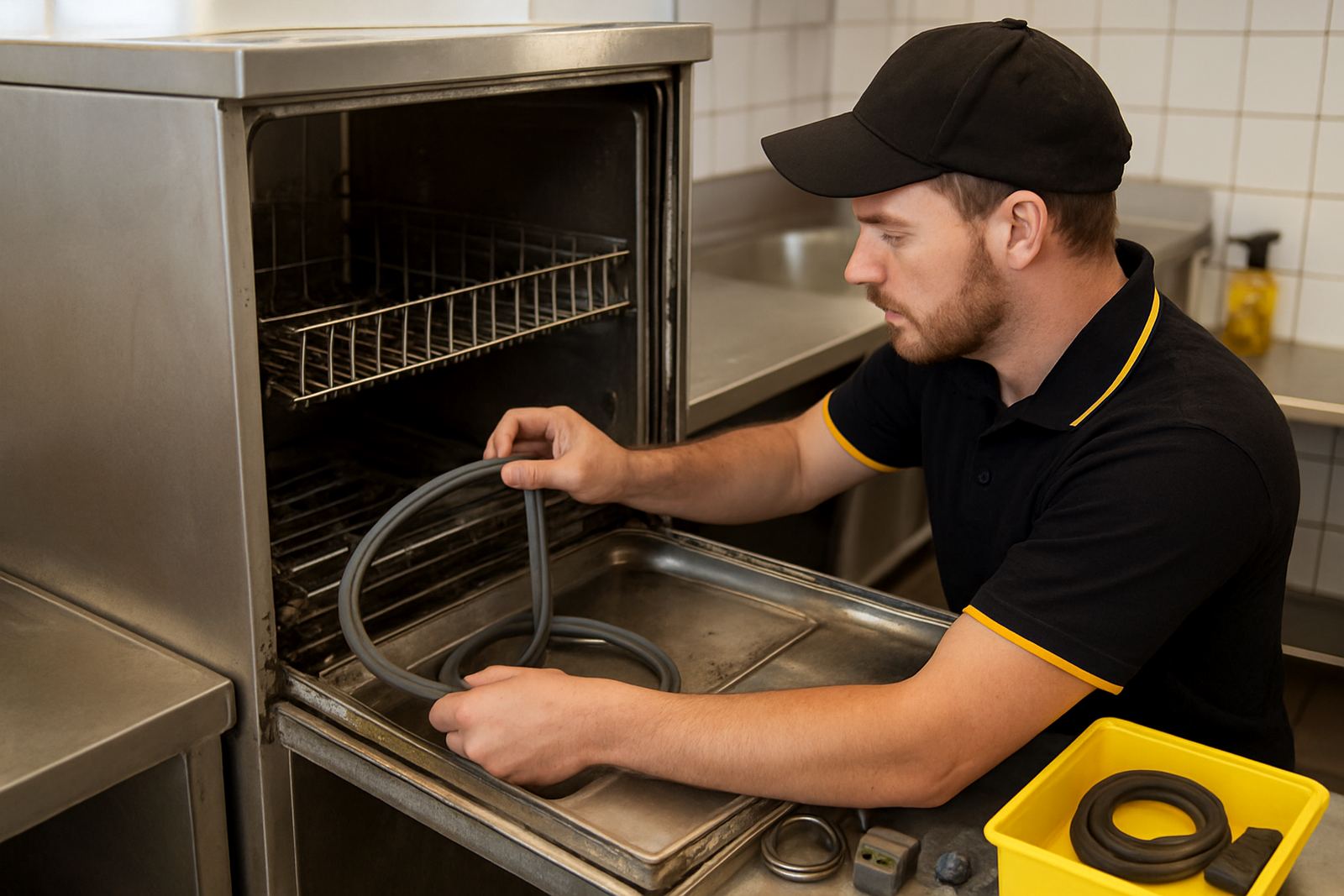
A dishwasher gasket is the sealing strip that sits around the door opening or tank section of a commercial dishwasher. Its job is simple but important: keep hot water, steam and detergent inside the wash chamber while the machine runs its cycle. On busy lines in school kitchens, cafés, hotels and canteens, a tired seal can cause puddles on the floor, poor temperature retention and longer drying times.
These seals are made for repeated closing, heat, moisture and chemical exposure. In South African kitchens, that includes long shifts, back to back cycles and the extra strain of load-shedding recoveries where equipment gets stopped and started more often than normal. A good gasket helps the door close evenly, limits spray loss and protects nearby panels from constant damp.
We supply dishwasher gaskets for commercial units only, including door gaskets, tank gaskets and related sealing profiles for undercounter and pass-through machines. If the old seal has gone hard, stretched or swollen, matching the correct profile makes a big difference to fit and wash performance.
Sizes, profiles and seal options to match the machine
Dishwasher gaskets are not one-size-fits-all. The profile, corner shape, length and mounting method must suit the cabinet or tank opening. Some seals push into a channel, others fit with clips, and some use a lip that sits against a metal frame. On older machines, a seal may look close but still fail once the door closes under pressure.
- Door perimeter gaskets for front-opening dishwashers
- Tank seals for wash chamber joints and splash areas
- Corner-moulded seals for tighter door frames
- Push-fit, clip-in and channel-mounted profiles
- Heat and detergent resistant rubber compounds
When measuring, use the full length of the old gasket only if it has not stretched. If the original seal is missing or broken, measure the groove or frame opening instead. Width, thickness and corner shape matter as much as total length. For some machines, even a 2 mm difference can cause a poor seal or a door that sits too tight.
Where these gaskets suit in commercial kitchens
These gaskets suit commercial dishwashers used in restaurants, hospitals, food factories, hotels, bakeries and catering kitchens. They are also used in staff canteens, lodges and large take-away operations where dishwashers run many times a day. Coastal kitchens in Durban, Cape Town and Port Elizabeth often see faster seal wear because salt air and constant moisture can harden rubber sooner.
If the machine leaks only when the door is slammed or when the rack is fully loaded, the gasket may still be the cause. A worn seal can also allow heat escape, which affects rinse temperature and leaves crockery with spots or film. In some machines, the same sealing issue can make the pump sound louder because water is not being held at the right level inside the chamber.
- Undercounter commercial dishwashers
- Pass-through and hood-type machines
- Wash tanks and door seals on larger units
- Units with frequent opening and closing during peak service
Fitting the seal and checking the machine first
Before fitting a replacement, inspect the door hinges, latch, frame and sealing groove. A new gasket will not fix a bent door or a worn catch. If the door drops slightly on one side, the seal may leak on the bottom corner even when the gasket itself is correct. Also check for limescale, soap build-up and small bits of food that can stop the seal from seating properly.
Installation normally does not need electrical power or gas work, but the machine should be isolated and cooled before any fitting starts. If the dishwasher is part of a line with nearby heaters or booster equipment, make sure the area is safe to work in and that water supply is turned off where needed. After fitting, run a short test cycle and inspect all sides for drips, misting and uneven door pressure.
In some cases the old gasket has swollen from harsh chemicals or heat and the channel is holding it too tightly. Remove all old adhesive, rinse the groove and fit the new seal evenly. If a seal is twisted during fitting, it can pinch at one corner and leak on the opposite side. That small mistake is common and easy to miss until the first full wash cycle.
Care tips that help the new gasket last longer
Dishwasher gaskets last longer when they are kept clean and not forced. At the end of each shift, wipe the seal with a damp cloth to remove detergent residue and grease. Avoid strong solvents, bleach-heavy cleaners and sharp tools because they can dry out or cut the rubber. If a kitchen has very hard water, treat limescale early so deposits do not build up on the sealing edge.
Good door use matters too. Staff should not yank the door closed or overload racks so that trays and pots push against the seal. In busy kitchens, the door gets opened and closed hundreds of times a week, so a quick visual check should be part of daily cleaning. If the seal starts to go shiny, flatten out or crack, replace it before leakage spreads to floor tiles, skirting and electrical parts.
- Wipe after service with warm water and a soft cloth
- Keep detergent strength within the machine maker's range
- Check for chips on the door edge and latch wear
- Replace seals before they split fully
What to check when ordering a replacement gasket
To supply the right dishwasher gasket, we need clear details from the machine and the old seal. The quickest way is to send the model details, a photo of the door opening and a photo of the old gasket out of the machine if possible. If the old seal is still fitted, check whether the corners are moulded or cut, and whether the profile is round, flat or bulb shaped.
It also helps to know whether the machine is a door type, hood type or undercounter unit, and whether the gasket seals the door, tank or another section. If you are in Johannesburg, Pretoria, Midrand or elsewhere on our national dispatch route, we can help identify the part before it is ordered. That saves time and avoids a return trip if the first seal does not sit right.
- Machine make and model details
- Door or tank location of the seal
- Approximate length, width and thickness
- Corner style and mounting method
- Photo of the old gasket, including any clips or groove
If you are unsure, send clear photos and the measurements you can take. We will check compatibility against the machine set-up and advise on the closest match. For kitchens that cannot afford downtime, getting the profile right first time is the safest option, especially when the dishwasher is part of a single line and cannot sit idle for long.
Key facts
| Product type | Commercial dishwasher door and tank gaskets |
|---|---|
| Materials | Heat resistant rubber and sealing profiles for wet service |
| Common styles | Push-fit, clip-in, channel-mounted and moulded corners |
| Typical use | Front-opening, hood-type and undercounter dishwashers |
| Ordering info | Model number, seal length, profile width and corner type |
| Service area | National dispatch from Midrand, with support across South Africa |