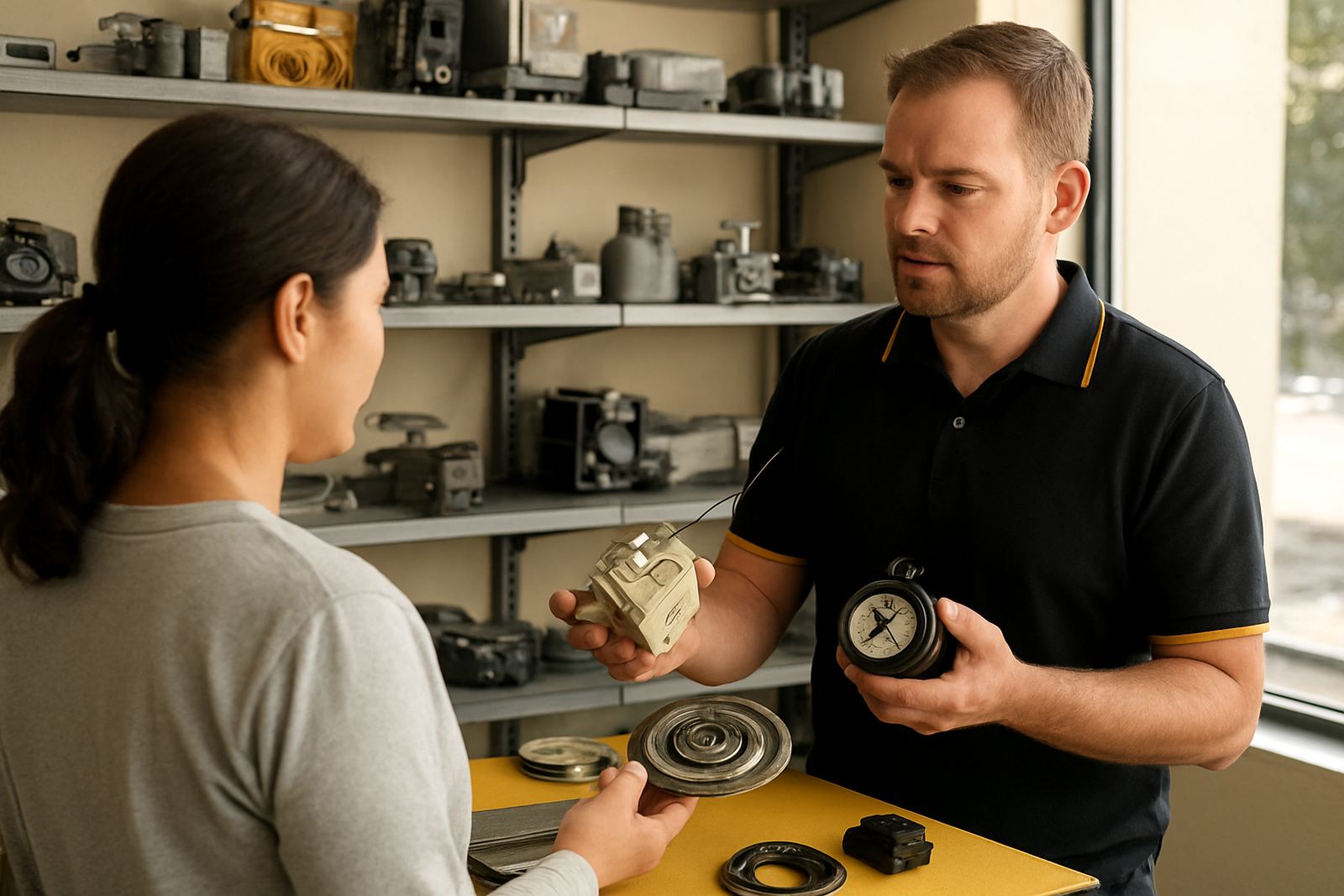
Start with the rating plate before you guess
The easiest way to match a part is to copy the information from the appliance rating plate. On most ovens, fryers and dishwashers, this plate is on the back, behind a front panel, inside the door frame, or near the control area. We need the brand name, full model number, serial number if shown, and the electrical rating where possible. If the plate is worn or missing, a photo of the whole machine and the control area still helps us narrow it down.
Please do not send only the fault description like “not heating” or “not switching on”. That tells us there is a problem, but not which part is fitted. A fryer that trips during load shedding recovery, for example, may need a different element or switch than a unit that simply heats slowly.
- Take one clear photo of the rating plate
- Include the full model number, not only the series name
- Send the appliance type, for example oven, fryer or dishwasher
- Add a short note on the fault and when it started
Photos that help us check fit first time
Good photos are the fastest way to avoid the wrong part. Use natural light where you can, and take the photo straight on so the text and shape are easy to read. We usually need the old part out of the machine, or at least visible from more than one side. Close-up shots are useful, but please add one wider photo too so we can see where it sits inside the appliance.
For gaskets, include the door opening and the corner shape. For burners, show the fixing points and the gas connection area. For switches and thermostats, photograph the terminal layout, any numbers on the body, and the knob or spindle style. If a part has burned, cracked or swollen, that photo is still useful because the damage pattern can confirm the match.
- Use one close-up and one wider shot
- Make sure numbers and terminals are visible
- Show the old part next to a ruler or tape measure if possible
- Send photos before the part is discarded
Measure the part in millimetres, not by eye
Where two parts look similar, a few millimetres can make the difference. Measure length, width, diameter, depth and fixing hole spacing in millimetres. For door gaskets, measure the full perimeter if you can, and note whether it is a push-in type or clipped in. For heating elements, measure from terminal to terminal, the bend shape, and the distance between mounting points.
If you are checking a thermostat or sensor, include probe length and capillary tube length, and avoid bending the tube more than needed. A slight mismatch can still stop the unit from fitting properly, and on a busy site in Johannesburg or Durban that means extra downtime. If your team can fit the part onsite, let us know, because we can advise on the fitting process as well.
- Measure in mm for accuracy
- Note fixing hole centres and terminal spacing
- For gaskets, check the profile shape and corner style
- For thermostats, include probe and tube length
Tell us the appliance problem in plain terms
We do not need a long report, just enough detail to link the fault to the right spare part. Say what the machine is doing now, what it used to do, and whether the fault is constant or intermittent. For example, “dishwasher fills but will not heat”, “oven trips after 10 minutes”, or “fryer loses temperature when busy”.
It also helps to mention any repair work already done. If a switch panel was opened, an element replaced, or a thermostat tested, tell us what was checked so we do not repeat the same steps. This saves time for your kitchen team and helps our technical parts lead check the likely cause faster.
- Describe the fault in one or two sentences
- Tell us if the issue is constant or comes and goes
- List any parts already changed or tested
- Say whether the appliance is electric or gas where relevant
What happens after you send your details
Once we have your model details, photos and measurements, we check the match against the part type and fitment points. If there is more than one possible match, we will tell you what still needs confirming rather than guessing. That is important for commercial kitchens, because a wrong thermostat or element can delay service and waste money.
Our Midrand team can help with identification first, then guide you on fitting and post-fit testing if required. We supply nationally and dispatch daily, so once the match is confirmed you can move quickly whether you are in Pretoria, Cape Town, Bloemfontein or along the coast. Coastal humidity can affect gaskets and switch gear, so we may also ask about corrosion or moisture if that looks relevant.
If you need onsite parts support or fitting, mention the location and access hours. That helps us plan the job and keep the process practical.
Send one clean message and save a back and forth
The best support message is short, clear and complete. Put the model details first, then attach photos and measurements, then add the fault note. If you are sending on behalf of a group kitchen, include the site name and the person on duty so we can keep the enquiry straight. One clean message is usually enough to get the process moving.
For email support, send everything to parts@foodservparts.co.za and use the subject line to name the appliance type. That makes it easier for our operations manager and customer support team to sort the request quickly. If a municipal or landlord rule affects access, switch-off times or work hours, note that too so we can keep the fitting plan practical.
- Model details first
- Photos next
- Measurements and fault note last
- Include site access notes if fitting is needed