Why booster heaters matter in a busy wash-up area
A booster heater raises the rinse temperature so dishes, glasses and utensils leave the machine properly sanitised and ready for service. In a hotel kitchen in Sandton or a canteen in Durban, that final heat step is what keeps the rinse cycle compliant and the kitchen moving.
When a booster heater starts to struggle you may still get water through the machine, but the final rinse will be too cool, cycles take longer and the wash-up team starts re-running loads. That costs water, power and time, and it can leave you with cloudy glasses or grease marks on cutlery.
- Cool final rinse water
- Longer recovery time between cycles
- Steam or heat, but no proper temperature rise
- Repeated trips on the breaker or overload
The most common reasons booster heaters fail
In South African kitchens the usual trouble starts with hard water. Scale forms inside the heater tank and on the element surface, so heat transfer drops and the heater works harder for the same result. Coastal areas such as Cape Town and Durban also deal with humidity and corrosion which can shorten the life of terminals, terminals and sensor points.
Low incoming water flow is another common cause. If the supply line is partially blocked, a valve is sticking or the pressure is unstable, the booster heater can overheat or refuse to recover. Then there are control faults: a worn thermostat, failed relay, burnt contactor or a damaged temperature probe can all make the heater cut out too early or not switch on at all.
- Heavy scale inside the tank or on the element
- Poor water flow from valves, filters or supply lines
- Faulty thermostat, sensor or control board
- Loose wiring, heat damage or burnt terminals
Early warning signs before a complete breakdown
Most boosters give signs before they stop. Staff may notice the rinse is not hot enough, the machine needs several attempts to reach temperature, or the outside casing feels hotter than usual. A buzzing contactor, repeated tripping after load-shedding, or a smell of burnt insulation should be checked quickly.
Do not ignore small changes. A unit that used to recover in 10 minutes but now takes 20 is already telling you something. In a busy takeaway in Midrand that can mean a lunch rush backed up by half an hour and a pile of dirty racks at the sink.
- Weak rinse temperature at the end of the cycle
- Delayed heating after start-up
- Breaker trips when the heater comes on
- Burnt smell, noise or visible scale around fittings
Simple checks your team can do before calling for parts
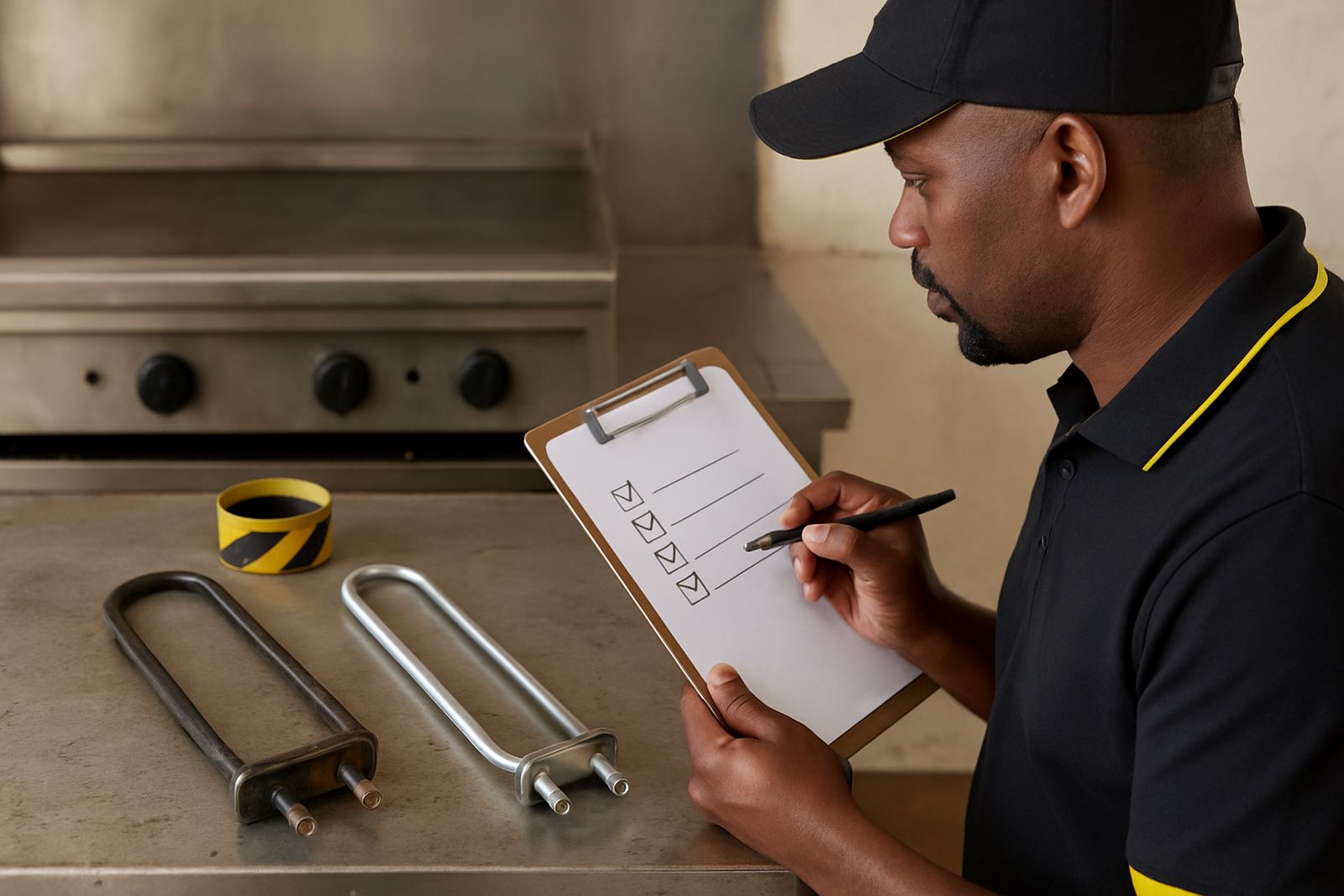
Before ordering parts, check the basics. Make sure the incoming water valve is fully open and the filters are clean. Confirm that the machine is not starved of water because another appliance is drawing from the same line. If the site has just come back after load-shedding, allow the heater to stabilise before testing again.
Look for visible scale on the inlet, tank and element cover. Check whether the heater is cycling at the right time and whether any lights or fault indicators are showing. If the unit keeps tripping, switch it off and do not keep resetting it, because repeated restarts can damage the control set and wiring.
- Check water pressure and valve position
- Clean strainers and inlet filters
- Look for scale, leaks and loose terminals
- Record the model, serial number and fault pattern
What usually needs replacing on a tired booster heater
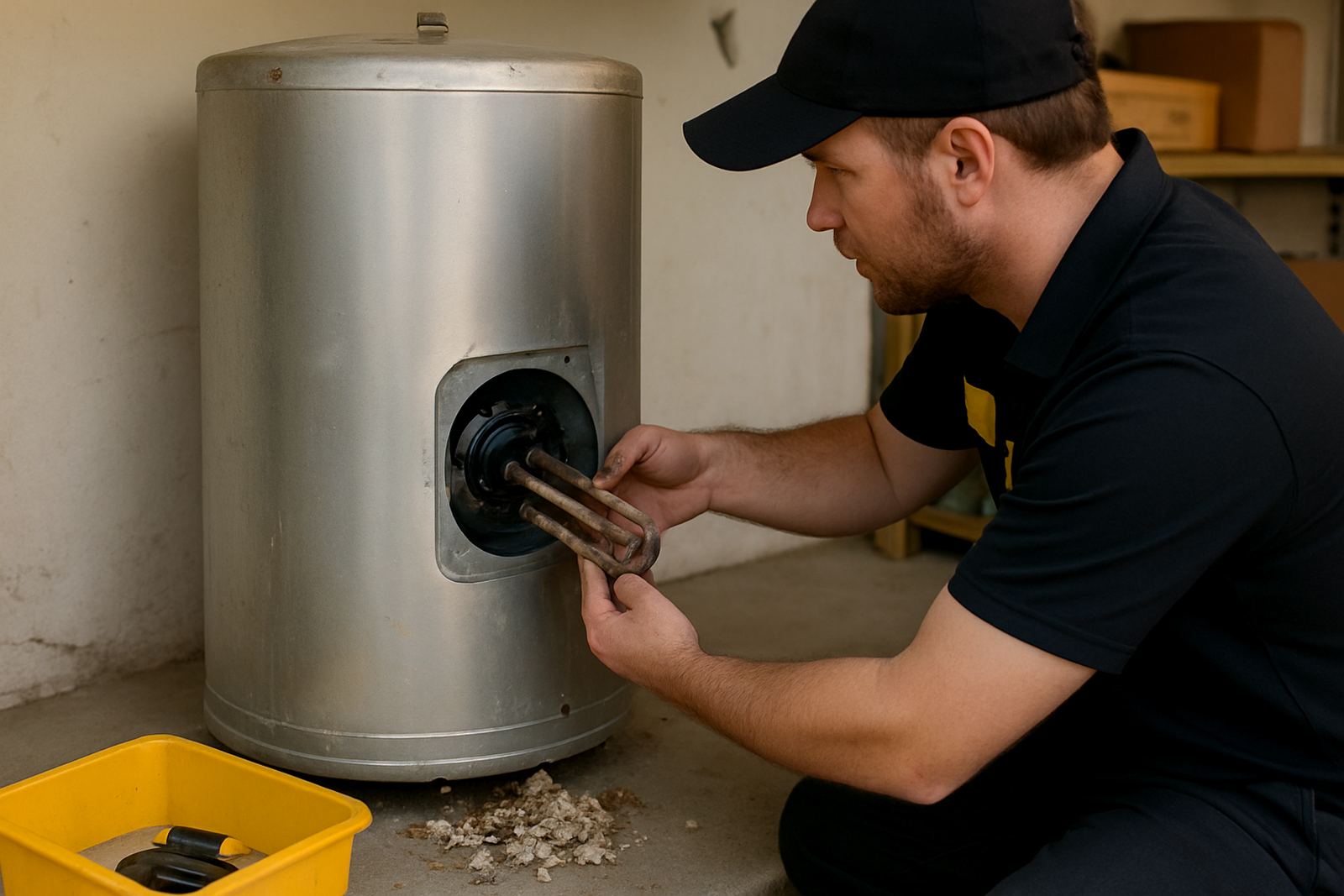
Once the fault is pinned down, the repair is often straightforward. Elements are replaced when scale or burn-out has affected heating. Thermostats and probes are changed when temperature control is drifting. If the heater is switching poorly, contactors, relays or switches may need attention. Worn gaskets and seals should be renewed at the same time if there has been any leak around the tank or cover.
Compatibility matters. A part that looks close enough can still have the wrong rating or fitting pattern, especially on imported kitchen equipment. Getting the right part first time saves another visit and avoids downtime at peak trading hours. That is why part identification and compatibility checks are worth doing before anything is fitted.
- Heating elements and element seals
- Thermostats, sensors and limit switches
- Gaskets, covers and tank seals
- Relays, contactors and control switches
A practical example from a Pretoria site
A busy school kitchen in Pretoria called in after the dishwasher started giving lukewarm final rinses and the staff were re-washing trays by hand. The booster heater had scale on the element, one thermostat was drifting and the inlet filter was choked with grit. The machine was not dead, just underperforming.
After the scale was cleared, the faulty thermostat replaced and the flow checked, the rinse temperature returned to normal and the backlog cleared before lunch. It was a small job in parts terms, but it prevented a larger breakdown later in the term. That is often how these repairs go, catch the fault early and the kitchen keeps moving.
- Old scale reduced heat transfer
- Faulty thermostat caused unstable cycling
- Blocked filter restricted flow
- After repair, rinse temperature returned to spec
How we help kitchens keep booster heaters running
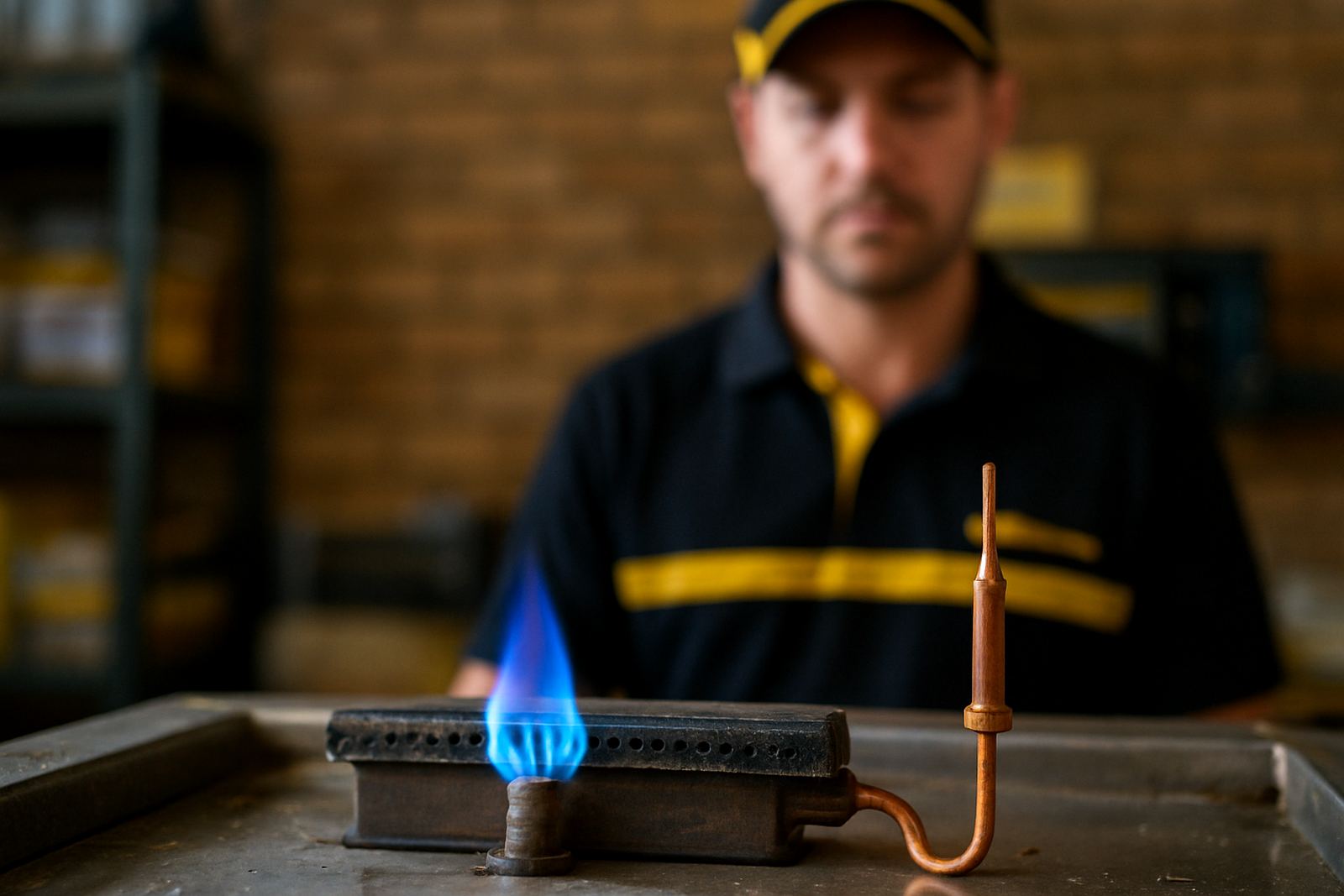
FoodServ Parts Store supplies spare parts for commercial kitchen equipment from our Midrand base, with national dispatch to Johannesburg, Pretoria, Durban, Cape Town and Bloemfontein. We handle part identification, compatibility checks, element fitting, thermostat fitting, gasket fitting, burner fitting, switch panel repairs, dishwasher part fitting, onsite parts support and post-fit testing.
If your dishwasher booster heater is acting up, send the model details, fault notes and a photo if you can. We can help narrow down the likely part before the kitchen loses another service window. For sites dealing with hard water or regular power interruptions, it is worth keeping the common wear parts on hand so a simple fault does not become a full shutdown.
- Email: parts@foodservparts.co.za
- Midrand dispatch for national coverage
- Support for hotels, schools, restaurants and canteens
- Parts matched to the fault, not guessed