Why braided hoses fail when the details are wrong
A braided hose is only as good as the specification behind it. In kitchens around Midrand, Johannesburg and Pretoria, we see failures after a hose was fitted with the wrong thread, stretched too tight or pushed into a bend that was smaller than it should be. Once that hose starts working against itself, the inner line wears, the braid opens up and the joint begins to seep.
For ovens, fryers and dishwashers, the hose must match the task. Hot water, steam, cleaning chemicals and constant vibration all shorten service life. If the hose is undersized or overworked, it may not fail on day one, but it will give trouble when the kitchen is under pressure and that is usually at the worst time.
Measure the run properly before you order
Length is not just a rough estimate. Measure the route the hose must follow, not only the straight line between two points. Leave enough slack for movement, but not so much that the hose hangs low, kinks or rubs against sharp edges. A hose pulled tight will fail early, and one that sits in a loop may trap heat or get damaged during cleaning.
In a busy prep area, technicians should check the full path from inlet to appliance and confirm where the hose passes through panels, under counters or past hot surfaces. If there is a pump, movable tray or drawer nearby, make sure the hose will not pinch during daily use. A few extra millimetres can save a proper headache later.
- Measure the installed route, not just the straight distance.
- Allow for vibration, movement and service access.
- Keep clear of sharp sheet-metal edges and hot surfaces.
- Do not force a hose into a tighter bend than the supplier allows.
Check pressure rating and temperature limits first
Pressure rating matters because a hose that suits one machine may be unsafe on another. Dishwashers often work with repeated fill cycles and hot water, while some fryers and ovens may expose nearby lines to more heat than expected. If the hose is rated too low, you are gambling with leaks, bursts and water damage to floors, motors and control panels.
Temperature is just as important as pressure. A hose fitted close to a heat source in a kitchen in Durban or Cape Town can age faster because of heat and coastal humidity. When steam and wash-downs are part of the daily routine, check that the outer braid and the inner tube can handle the actual site conditions, not only the spec sheet on paper.
- Confirm working pressure, not just the maximum burst figure.
- Check hot-water and steam exposure near the machine.
- Ask whether the hose suits indoor heat and wash-down use.
- Replace hoses showing rust on the braid or swelling on the inner line.
End fittings must match thread, seat and appliance type
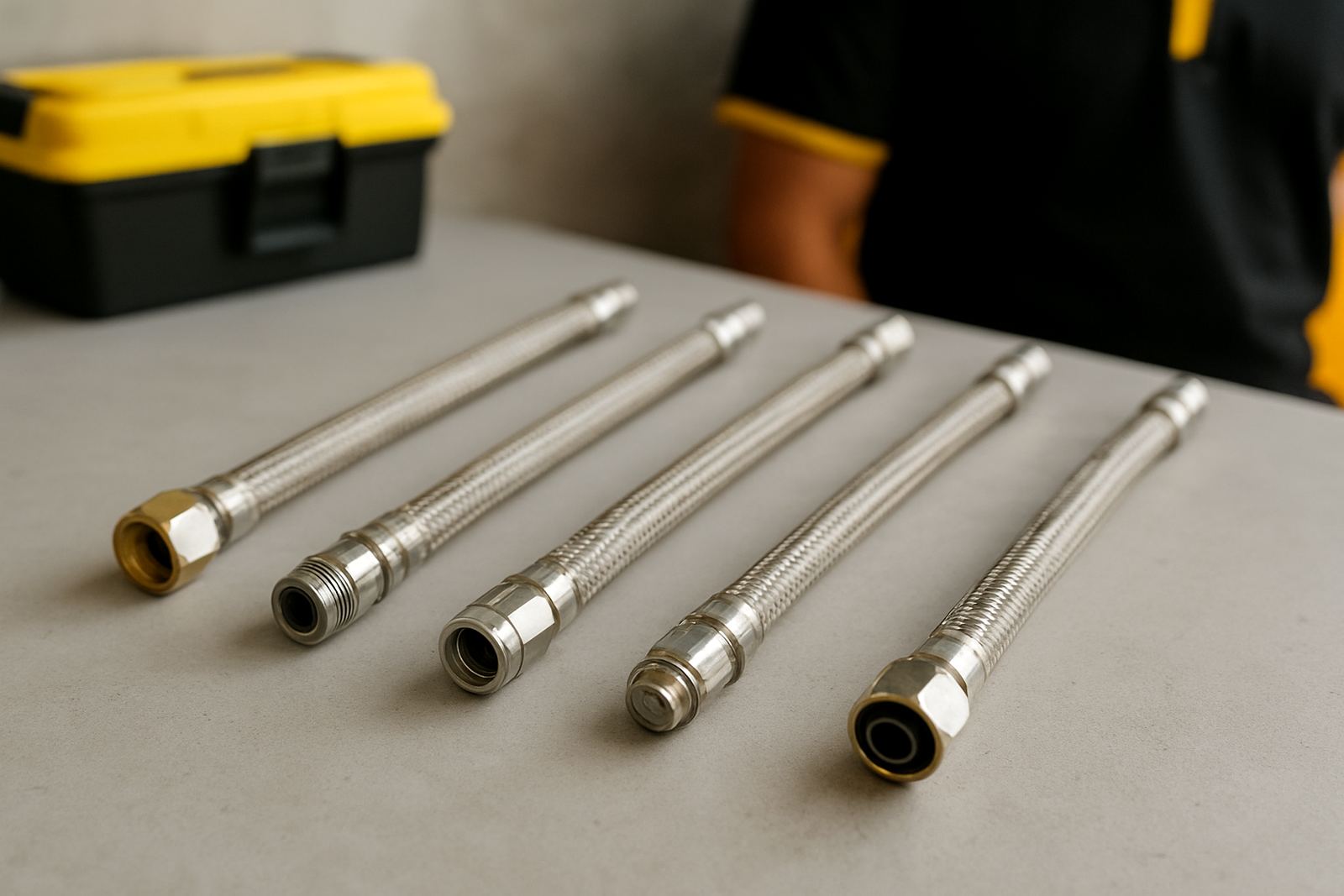
Many call-backs start at the end fittings. The thread may look close enough, but a mismatched fitting will never seal properly. You need the correct size, the correct thread form and the correct seal face for the appliance connection. A washer can hide a weak fit for a short while, but once vibration and pressure start working on it, the drip comes back.
Commercial kitchens use different connection styles on water feeds, drain lines and gas-related support components, so take care not to cross-purpose a hose. If a technician is fitting into a dishwasher bay, check that the hose end allows for service access and that the connection can be tightened without twisting the braid. Twisting damages the hose before it even gets going.
- Match the thread size and thread type exactly.
- Check whether the joint seals on a washer, cone or flat face.
- Make sure the hose can be tightened without twisting.
- Inspect both ends before leaving the site.
Look for real signs of wear before a small leak becomes a shutdown
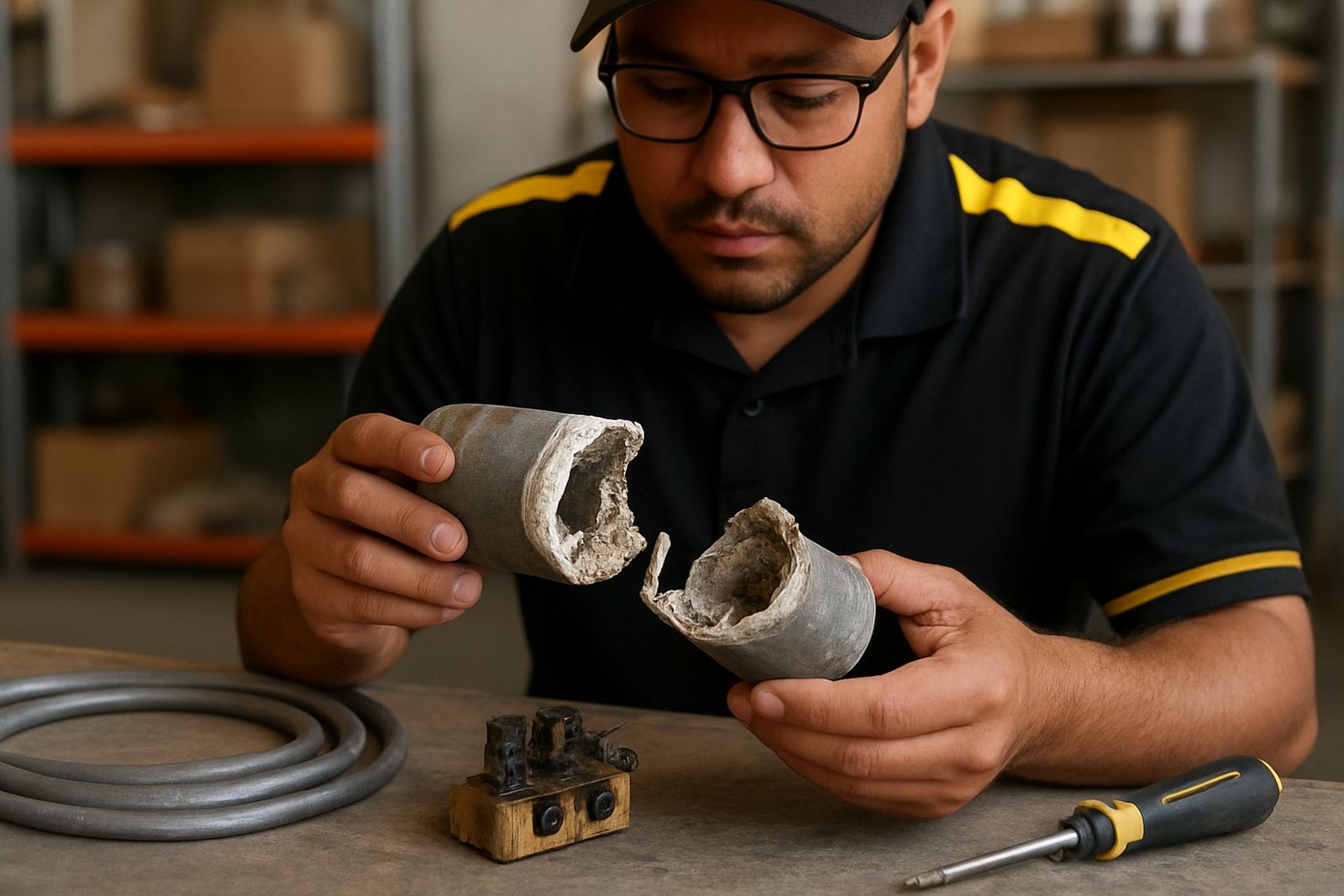
Hoses do not usually fail without warning. Look for kinks, abrasion, rusty braid, cracked outer covers and staining at the fittings. In dishwashing areas, detergent and rinse chemicals can attack weak points over time. On fryer lines and hot zones, the issue may be heat cycling more than water pressure, so the hose hardens and loses flexibility.
If a kitchen is already seeing low flow, error codes or repeated tripping after cleaning, a hose may be part of the fault. That is why post-fit testing matters. Fill the line, check for seepage at both ends and run the appliance long enough to catch a slow drip, not only the obvious one. One small leak can turn into a damaged board or a wet floor before lunch service. It happens fast.
A Midrand example that shows why the spec matters
A catering site near the Midrand industrial area called after a dishwasher kept losing pressure during peak service. The first hose had been replaced with one that was slightly shorter and fitted under strain. It held for a while, then started pulling at the end fitting every time the machine vibrated. The repair team corrected the route, fitted the right length and checked the pressure rating against the machine's working cycle.
After the change, the unit ran normally and the leak stopped. That job was not about a fancy part, only about matching the hose to the machine and the space around it. The same logic applies across ovens, fryers and prep equipment: get the length right, confirm the pressure and fit the correct ends, otherwise you are fixing the same fault twice.
For kitchens in Johannesburg, Pretoria, Durban, Cape Town and Bloemfontein, this simple check saves time, water and repeat call-outs. It also helps teams plan around load-shedding and busy service windows, because the less time spent on leaks the better.