The pattern tells you more than the machine does
When a commercial dishwasher starts leaving the same marks on the same spots, the wash arm is usually the first place to check. A blocked nozzle does not always stop the machine from running, so operators in busy kitchens often miss it until the rewash pile grows.
The tell-tale sign is a repeating pattern. You may see one corner of a tray still dirty, a row of glasses with dried tea stains at the same height, or plates with food on the same section after every cycle. That pattern is the clue, because a healthy wash arm should spread water evenly across the load.
In Midrand and the rest of Gauteng, we often see this after a few weeks of heavy service where crumbs, pips, labels and broken garnish pieces work their way into the spray holes. If the water pressure drops and the arm still turns slowly, the blockage can be partial rather than complete.
Common blockage signs staff can spot before service breaks down
Staff do not need a multimeter to notice a wash arm problem. A quick visual check before service can pick up most of the warning signs.
- Repeated dirty patches in the same area on plates, trays or crates
- Glasses coming out cloudy on one side only
- Food particles sitting in the bottom of cups after a normal cycle
- Wash arms turning slowly or not spinning freely by hand
- Spray jets that feel blocked when inspected after switching off and isolating the machine
- Unusual noise, such as a knocking or scraping sound during the wash stage
If the lower wash arm is blocked, the lower rack may come out worse than the top. If the upper arm is the issue, glasses and light items on the top rack often show the damage first. In some kitchens, the problem looks like poor chemical dosing but the real cause is simply poor water spread.
What usually blocks a wash arm in South African kitchens
Commercial dishwashers pick up more debris than most teams expect. In canteens, hotels, schools and takeaway prep kitchens, the usual causes are simple but annoying. Hard water scale can narrow the spray holes, while grease and starch build up inside the arm. Small bits of lemon pips, rice, stickers from containers and broken cutlery ends can also lodge inside the channel.
Coastal humidity does not help either. In Durban, Cape Town and other damp areas, moisture can encourage residue to stick inside parts for longer, which makes scale and grime harder to wash out. If the machine has been sitting idle during load-shedding or a quiet weekend, dried residue can set harder than usual.
The most common reasons we see are:
- Food scraps not scraped off before loading
- Blocked filters allowing debris back into circulation
- Scale from hard water, especially on older rinse systems
- Damaged wash arm caps or cracked ends
- Incorrect loading that stops water reaching the arm properly
A quick inspection before you call for parts
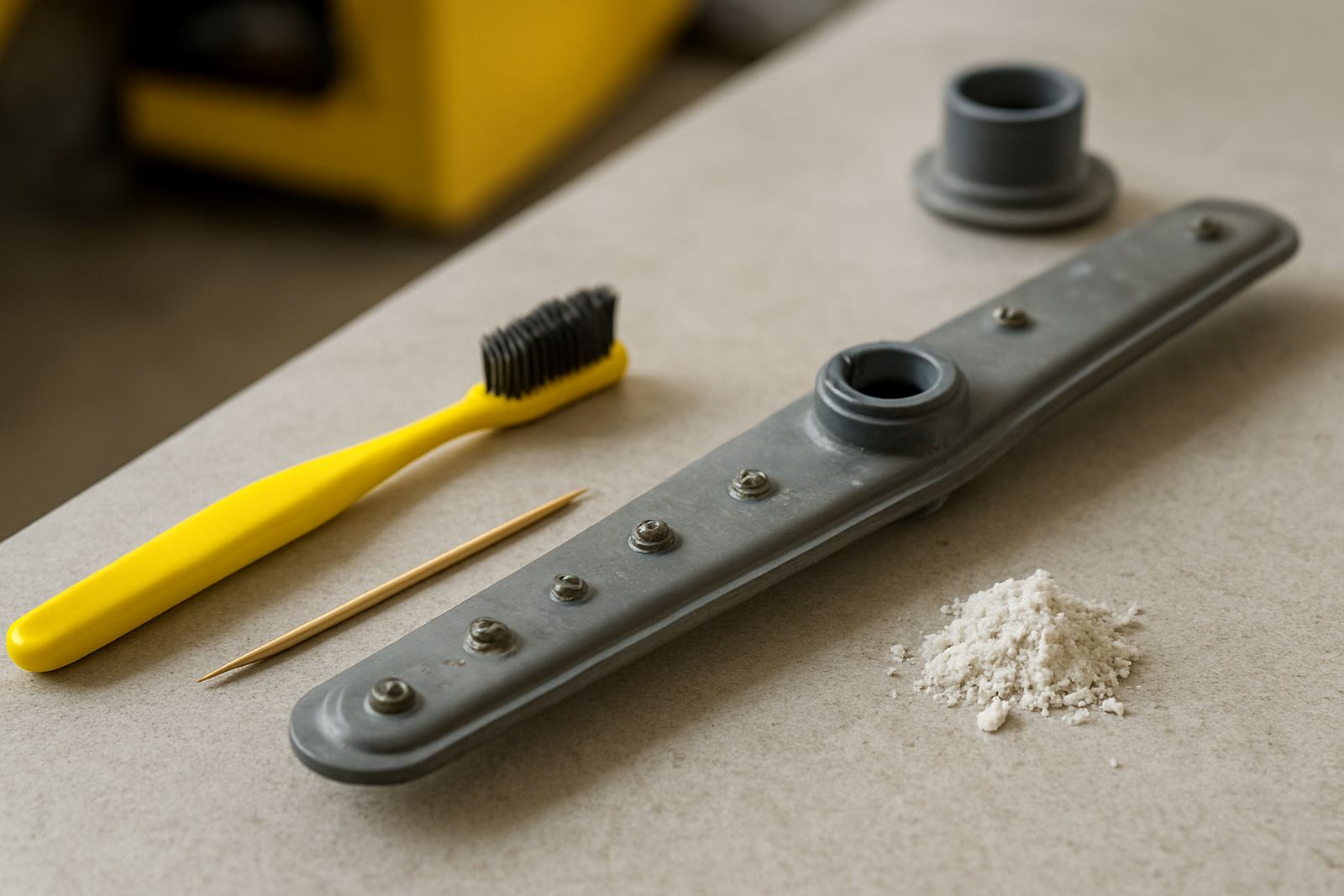
A few minutes of checking can tell you whether you have a cleaning issue, a fitting issue or a part that needs replacement. Switch the machine off, isolate power and let it cool before opening anything. Then remove the wash arm and check whether it rotates freely. If it feels stiff or catches, look for buildup around the centre bush and the ends.
Hold the arm up to the light and look through each jet opening. Even one partly blocked hole can leave a clean stripe and a dirty stripe on the load. If the arm is split or warped, water will not spread evenly no matter how well you clean it.
Use this quick check:
- Remove the arm and rinse out loose debris
- Check the centre mount for wear or cracking
- Look for scale inside the spray tubes
- Inspect the filters and sumps at the same time
- Spin the arm by hand to feel for rough movement
If the part is clean but still marks the same area, the problem may be a worn bearing, low pressure, or a thermostat issue affecting wash temperature. That is when compatibility checks and proper part identification matter.
When a blocked wash arm becomes a bigger dishwasher fault
A blocked wash arm is not only a cleaning fault. Left alone, it can put extra strain on pumps, heaters and seals because the machine runs longer and gets cycled more often. Staff start repeating washes, chemical use goes up and the kitchen burns more water and electricity than needed.
In a Pretoria hospital kitchen or a school in Bloemfontein, that can mean a backlog by mid-morning. In a restaurant, it can mean plates coming back to the pass with stains right when lunch service starts. If the team keeps forcing the machine through service, a small blockage can turn into a damaged arm, worn gasket or a pump problem.
Watch for these signs that the issue has moved past simple cleaning:
- The arm blocks again soon after cleaning
- The spray holes are enlarged, split or misshapen
- The machine leaves a repeat pattern even with good loading
- Water pressure seems weak across both racks
- The arm rattles, sags or leaks at the joint
Practical local example from a busy Midrand kitchen
We often hear from kitchens around Midrand and Johannesburg where the dishwasher looks fine at first glance but the trays are coming out with the same dirty corner every time. In one case, the staff thought the machine needed a new heater because the wash was poor. The real issue was a lower wash arm packed with rice husks and hard-water scale, plus a blocked filter that kept sending grit back into circulation.
After the arm was cleaned and checked for wear, the pattern disappeared. The team also changed the loading method so tray edges were not sitting directly over the blocked spray path. That saved them from buying a part they did not need, and it got them through a Friday supper run without rewash delays.
This is why a simple blockage check matters. It can save time, water and a callout, especially when the kitchen is already stretched and the power has come back after an outage.
Get the right wash arm parts before service slips
Wash arms, end caps, gaskets and mounts need to match the machine properly. A part that is nearly right can still leave gaps, leak at the joint, or miss the spray angle the machine was designed for. That is why compatibility checks matter just as much as the replacement itself.
FoodServ Parts Store supplies commercial kitchen spare parts nationwide, with dispatch from Midrand for kitchens across Johannesburg, Pretoria, Durban, Cape Town and Bloemfontein. If you are not sure whether the wash arm is blocked, worn or cracked, it is better to check the part against the model before the next service rush.
For a fast repair path, keep these details ready:
- Machine make and model
- Serial number if available
- Which rack is showing the dirty pattern
- Whether the arm spins freely by hand
- Photos of the wash arm, filters and spray pattern on the ware
That makes part identification easier and helps avoid repeat faults after fitting.