Why caterers need parts that change over fast
Event catering is not like fixed-site cooking. You may be loading at 05:00, parking at a school sports day in Pretoria by 08:00, then moving to a function in Midrand the same night. If an element burns out or a switch fails, the whole day can shift from paid work to damage control. That is why caterers should think in terms of quick change parts, not only emergency repairs.
The best spare parts for mobile work are the ones that can be identified quickly, fitted without delay and tested before the next service. Ovens, fryers and dishwashers each have a short list of items that fail often. Keep those items at the top of your maintenance plan and you reduce last minute cancellations, late plates and unhappy clients.
For a caterer, every hour lost matters. A fryer that is out for 45 minutes during lunch service can leave chips behind, while a washer with a bad gasket can mean buckets, towels and extra labour. Small faults become expensive fast, so it pays to stock for the parts that stop work instantly.
The parts caterers should keep closest at hand
Not every spare needs to live in the vehicle, but a working caterer should have a practical core kit. That kit should match the appliances used most often and the jobs that carry the highest risk of downtime. If your team uses gas ovens, electric ovens and undercounter dishwashers, the spare list will look different from a snack trailer that runs mainly fryers.
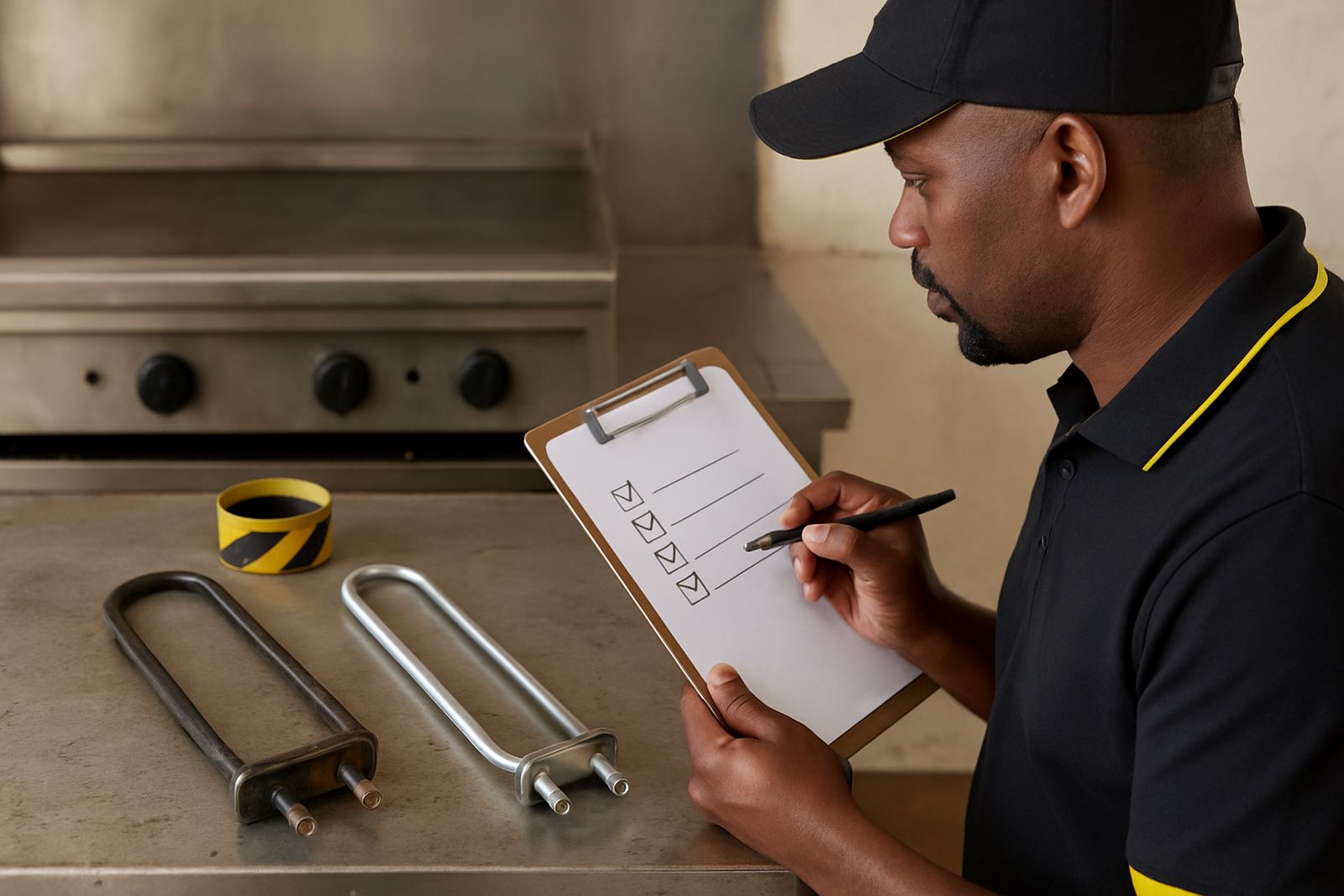
- Heating elements for ovens and fryers
- Thermostats and temperature controls
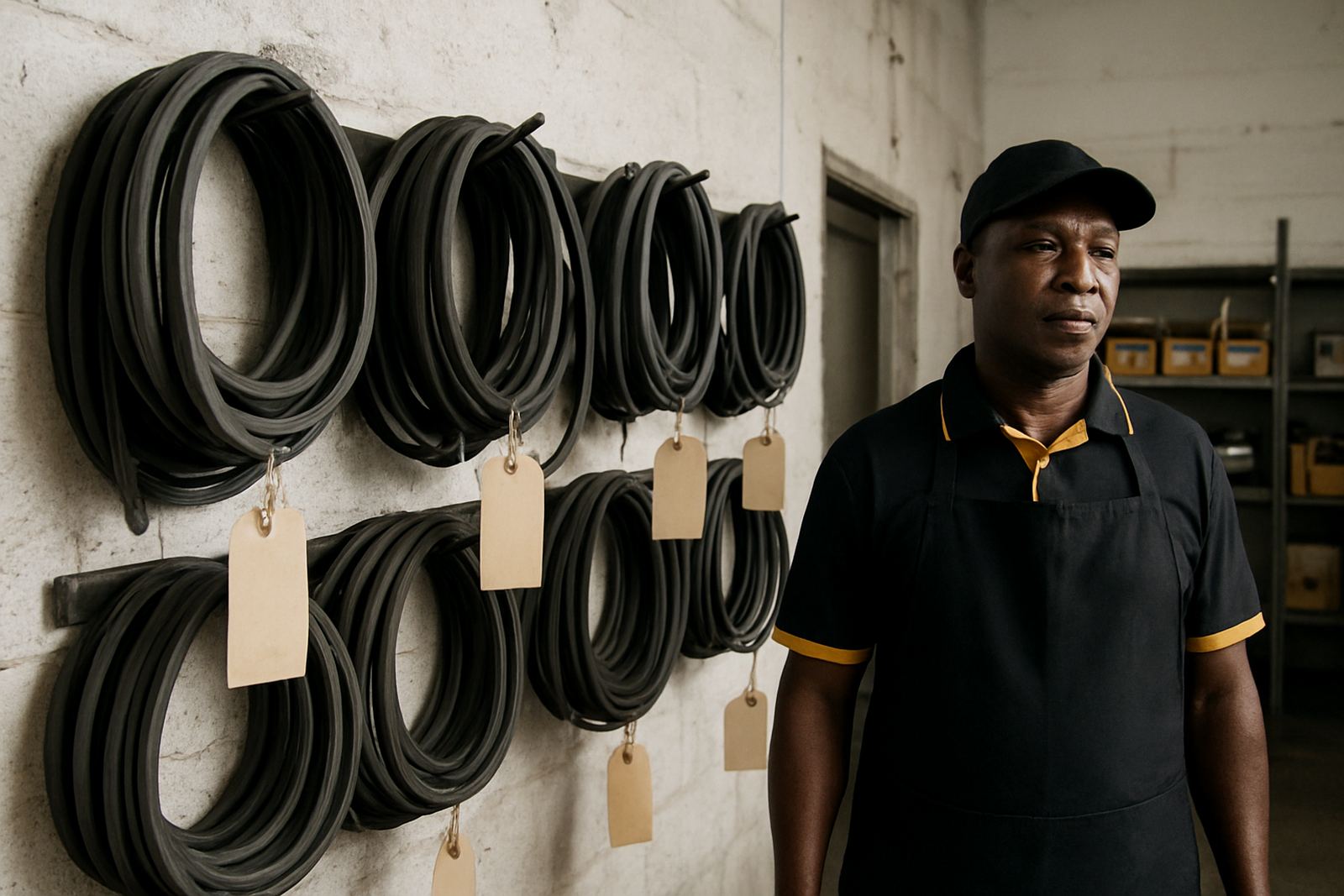
- Door and tank gaskets
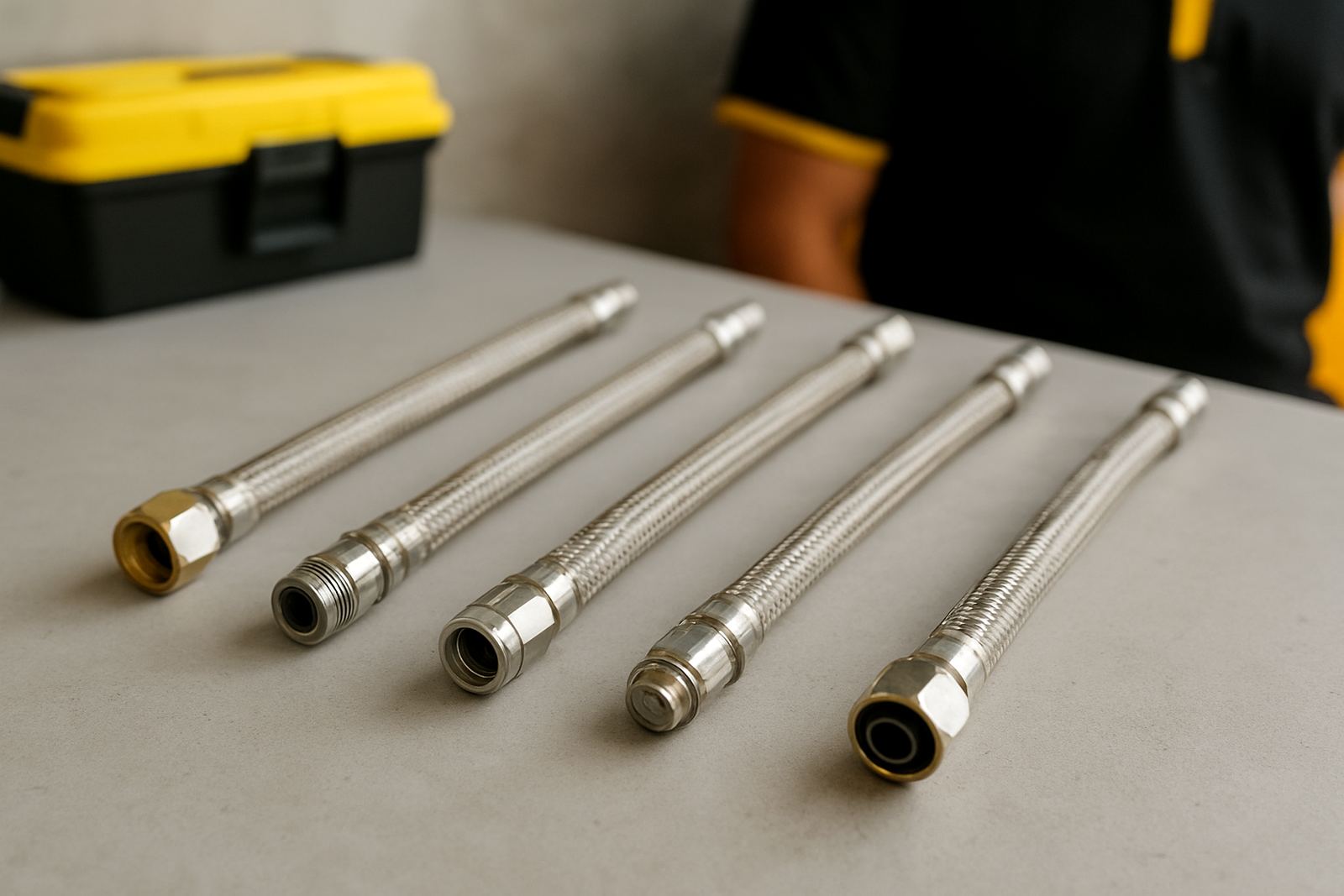
- Burners and ignition related parts
- Switches and switch panels
- Dishwasher spray and sealing parts
These are the parts that usually let you get back into service quickly. A worn gasket can cause heat loss and long preheat times. A weak thermostat can throw your temperatures off by a few degrees, which is enough to affect product quality and food safety. A damaged switch can stop a unit from starting at all.
It is better to keep one confirmed spare for the items that fail often than to carry boxes of parts you may never use. Space in a catering vehicle is tight, and the wrong stock just adds clutter.
How to avoid buying the wrong spare
Compatibility checks matter more than guesswork. Many caterers know the appliance by sight, but that is not enough when you need the correct element length, terminal position or gasket profile. Two ovens can look almost identical and still use different parts. The same goes for fryers, where the burner size and switch rating must match the unit.
Before you order, record the model details, serial number and any markings on the old part. If the old part has failed badly, take measurements across the fitting points, not just the outer size. In many cases, the safest route is to compare the failed part against a replacement before it leaves the depot. That saves time and avoids a second call out.
At FoodServ Parts Store we handle part identification and compatibility checks for commercial kitchen equipment. That is useful for caterers who work from borrowed equipment, rented kitchens or mixed fleets where the appliance list keeps changing. It is common in Johannesburg and Durban to see event teams using a mix of older and newer units, and those systems do not always accept the same fittings.
If you are not sure, ask for a check before fitting starts. A quick phone call can save a wasted trip and a very unhappy chef.
Planning for load shedding, heat and coastal conditions
South African catering teams have to plan for more than normal wear. Load shedding can interrupt cooling cycles and restart sequences. Heat in summer puts pressure on thermostats, switches and insulation. On the coast, moisture and salty air can shorten the life of connectors, burners and gaskets. A unit that works fine in Midrand can behave differently after a few weekends in Durban.
For that reason, caterers should keep a closer eye on parts that show early signs of stress. Watch for uneven heat, longer warm up times, smell from overheated wiring, or doors that no longer seal properly. These are not small annoyances. They are the first warning that the next service could stop mid shift.
- Test appliances after any power interruption
- Check gaskets for cracks, flattening or loose edges
- Inspect burners for uneven flame or delayed ignition
- Look for burnt terminals on switches and thermostats
- Run a short test cycle before dispatching gear to site
Post-fit testing is worth the effort. A part may be installed correctly but still need a heat cycle or water run to prove it is doing its job.
What to keep in the vehicle and what to leave at base
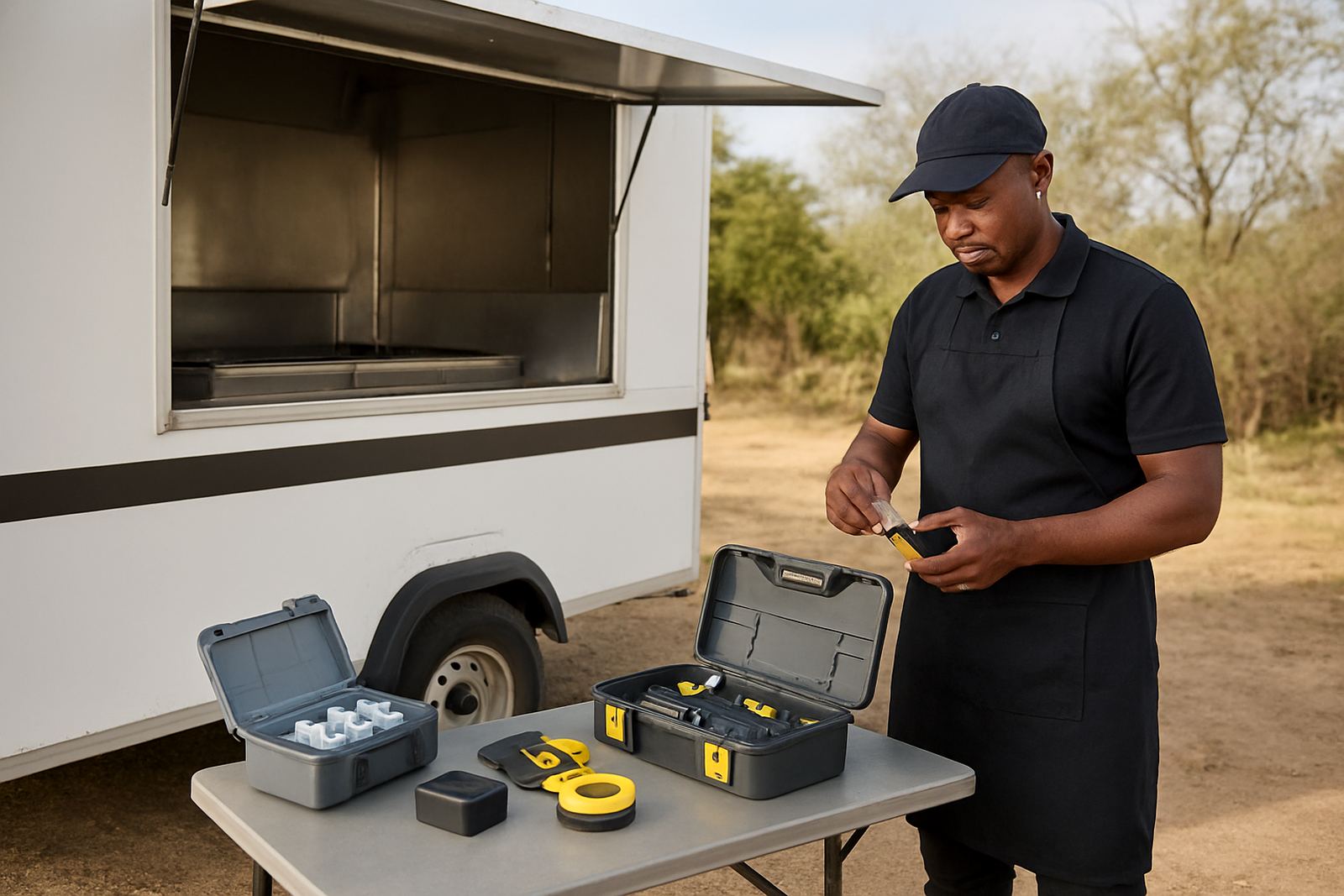
The vehicle kit should be limited to the parts that can save a service on the spot. Think of it as the first response bag for kitchen equipment. Keep the items that fit your most used machines and the basic tools needed for a safe changeover. Anything bulky, specialist or low use can stay at the Midrand base until needed.
A sensible split is to hold common wear items in the van and keep matched spares at base for planned work. That means your field team can deal with a failed thermostat on site, while the warehouse keeps deeper stock for the next fitting job. It also helps the dispatch team move faster when a job comes in from Pretoria, Cape Town or Bloemfontein.
For mobile caterers, ordering should follow service dates. If you have a wedding booked for Saturday, do not wait until Friday afternoon to ask for a burner or gasket. Give yourself time for checking, packing and, where needed, fitting advice.
A local example from a busy event weekend
A caterer working a corporate event in Sandton had a fryer losing temperature after the first lunch rush. The unit was still running, but recovery time had slowed enough to delay the next batch. The problem was traced to a worn thermostat and a tired element. Because the team had the model details on hand, the correct parts were matched quickly and dispatched from Midrand. The fryer was back in use before evening service, with no need to cancel the remaining bookings.
That kind of fix is what mobile catering depends on. Not every problem needs a full workshop visit. Sometimes it only needs the right part, the right fit and a clean test afterwards. When a team works like that, they protect revenue and keep clients from noticing the strain behind the scenes.
FoodServ Parts Store supports caterers with element fitting, thermostat fitting, gasket fitting, burner fitting, switch panel repairs and dishwasher part fitting. For teams that need onsite parts support, that can make the difference between a full service and a rushed apology.
Build a spare-parts habit before the next booking
The easiest time to deal with a fault is before the booking starts. Caterers who review their equipment after each function usually catch small faults early, when the fix is still cheap and straight forward. A cracked seal, a weak switch or a delayed burner can wait for a little while, but only until the next busy day proves the weak point.
Set up a simple routine: inspect, record, match, order, fit and test. Keep the record with the appliance, not in a random file. That way the next person on shift can see what was changed and when. It is a plain system, but it works in a busy kitchen and it suits the pace of event work.
For mobile and event caterers, the right spare is not a luxury. It is part of keeping the schedule, the food and the cash flow on track.