Why the plate matters before you order anything
When a commercial oven, fryer or dishwasher gives trouble, the first mistake is often to guess the part by looking at the machine from the outside. Two units can look nearly identical and still use different elements, thermostats, burners or switch assemblies. The model plate, rating plate or data plate tells you exactly what you are working with.
On most kitchen equipment, that plate lists the make, model number, serial number, electrical rating and in many cases the gas type or phase. Those details help a parts supplier narrow down the correct replacement and avoid a return that wastes time and freight. In a busy kitchen every hour counts, especially when you are fighting load-shedding or a full breakfast trade.
For Foodserv Parts Store, the plate is usually the fastest route to part identification. It gives the technical team something solid to work from, rather than a description like “the one near the back” or “the round thing by the thermostat”.
Where to find the plate on ovens, fryers and dishwashers
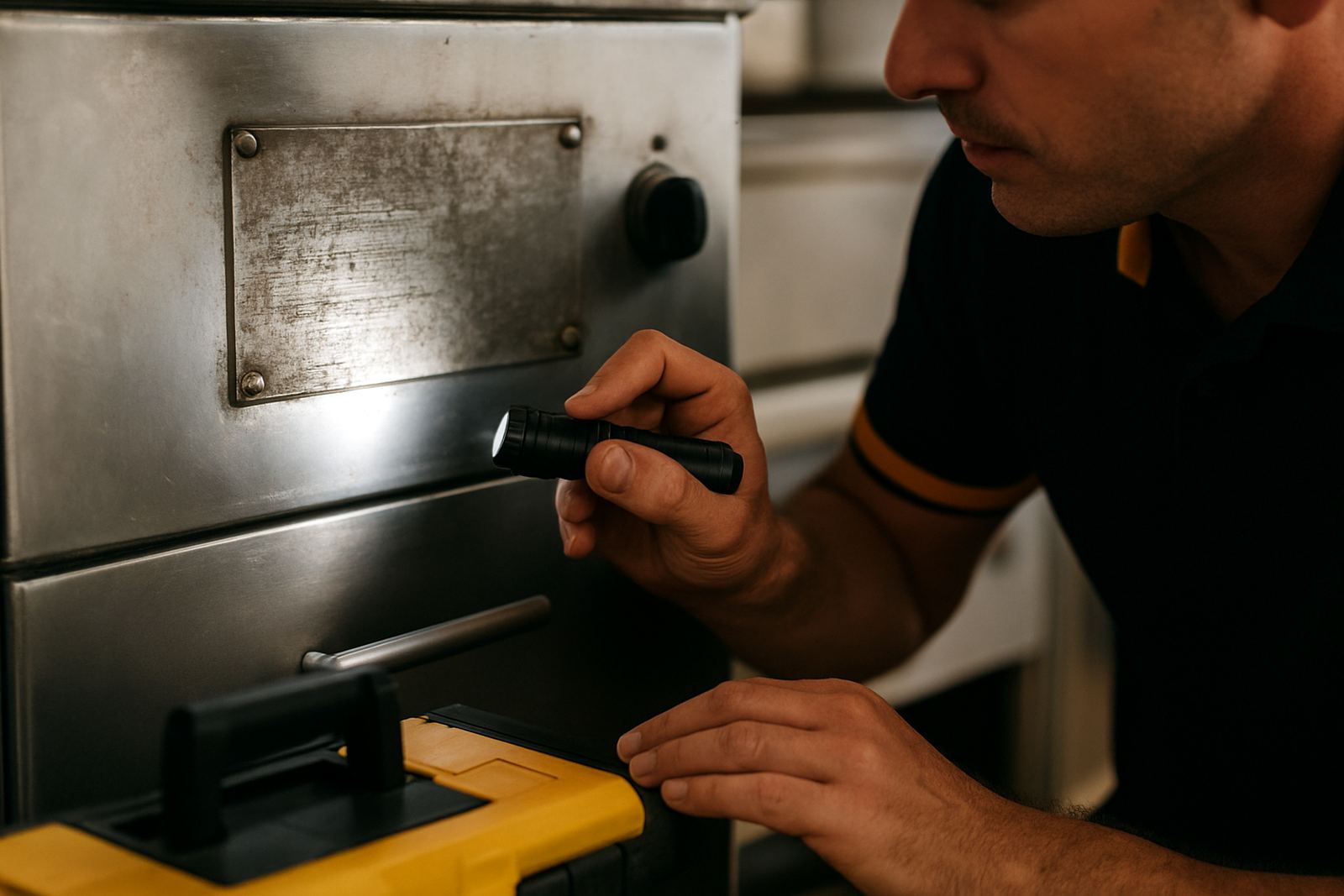
The plate is often fixed to the frame, side panel, rear panel, inside the door jamb or behind a lower kick plate. On dishwashers it may be tucked low down near the service access cover where it picks up steam and grime. On fryers it can sit on the inside cabinet wall, while on ovens it is often on the rear or side of the body.
- Switch off the unit before reaching into tight service areas.
- Use a torch and wipe away grease, flour dust or detergent residue first.
- Take a clear photo, then take a second one closer in for the text.
- Check if the plate is faded, scratched or partly missing.
If the plate is hard to read, do not guess at the last digits. One wrong number can point to a different voltage, different burner size or a gasket profile that does not seal properly. In coastal areas like Durban, salt air and humidity can make plates corrode faster than expected, so a picture taken early can save trouble later.
The details that matter most for spare parts matching
Not every number on a plate matters equally. A good supplier will focus on the fields that affect fit and function, especially where safety and electrical load are involved. If you send the right information at the start, the process is much quicker.
- Model number: the main reference for the equipment version.
- Serial number: helps confirm production batch or revision.
- Electrical rating: voltage, phase and amperage for elements and switches.
- Gas type: critical for burners and ignition parts.
- Input or load figures: useful for thermostats, contactors and elements.
- Date code or manufacturing note: can separate old and revised parts.
These details matter because a thermostat fitted to one version may not probe the same way on another, and a gasket that looks close can still leave a small gap. That gap turns into heat loss, steam leakage or poor wash performance. Small faults become bigger bills.
A Johannesburg example from a busy breakfast kitchen
A restaurant in Johannesburg called about a combi oven that was tripping off during the morning rush. The kitchen team thought the element had burned out, but the model plate showed a different electrical rating than the one they were about to order. Once the plate details were checked properly, the real issue was found in the control side, with a switch panel fault and a tired high-limit thermostat.
That saved them from fitting the wrong element and waiting another day for the next delivery. It also meant the service team could arrange the correct parts in one trip, then do post-fit testing on site before handing the unit back. For a trade kitchen, that kind of accuracy keeps the pass moving and avoids unnecessary downtime.
The same approach works in Pretoria, Cape Town, Bloemfontein and coastal towns where equipment can age differently because of water quality, heat and daily duty cycle. The plate gives you a starting point, but the condition of the machine still needs proper checking.
What to send with the plate photo
A clear photo of the model plate is a strong start, but it works best with a few extra details. That is because many commercial units carry revisions, and the visible symptom on the day may not point straight to the failed component.
- A photo of the full machine from the front and side.
- A close-up of the failed part if it is safe to remove.
- A note of the problem, for example no heat, slow heat, leaking door or poor wash cycle.
- The kitchen location and whether the unit is gas or electric.
- The town or suburb for dispatch or onsite fitting.
If the machine is in Midrand, Sandton or Pretoria East, parts can often be moved quickly from the depot. For coastal sites, extra care may be needed with corrosion on switches and terminals. If the machine has already been opened, keep the old part aside. Even a cracked gasket or burnt terminal block can help confirm the right replacement.
How model plates support safer repairs and cleaner handovers
A plate reading is not only about getting the right part. It also supports safer work. Matching the correct element, thermostat or burner reduces the risk of overloading the circuit, running the wrong temperature range, or fitting a part that forces the operator to work around a fault.
For kitchens under pressure, especially where service times are tight and backup equipment is limited, the cleanest repair is the one based on accurate identification from the start. That is where model plate details, compatibility checks and post-fit testing make the difference. It is practical work, not guesswork, and it keeps equipment in service longer.
When the plate is missing or unreadable, a technical assessment can still help, but it takes more time. Whenever possible, photograph the plate before cleaning, before stripping and before the labels fade further. One clear photo today can save a second call-out tomorrow.
The shortest route to the correct spare
If a machine is down, the goal is simple: identify it properly, match the part and get it working again without unnecessary delays. The model plate is the small bit of metal or sticker that makes that possible. It is often overlooked, but it carries more value than most people realise.
Before asking for a replacement, check the plate, take a clean photo and note the symptoms. That single step improves the odds of getting the correct part first time, whether you need an element, thermostat, gasket, burner or switch. In a trade kitchen, that can be the difference between a missed service and a smooth shift.