Start with the wash pattern, not the machine
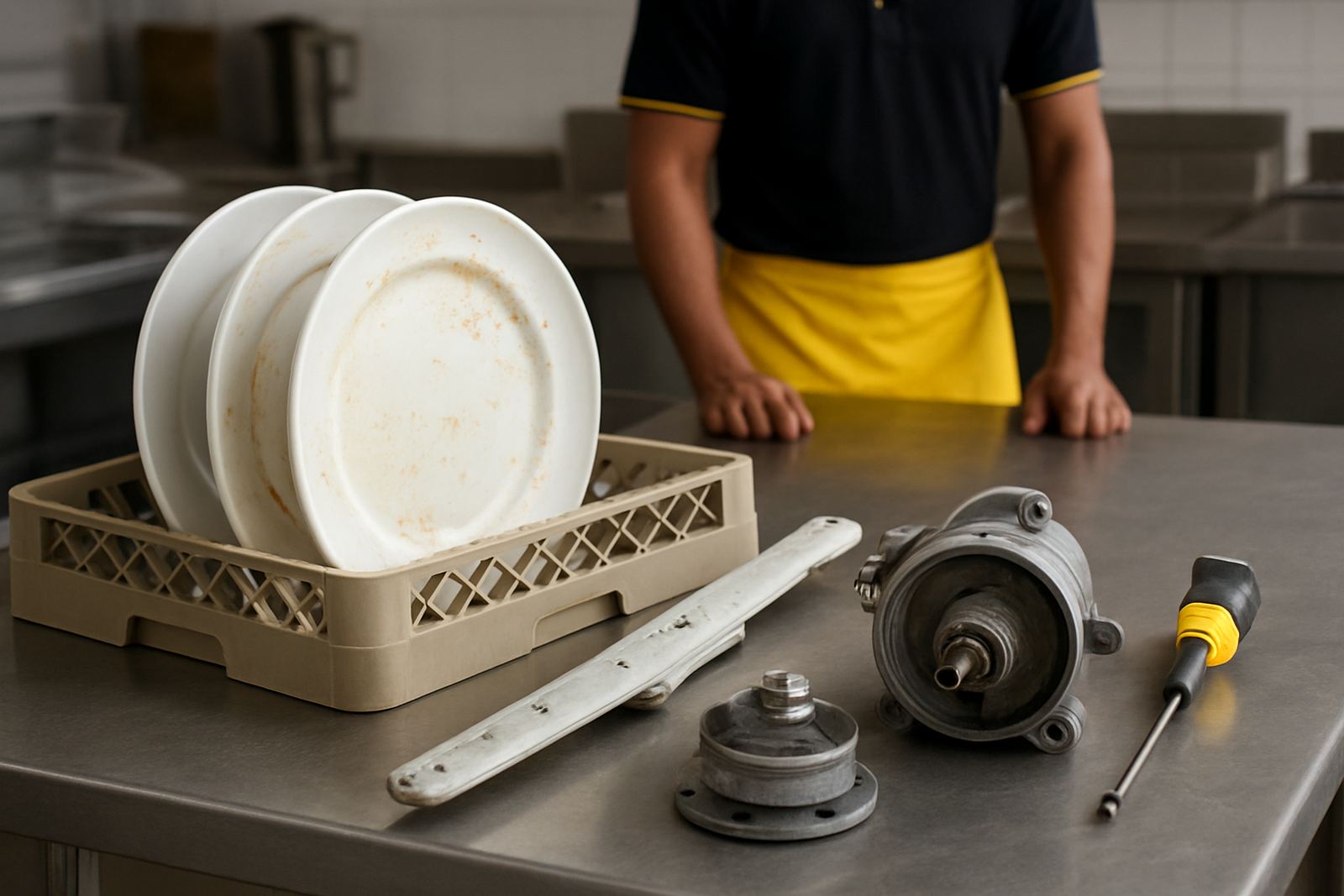
Before you pull the unit apart, look at the dishes and trays coming out. If tea glasses have a cloudy film, the problem may be rinse related. If plates come out with food bits still stuck on, the machine is not breaking down soil properly. If one side of the load is clean and the other side is not, you may be dealing with spray coverage or a weak pump.
Commercial dishwashers work hard in restaurants, hotels, canteens and takeaway kitchens across Midrand, Johannesburg and Pretoria. When water pressure drops or the machine gets poor water quality, wash results can go south fast. Start by checking whether the machine has had normal pre-rinse, correct detergent, and enough hot water supply. A dishwasher can only do so much if the feed water is cold or the wash tank is underfilled.
- Check if the same problem shows on all racks or only certain areas
- Look for food residue, film, spots or a dull finish
- Confirm the water is reaching operating temperature before a busy service
- Make sure filters and strainers were cleaned after the last shift
Check spray arms and jets for blockages
Blocked spray arms are one of the most common reasons for poor wash. Bits of glass, rice, label glue and scale can block the small jet holes and stop the water pattern from reaching the whole load. If the arms do not spin freely, dishes in the top or bottom rack can stay dirty even though the pump is running.
Remove the spray arms and inspect them in good light. Hold them up to a tap or hose and make sure water passes through each jet. If you see hard scale, soak the arm in warm water and a suitable descaler, then rinse well. Never force a pin or wire through a jet unless the manufacturer allows it, because that can enlarge the hole and upset the spray pattern.
- Spin each arm by hand and check for rubbing
- Inspect end caps, bearings and mounting points
- Clean the sump and filter basket before refitting
- Look for cracked arms that leak instead of spraying
When the pump is weak, the wash suffers
The wash pump must move a strong, even flow through the spray arms. If it sounds strained, trips the breaker, or runs but the machine still leaves residue behind, the pump could be worn, jammed or blocked by debris. In some cases the impeller has damage from broken crockery or hard particles. On older units, the motor can start fine but lose output under load.
First make sure the filters and suction area are clear. Then listen for changes in sound when the load starts. A healthy pump usually has a steady tone. If the sound pulses, rattles or changes after a few seconds, there may be a failing seal, bearing or impeller issue. In coastal areas like Durban and Cape Town, moisture and salt air can also shorten the life of electrical components around the pump housing.
- Check the pump inlet for debris and broken glass
- Look for water leaks around the seal or motor housing
- Confirm the pump is getting full power during the wash cycle
- Inspect any visible wiring for heat damage or loose terminals
Water temperature and detergent dose matter more than people think
If the wash tank is too cool, grease does not break down properly and the detergent cannot do its job. If the rinse water is not hot enough, you can get poor drying and a greasy feel on plates and cutlery. Temperature faults often show up when the thermostat, heating element or sensor is drifting out of range.
Do a simple check with a reliable thermometer rather than guessing from the control panel alone. Compare the actual water temperature to the machine setting and the wash cycle timing. Also confirm the detergent and rinse aid are being dosed correctly. Too little chemical leaves food behind, while too much can create film and streaking. That mix up happens alot in busy kitchens when staff change over during service.
- Test wash and rinse temperatures with a separate thermometer
- Check that the thermostat is responding properly
- Inspect heating elements for scale, scorch marks or no heat
- Verify detergent lines, caps and dosing tubes are not blocked
Door gaskets, water levels and loading can create false faults
Sometimes the dishwasher is not broken, it is just not sealing or loading correctly. A worn gasket allows steam and heat loss, while low water level means the pump cannot work with enough force. Overloading racks can also block spray paths and leave the centre of a tray dirty, even if the machine itself is fine.
Check the door gasket for splits, hard sections and gaps at the corners. On undercounter units, look at the bottom seal too. If the machine is not filling to the right mark, the float switch, inlet valve or pressure control may need attention. Also make sure pans and plates are angled properly. A tightly packed load can hold food in place and reduce contact with water.
- Inspect all gaskets for cracks, flattening and loose corners
- Confirm the machine fills to the correct level
- Load items with space between them for water flow
- Watch for dripping or steam loss around the door during a cycle
A practical fault-check before you order parts
If the wash is still poor after cleaning filters and spray arms, work through the fault in order. Start with water supply, then temperature, then spray coverage, then pump output. That approach saves time and helps you order the right part first time. In a national kitchen operation, a quick compatibility check matters because one wrong thermostat or gasket can keep a machine out of service for another day.
For busy sites in Midrand, Johannesburg, Pretoria, Durban, Cape Town and Bloemfontein, it helps to keep a small parts plan on hand. Common spares include elements, thermostats, gaskets, burners and switches, plus pump-related fittings where applicable. If you need onsite help, post-fit testing is worth doing so the machine goes back into service with proper wash results, not just a quiet motor and a full rack of dirty plates.
- Record the make, model and serial number before ordering
- Photograph the failed part and the wiring or mounting points
- Check voltage, phase and size before fitting any replacement
- Test a full cycle after the repair, not just a short run