Start With The Basics Before You Open The Oven
If the oven is dead or only warming slightly, begin with the simple checks first. A lot of service calls in Midrand, Johannesburg and Pretoria end up being a power issue, a tripped isolator or a loose connection rather than a major part failure. Check that the unit has supply, the breaker is on and any wall isolator is not damaged or overheated.
Also confirm whether the oven is supposed to be on a single phase or three phase supply. An incorrect supply can make the oven behave unpredictably, especially after load shedding or if a tenant moved equipment without calling a technician. If the display works but the cavity stays cold, you are likely looking at a heat control fault, not a complete power loss.
- Check the circuit breaker and local isolator
- Look for burnt plugs, loose terminals or heat marks
- Confirm the supply matches the oven rating plate
- Test whether lights, timers or fans still work
How To Tell If The Element Has Failed
The heating element is one of the most common reasons an oven will not heat. In many commercial ovens the element can fail open circuit, so the fan may still run and the control lights may still come on but no heat is produced. On older units you may also see the element bulging, cracked or showing hot spots where it has burnt through.
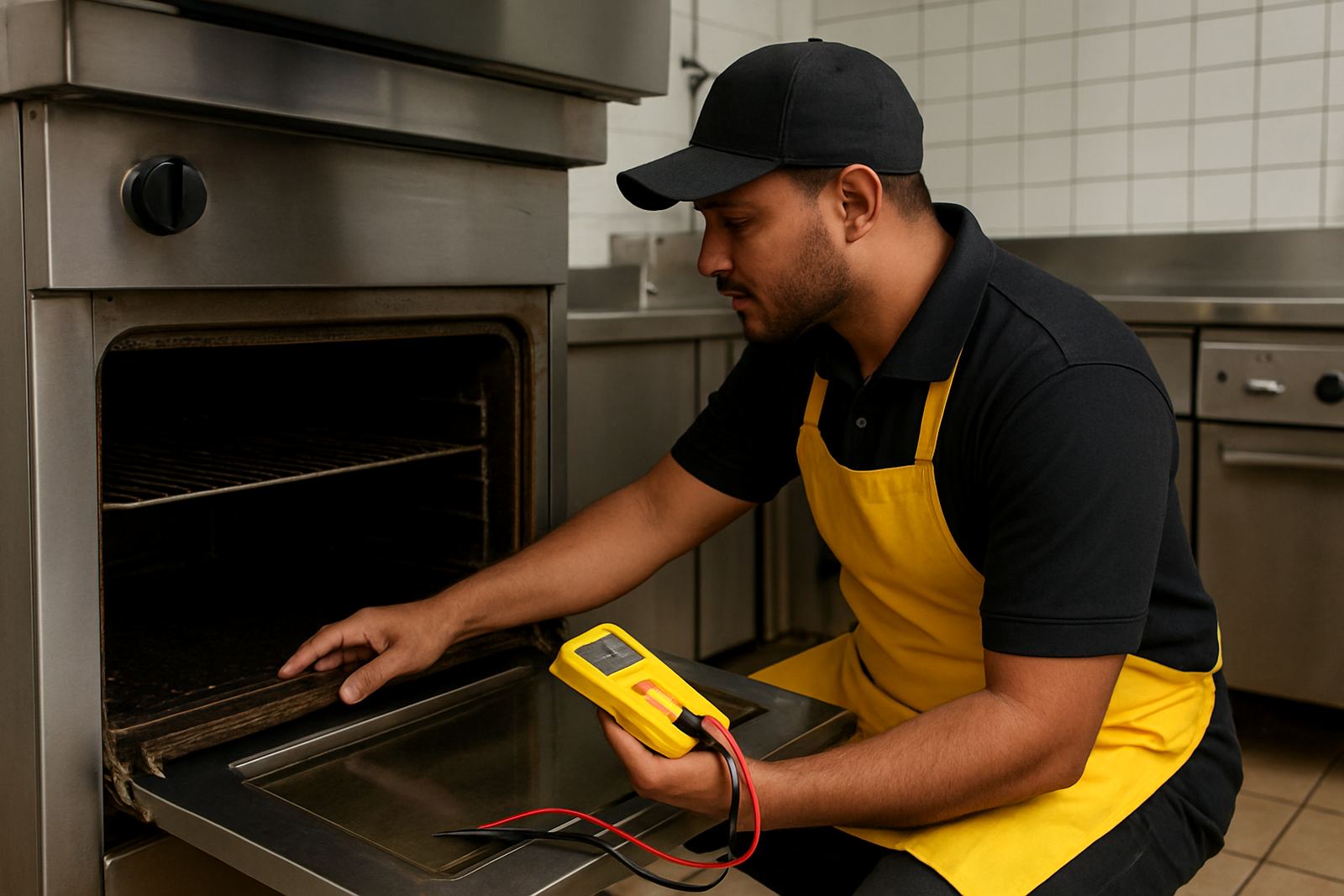
If the oven heats weakly, it may be that only part of the element is working. This often happens in heavy-use kitchens in Sandton, Durban or Cape Town where the oven runs through long service periods and moisture or grease has been getting in. A visual check helps, but proper testing with a meter gives a clearer answer.
- Look for breaks, blisters or sagging in the element
- Check for discolouration around terminals
- Test for continuity if you have the right tools
- Replace elements in matched pairs where the oven design requires it
Thermostat And Sensor Problems That Stop Heat
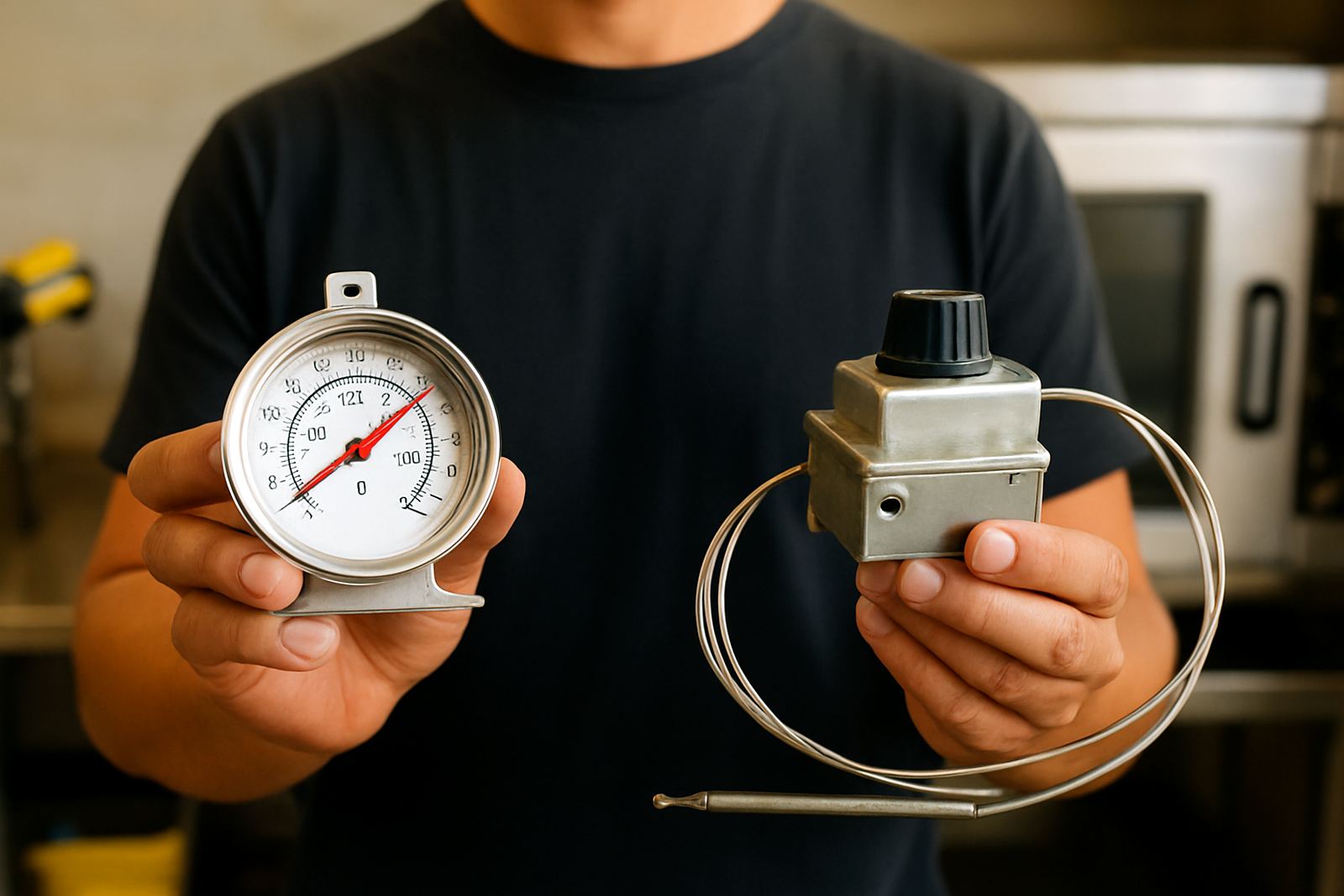
If the element is sound, the next likely suspect is the thermostat or temperature sensor. A thermostat that is stuck open, badly calibrated or reading incorrectly will stop the oven from calling for heat. In some cases the oven may switch on and off too early, so the chamber never reaches proper cooking temperature and baking results are uneven.
Check whether the knob turns normally and whether the control cycles make sense. On digital units a faulty sensor can make the controller think the oven is already hot enough, so the element stays off. If a machine has been fitted near a prep area with lots of steam, or in a coastal kitchen with salty air, sensor and control faults are even more common.
- Inspect the thermostat capillary or probe for damage
- Check if the control is stuck at one setting
- Look for error codes on digital controls
- Replace worn thermostats before they cause repeat callouts
Switches, Timers And Control Panels
Many ovens rely on selector switches, timers and control panels to send power to the element. If one of these parts wears out, the oven may appear alive but never complete the heating circuit. This is common on busy bakery ovens and food service units that get switched on and off many times a day.
A burnt switch can also leave a smell of overheated plastic or show signs of pitting on the terminals. In some cases only one heating mode works, such as top heat but not bottom heat. That usually points to a selector fault or damaged wiring behind the panel. Do not keep forcing the controls if the switch feels stiff or crackly, because it can make the repair bigger and more expensive.
- Check for stiff, loose or overheating switches
- Look for burnt connectors behind the control panel
- Test timer functions and selector positions
- Replace damaged terminals, not only the outer knob
What To Check In The Wiring And Safety Circuit
Wiring faults are common where ovens have been moved, cleaned with too much water or repaired in a hurry. A loose neutral, damaged high temperature wire or failed safety cut-out can interrupt heating completely. In commercial kitchens, heat and vibration from daily use can work terminals loose over time, especially on older imported equipment and site-built installations.
Look for melted insulation, darkened connectors and any sign of a tripped thermal cut-out. Some units also have door interlocks or limit switches that prevent heating unless the door is fully closed. If the oven had a power dip during load shedding, a control board may also need a reset or further testing before parts are replaced.
- Inspect wiring near hot zones and terminals
- Check thermal cut-outs and safety switches
- Confirm the door switch is making proper contact
- After any repair, test the oven under load before returning to service
When To Replace Parts And Get Back To Work
If you have confirmed supply, checked the element and ruled out thermostat or switch faults, the next step is to match the correct spare part to the oven model. Getting the right part matters because two ovens may look similar but use different element ratings, sensor lengths or terminal positions. Wrong parts waste time and can lead to another breakdown a few days later.
FoodServ Parts Store supplies commercial kitchen spare parts nationwide from Midrand, with support for part identification and compatibility checks. We work with oven element fitting, thermostat fitting, switch panel repairs and onsite parts support where needed. If you are managing a hotel kitchen, take-away, butcher, school canteen or franchise site, it helps to have the fault described clearly so the right part can be sent first time.
- Have the model number and serial plate ready
- Take clear photos of the failed part and terminals
- Note if the fault is full loss of heat or weak heat only
- Ask for compatibility checks before ordering
Quick Fault Checklist Before You Order A Spare
Use this checklist to narrow down the problem before you strip the oven further. It can save a lot of downtime, especially where the kitchen is relying on one main oven for breakfast service, production or takeaway volume. If you are in Durban humidity or near the coast in Cape Town, check for corrosion as well because it can hide the real fault.
Once you have the basics, decide whether the fault sits in supply, heat control or the element itself. That simple split will usually point you in the right direction and help the technician get the correct spare part on the first visit.
- Power present at the unit?
- Breaker and isolator okay?
- Element physically damaged or open circuit?
- Thermostat, probe or sensor reading correctly?
- Switches and timers changing state properly?
- Wiring and safety cut-outs intact?