What a contactor does in a busy kitchen
A contactor is an electrically controlled switch made for repeated use on heavier loads. In kitchen equipment it is often used to bring heating elements, immersion heaters, wash tank heaters or similar circuits in and out of service. The control signal is usually low current, while the contactor handles the main switching duty. That is why you will find them in ovens, fryers, bain maries, dishwashers and some holding cabinets.
When a contactor is healthy, it should pull in cleanly and release without delay. If it is pitted, burnt, noisy or slow to close, it can cause intermittent heating, overheating at the terminals, or a machine that only works now and then. In many cases the fault looks like a thermostat or element problem, but the contactor is the part doing the actual switching.
Sizes, pole counts and coil ratings to match
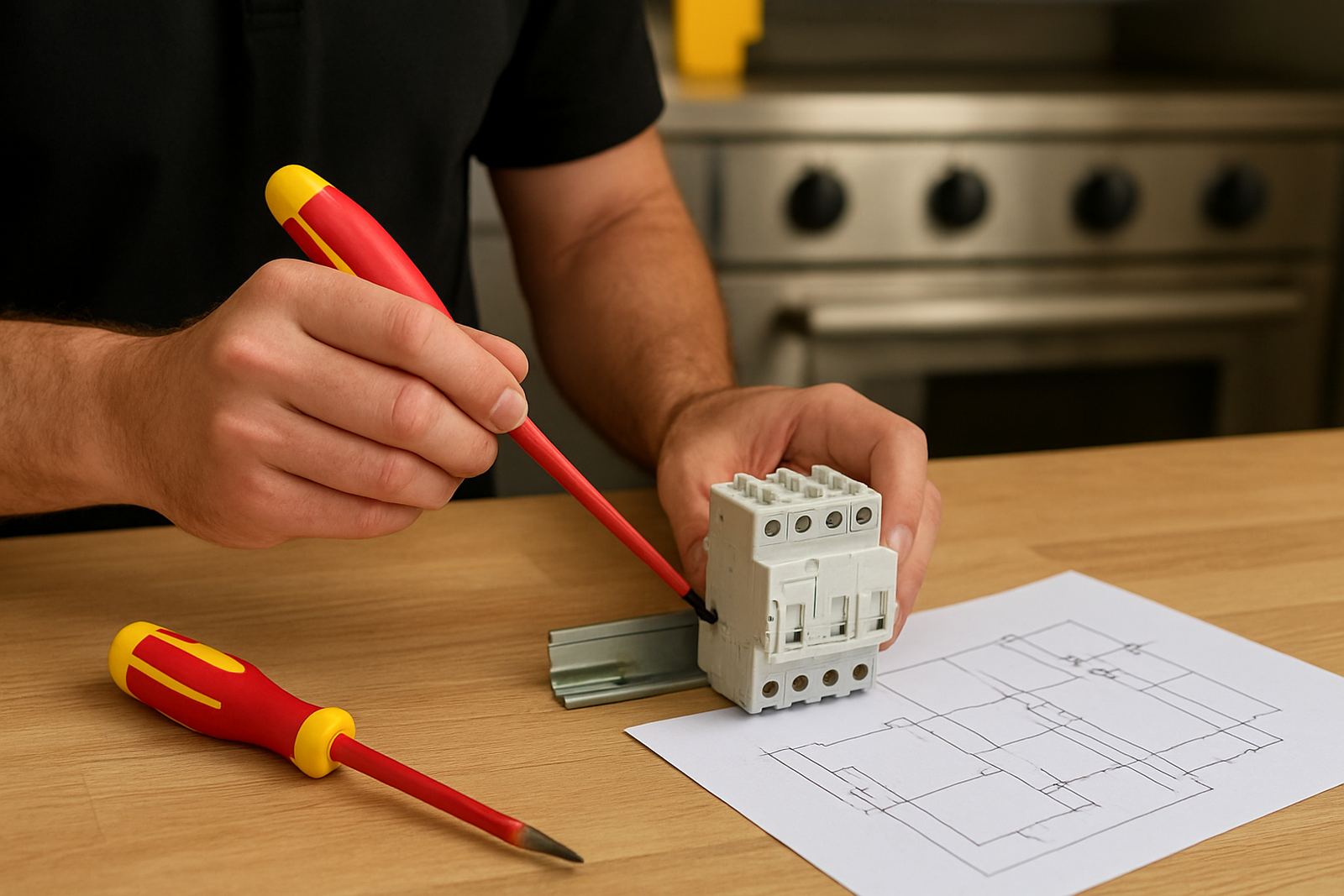
Contactors are not all the same size. The main points to match are pole count, current rating and coil voltage. A 2-pole unit may suit a simple single-phase heater circuit, while 3-pole and 4-pole units are common on heavier machines or where more than one live conductor must be switched. Current ratings are often listed in amps at a specified duty, so it is important to compare like for like and not only go by physical size.
- Coil voltages commonly include 24 V, 110 V, 220 V and 230 V
- Current ratings are often in the 20 A to 40 A range for kitchen heating circuits
- Auxiliary contacts may be fitted for status feedback or interlocks
- DIN rail or screw mounting depends on the control panel layout
- Terminals can be top-feed, bottom-feed or side-access on compact units
On older imported equipment, the plate details may be faded or missing. If that is the case, our team can help you compare the old part, terminal layout and coil marking before dispatch. A small mismatch can leave you with a unit that physically fits, but will not energise correctly. It saves a lot of time to check this before you strip the panel.
Where contactors suit best in commercial equipment
Contactors are found anywhere a machine needs repeated high-load switching. In an oven, they may control upper or lower element banks. In a fryer, they can handle the main heating stage and sometimes a hold cycle. In a dishwasher, they may switch the tank heater or rinse system depending on the control design. The part is also common in hot cupboards, warming stations and some electrically heated display units.
They suit equipment that runs long hours, especially in restaurants, schools, hotels and takeaways where heating cycles start and stop many times a day. In coastal areas such as Durban or Cape Town, humidity can speed up terminal corrosion if the cabinet is not kept dry. In inland sites like Midrand, Pretoria or Bloemfontein, dust and vibration can work loose over time, so regular checking is worth doing.
- Use in ovens, fryers, dishwashers and wash tank heaters
- Suitable for frequent switching under load
- Helpful where control switches must stay low current
- Common in single-phase and three-phase heating circuits
Installation, power supply and safety checks
Before fitting a new contactor, isolate the machine fully and confirm the supply is off at the wall and the isolator. Many faults are caused by a loose neutral, a heat-damaged terminal or a failed control circuit rather than the contactor itself, so a quick check with a meter saves guesswork. If the old unit has heat marks or melted insulation, inspect the surrounding wiring too.
Coil voltage must match the control circuit exactly. If the coil is wrong, the contactor may hum, chatter or pull in weakly. On 3-phase equipment, check the load side and line side markings before re-terminating. Make sure the current rating is suitable for the heater load, especially on ovens and fryers that draw strongly when first heating. If the contactor is fitted in a cramped panel, allow enough space for airflow and service access.
- Confirm coil voltage before ordering or fitting
- Check pole count and terminal arrangement
- Inspect for burnt lugs, loose screws and heat damage
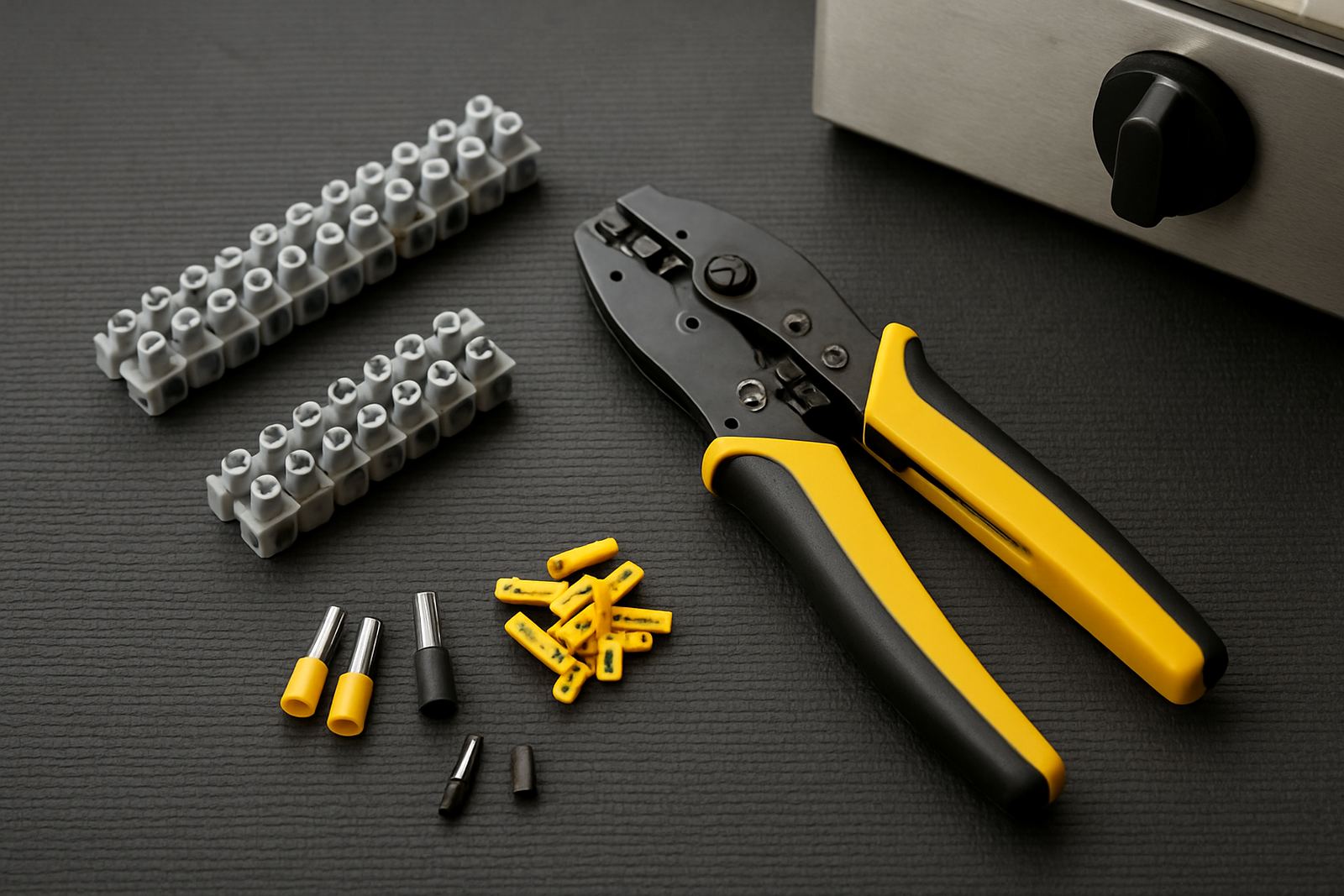
- Use correct crimp terminations where required
- Test the control circuit before putting the machine back into service
Load shedding can expose weak switching parts because equipment starts and stops more often. After power returns, a contactor that is already worn may fail under the first heavy load. If the machine trips as soon as it heats up, the contactor should be checked together with the elements, thermostat and wiring.
How to care for contactors so they last longer
Contactors do not need much day-to-day attention, but they do benefit from simple service checks. Dust, grease and moisture can collect inside a control box and cause tracking or sticky movement. The terminals should be checked for tightness, since a loose connection creates heat and can shorten the life of the part. If the unit is making a loud buzz, it may be under-voltage, worn internally or affected by poor control wiring.
During scheduled maintenance, look for pitted contacts, discolouration and any burnt smell around the coil or terminals. In kitchens with heavy steam or frequent wash-down, make sure panel covers and seals are intact so moisture does not enter the control gear. A contactor that has been running hot for some time usually gives warning signs before it fails completely, so it is worth catching it early.
What to send us when ordering a replacement
To identify the correct contactor, send a clear photo of the front, side and terminals, plus the model plate from the equipment if you have it. The coil voltage, amp rating and pole count are the most important details. If the label is worn off, measure the physical dimensions and note how the terminals are arranged. A photo of the wiring before removal also helps us confirm the matching part.
We dispatch nationally from Midrand, with coverage for Johannesburg, Pretoria, Durban, Cape Town and Bloemfontein. If you are unsure whether the fault is in the contactor or another part of the circuit, our team can assist with part identification and compatibility checks before you order. That is often quicker than replacing a few pieces one by one and hoping for the best.
- Equipment make and model if available
- Coil voltage printed on the old part
- Current rating and pole count
- Photos of the terminals and mounting points
- Any fault notes such as buzzing, sticking or no pull-in
Key facts
| Product type | Electrical contactor for commercial kitchen heating circuits |
|---|---|
| Common coil voltages | 24 V, 110 V, 220 V, 230 V |
| Typical current range | 20 A to 40 A depending on duty and load |
| Pole options | 2-pole, 3-pole and 4-pole variants |
| Mounting styles | DIN rail or screw-fixed control panel mounting |
| Typical uses | Ovens, fryers, dishwashers, hot cupboards and wash tank heaters |