What a spark igniter does in a kitchen appliance
A spark igniter is the part that creates the small high-voltage spark needed to light gas safely at the burner. In commercial kitchens it is fitted to ovens, fryers, combi units and some dishwashers that use gas heating, giving quick start-up without repeated match lighting or unreliable manual flameing.
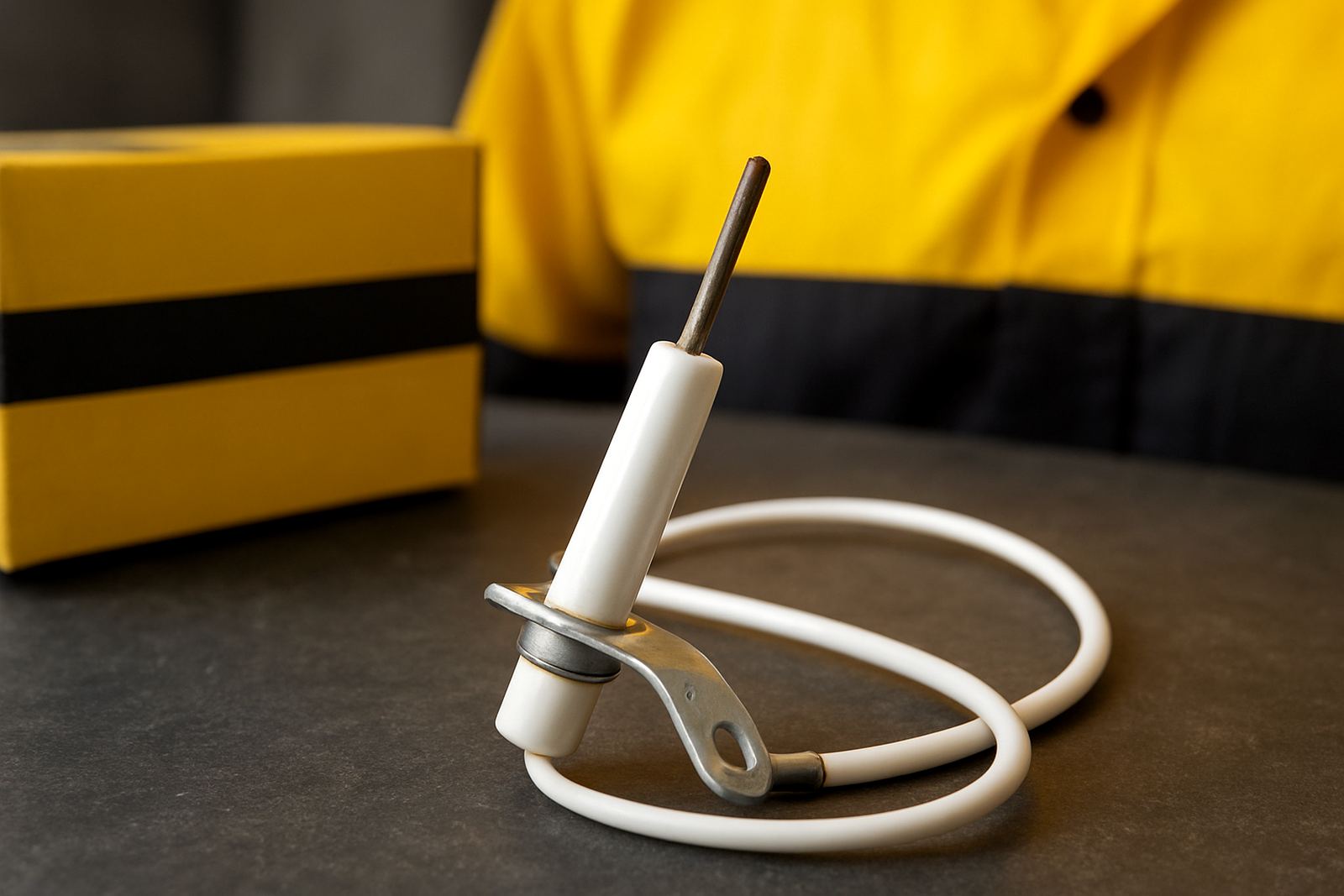
Most systems use an ignition electrode, a ceramic insulator, a lead or terminal connection, and a mounting bracket close to the burner head. When the control calls for heat, the electrode jumps a spark to the correct point and the flame should take immediately. If the spark is weak, misaligned or damp, you can get delayed lighting, popping, or a burner that keeps trying to ignite.
For kitchens running through breakfast rushes, lunch service and after-hours prep, a dependable spark matters. It saves time, reduces gas build-up at start-up, and helps avoid nuisance call-backs from staff who just need equipment that lights first time.
Sizes, shapes and connection types we stock
Spark igniters are not one-size-fits-all. The electrode tip, ceramic length, lead length and mounting position must suit the appliance burner layout. Some are straight probe styles, others are angled, and some are supplied as a full lead-and-electrode assembly for direct replacement.
- Single electrode units for one burner or one ignition point
- Dual spark assemblies for paired burners or multi-point ignition
- Ceramic body lengths for short, medium and extended reach fitments
- High-temperature leads for enclosed ovens and hot fryer housings
- Bracket-mounted styles for fixed positioning next to the burner head
We also look at the terminal end, because some units use a push-on connection while others use a screw terminal, plug or crimped lead. If you send a photo and the appliance model details, we can match the part more accurately and avoid unnecessary returns.
Where spark igniters are commonly used
These parts suit gas appliances where instant ignition and repeat lighting are important. In busy food operations that can mean pizza ovens, convection ovens, gas fryers, griddles, boiling tops and certain dishwasher heating systems. They are especially useful where staff turnover is high and equipment gets started many times a day.
In coastal areas like Durban, salt air and moisture can shorten the life of ignition components. In inland kitchens, heat cycling and grease vapour are often the bigger issue. A spark igniter fitted in the wrong position can fail early because it sits too close to flame wash or gets covered in grease spray, so placement matters as much as the part itself.
- Commercial gas ovens and deck ovens
- Gas fryers with electronic start-up
- Combination cooking equipment
- Dishwashers with gas heating stages
- Back-of-house equipment in schools, hotels and takeaways
Installation details, power needs and safety checks
Spark igniters work with an ignition module or control circuit, so the electrical side must be in order even though the appliance is gas-fired. Most systems use low-current control and a high-voltage spark lead, which means damaged insulation, loose terminals or poor earthing can cause misfires. If the earth path is poor, the spark may jump weakly or not at all.
When fitting, the electrode tip must sit at the correct gap to the burner, usually only a few millimetres. Too close and it can short to earth, too far and the spark may miss the gas stream. The lead should be kept clear of sharp edges and hot metal panels, and any ceramic crack should be treated as a failure point. After fitting, the burner must be tested under normal gas pressure and with the cabinet closed, not just on an open bench.
If a site has load-shedding backup or a generator, the ignition circuit should be checked after changeover too. Some kitchens see repeated ignition faults when supply power is unstable, which can point to the control side not the electrode itself.
How to look after spark parts so they last longer
These components last better when they are kept clean and dry. Grease build-up on the electrode tip can prevent a clean spark, while moisture after wash-down can track across the ceramic and leak voltage. A quick visual check during routine service goes a long way, and it is often the difference between a simple clean and a full replacement.
- Wipe the tip only when the appliance is isolated and cool
- Check for carbon tracking or black marks on the ceramic
- Inspect the lead for cracking, chafing or burnt spots
- Keep spray from direct hose-downs away from ignition points
- Replace the part if the spark is weak, intermittent or off-line
In kitchens near the coast, make sure the fittings are dry after cleaning and that the cabinet seals are intact. In inland service kitchens, grease vapour and heat are the main enemies, so regular cleaning around the burner tray and ignition point helps a lot.
What to check before you order the correct igniter
Before ordering, confirm the appliance make and model if possible, then check the old part against the new one. A similar-looking igniter can still have the wrong reach, terminal, angle or spark gap. That is why part identification matters, especially on older ovens and imported units where previous repairs may have changed the layout.
- Appliance type: oven, fryer, dishwasher or other gas unit
- Lead length and terminal type
- Electrode angle and mounting style
- Ceramic length and fixing point spacing
- Photo of the failed part and the burner area
- Whether the fault is no spark, weak spark or repeated misfire
If you are unsure, our team can help with compatibility checks before dispatch from Midrand. That saves time for sites in Johannesburg, Pretoria, Durban, Cape Town and Bloemfontein, where a wrong igniter can leave a kitchen waiting on a second trip. We also assist with fitting guidance and post-fit testing where needed.
Key facts
| Product type | Ignition electrode and spark component for gas appliances |
|---|---|
| Typical use | Commercial ovens, fryers and dishwashers |
| Materials | Ceramic insulator, metal electrode, insulated lead |
| Fitment options | Straight, angled, bracket-mounted and lead assemblies |
| Electrical requirement | High-voltage ignition circuit with sound earthing |
| Service life factors | Heat, grease, moisture, vibration and correct spark gap |