What terminal blocks do on kitchen equipment
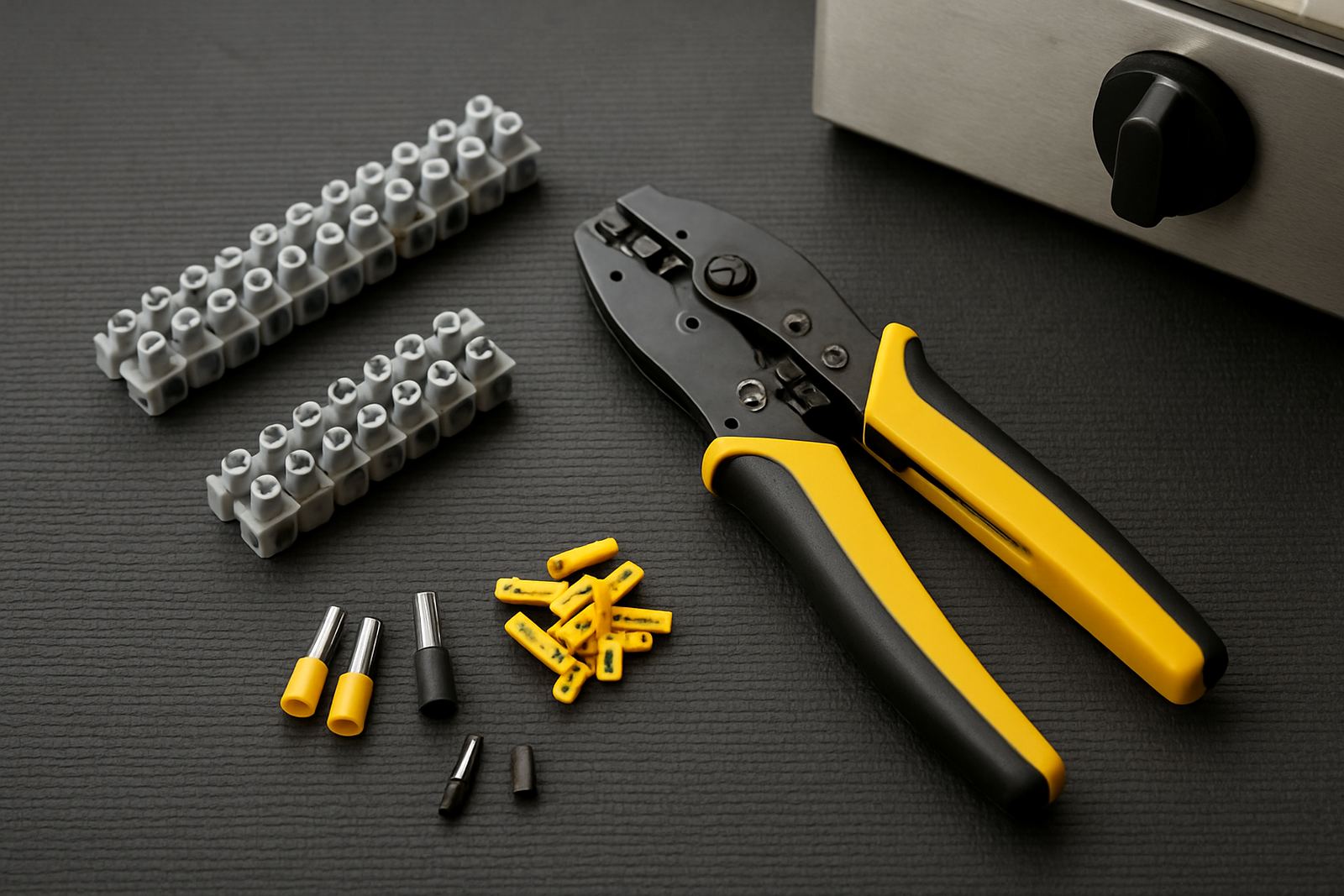
Terminal blocks are the connection points that join wires inside control panels, terminal housings and junction boxes. On commercial kitchen equipment they help separate live, neutral and earth conductors so repairs can be done in a controlled way, without loose joins or taped connections hanging in a hot cabinet.
They are used when an element burns out, a thermostat is changed, a switch panel is repaired, or a cable needs to be reterminated after fault finding. In ovens, fryers and dishwashers, a good block keeps the wiring tidy and makes later servicing much faster. It also lowers the chance of a wire pulling free when the panel is opened and closed a few times.
- Useful for safe circuit repairs inside equipment panels
- Helps keep live, neutral and earth conductors separated
- Suitable for retermination after part changes or wire damage
- Makes future fault tracing easier for your technician
Sizes, styles and electrical ratings to check
Terminal blocks are not all the same. The important differences are the number of ways, conductor size, current rating, heat tolerance and mounting style. Some units are compact for tight control compartments. Others are longer blocks for multi-point connections where several cables must sit in line.
For most commercial kitchen applications, the block must suit both the wire thickness and the load on that circuit. A small control circuit may use lighter duty blocks, while heater or motor circuits need higher current capacity and better heat resistance. In many cases the original block is the safest guide, but if it has melted or cracked we can help you match by photos and measurements.
- Ways available from single pole to multiple pole blocks
- Common conductor sizes: 1.5 mm², 2.5 mm² and above
- Typical current ranges: 15 A, 24 A, 32 A and higher depending on design
- Options for screw clamp or spring clamp connections
Where vibration is an issue, such as dishwashers and some fryer cabinets, a solid clamp is important so the conductor stays seated. Heat, grease and repeated cleaning can loosen poor terminations, so the right block matters just as much as the wire size.
Where terminal blocks suit ovens, fryers and dishwashers
Terminal blocks are used in a wide range of commercial kitchen equipment. On ovens they are often found behind the rear cover or within the control panel where element feeds and thermostat wiring meet. On fryers they may sit close to heating circuits and safety devices. On dishwashers they are used for pumps, heaters, timers and control wiring.
They suit repairs where a cable end has overheated, a join has become brittle, or the original block has discoloured from heat and age. In coastal areas such as Durban and parts of Cape Town, humidity and salt in the air can speed up corrosion, so the condition of the block should be checked whenever a panel is opened. A crusty terminal or green staining on copper is a warning sign that the connection may already be failing.
- Oven element and thermostat connection points
- Fryer heater, safety cut-out and wiring joins
- Dishwasher pump, heater and control panel circuits
- General junction use in compact appliance panels
Installation notes for safe rewiring and repairs
Terminal block replacement should be done with the power isolated at the supply and the equipment proved dead before any conductor is touched. Many kitchen repairs involve both electricity and heat, so the panel should be allowed to cool fully before work starts. If the appliance has gas controls as well, shut off the gas supply where required and follow site safety rules.
When fitting a new block, the wire ends should be cut back cleanly and stripped to the correct length. Copper strands must sit fully inside the clamp, with no bare copper exposed outside the housing. Screws should be tightened to the maker's specification, not over-tightened. Over-tightening can damage the conductor or crack the block body.
- Isolate electrical supply before opening the panel
- Allow hot equipment to cool before rewiring
- Match the wire size to the terminal opening
- Check screw tension after the first heat cycle
Where a panel has been repaired after load-shedding surges or a lightning-related fault, the surrounding wiring should be inspected too. A new block will not fix a damaged cable, relay or switch, so the full circuit must be checked before the unit goes back into service.
Care, servicing and signs the block needs replacing
Terminal blocks are low-maintenance parts, but they should still be inspected during routine servicing. In kitchens that run all day, heat cycles and vibration can loosen terminations over time. Cleaning staff may also wash down external surfaces and allow moisture to enter a poorly sealed cabinet.
Look out for browning, melting, cracked plastic, loose conductors, a burning smell, or a terminal screw that no longer grips properly. Any of these signs means the block should be changed rather than reused. If the equipment has had repeated faults on the same circuit, it is sensible to replace the block and inspect the cable ends at the same time.
- Check for heat marks during planned maintenance
- Inspect after any burnt element or failed switch repair
- Replace blocks that have warped, cracked or discoloured
- Keep cabinets dry and free of grease build-up
What to confirm before you order
Before ordering, check the number of ways, conductor size, current rating, mounting footprint and the spacing between terminals. If possible, send a clear photo of the old block next to a ruler. A photo of the appliance data plate also helps us verify the machine type and the likely wiring layout. In many cases the same cabinet can use more than one block style, so the smallest measurement is often the one that saves the most time.
If the original part is missing, look at the wire gauge, the screw spacing, the width of the base and the height available under the cover. On tight panels, even a few millimetres can matter. We can assist with part identification, compatibility checks and post-fit testing from our Midrand base for customers across Johannesburg, Pretoria, Durban, Cape Town and Bloemfontein.
- Number of poles or connection points
- Wire size and current rating required
- Mounting dimensions and cover clearance
- Photo of the old part, data plate and wire layout
If you are unsure, send the details before you order. It is quicker to match the right terminal block first than to strip and refit a panel twice.
Key facts
| Product type | Electrical terminal block for commercial kitchen equipment |
|---|---|
| Common use | Safe rewiring and circuit repairs in control panels |
| Typical conductor sizes | 1.5 mm², 2.5 mm² and selected heavier gauges |
| Electrical ratings | Common options from 15 A to 32 A and above depending on style |
| Mounting styles | Screw mount, rail mount and compact panel fitment |
| Suitable equipment | Ovens, fryers, dishwashers and general appliance panels |