What a handle kit does on commercial kitchen equipment
A handle kit is the working grip fitted to a door, lid or front access panel on heavy duty kitchen equipment. On ovens it gives staff a safe way to open a hot cavity, on fryers it helps lift lids or front covers, and on dishwashers it supports repeated opening through a busy service. In practice the handle is a small part that gets used many times a day, so wear shows up fast when the wrong material or fixing is fitted.
These kits are chosen for commercial use because domestic handles usually do not last in a catering environment. Heat, steam, cleaning chemicals and constant pulling can loosen screws, crack end caps or warp the grip. A good replacement should match the original fixing pattern and sit square on the panel so the door closes cleanly and the latch lines up. If the handle sits proud or the holes are off by even a few mm, staff tend to force the door and that leads to extra damage.
Sizes, styles and fixing options to look for
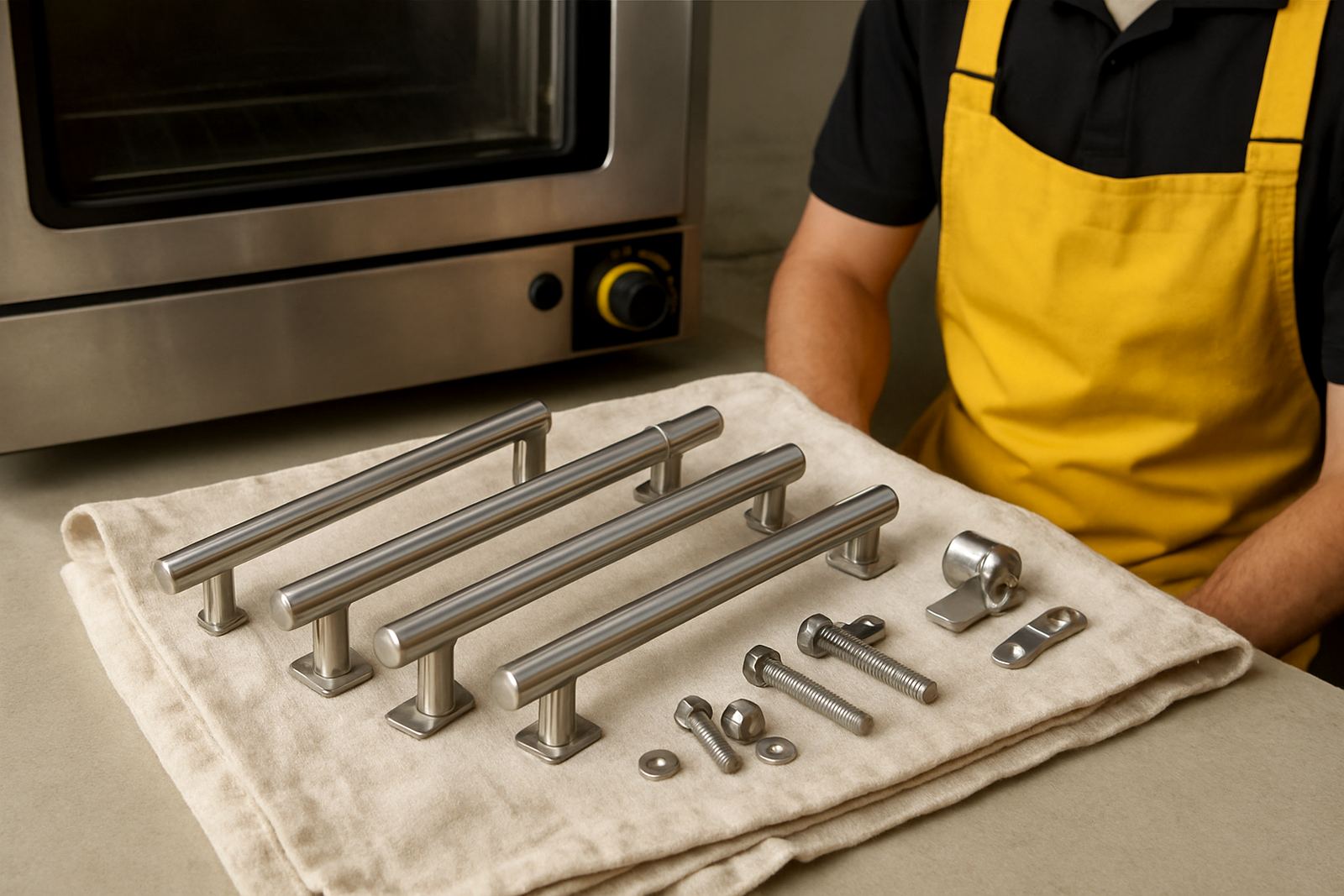
Handle kits come in a few common styles, but the practical job is always the same: give a firm grip and fasten securely to the panel. Most commercial units use straight bar handles, curved grips, tubular handles or moulded pull handles. Some are supplied as a complete kit with screws, spacers and end caps, while others are just the handle body. For stainless steel doors, a metal handle is often the best long term choice. For lighter lids or insulated panels, a heat resistant plastic or coated grip can be suitable.
- Overall length, often measured in mm between end points
- Fixing centre distance, which must match the existing holes
- Grip diameter for comfortable hold with wet or gloved hands
- Projection from the panel so fingers clear the hot surface
- Material type, such as stainless steel, coated metal or heat resistant polymer
- Mounting style, including surface mount, through-bolt or bracket fit
When ordering, it helps to measure the old handle before it is removed if possible. Even a handle that looks standard can have a slightly different centre distance. On some imported equipment, the screw spacing is unusual and a close visual match is not enough. A photo with a tape measure in shot saves time and avoids a back and forth if the panel has already been bent or repaired.
Where handle kits suit best in the kitchen
Handle kits are used across ovens, fryer lids, warming cabinets, dishwashers, pass-through units and prep equipment with hinged covers. In bakeries and hotel kitchens they are also common on proofing cabinets and insulated holding doors. For coastal kitchens in Durban or Cape Town, corrosion resistance matters because salt in the air can attack cheaper fasteners and make the handle feel rough after only a short period. In inland sites like Midrand, Pretoria or Bloemfontein, heat and repeated cleaning are usually the bigger concerns.
Where staff use protective gloves, the handle should allow enough clearance for a secure grip. That matters on hot ovens, but also on dishwashers where the door is opened several times during wash cycles and the handle gets sprayed often. If the machine sits in a busy canteen or takeaway line, choose a handle that can take frequent pulls without flexing. A loose handle can slow service and if it fails during a rush, the appliance often gets taken out of use until the part is changed.
- Oven doors and front access panels
- Fryer lids and hinged covers
- Dishwasher doors and service panels
- Holding cabinet and warmer doors
- Prep unit lids and utility compartments
Installation notes and what the handle needs from the appliance
Most handle kits do not need power or gas connections of their own, but they still need the appliance to be safe before fitting starts. A technician should isolate the machine, cool it down and confirm there is no residual heat around the panel. On gas equipment, the area around the door or lid may sit close to burners, so any damaged insulation or distorted panel should be checked before the new handle goes on. If the old fixings are stripped or the panel is cracked, fitting the handle straight onto weak metal will only fail again.
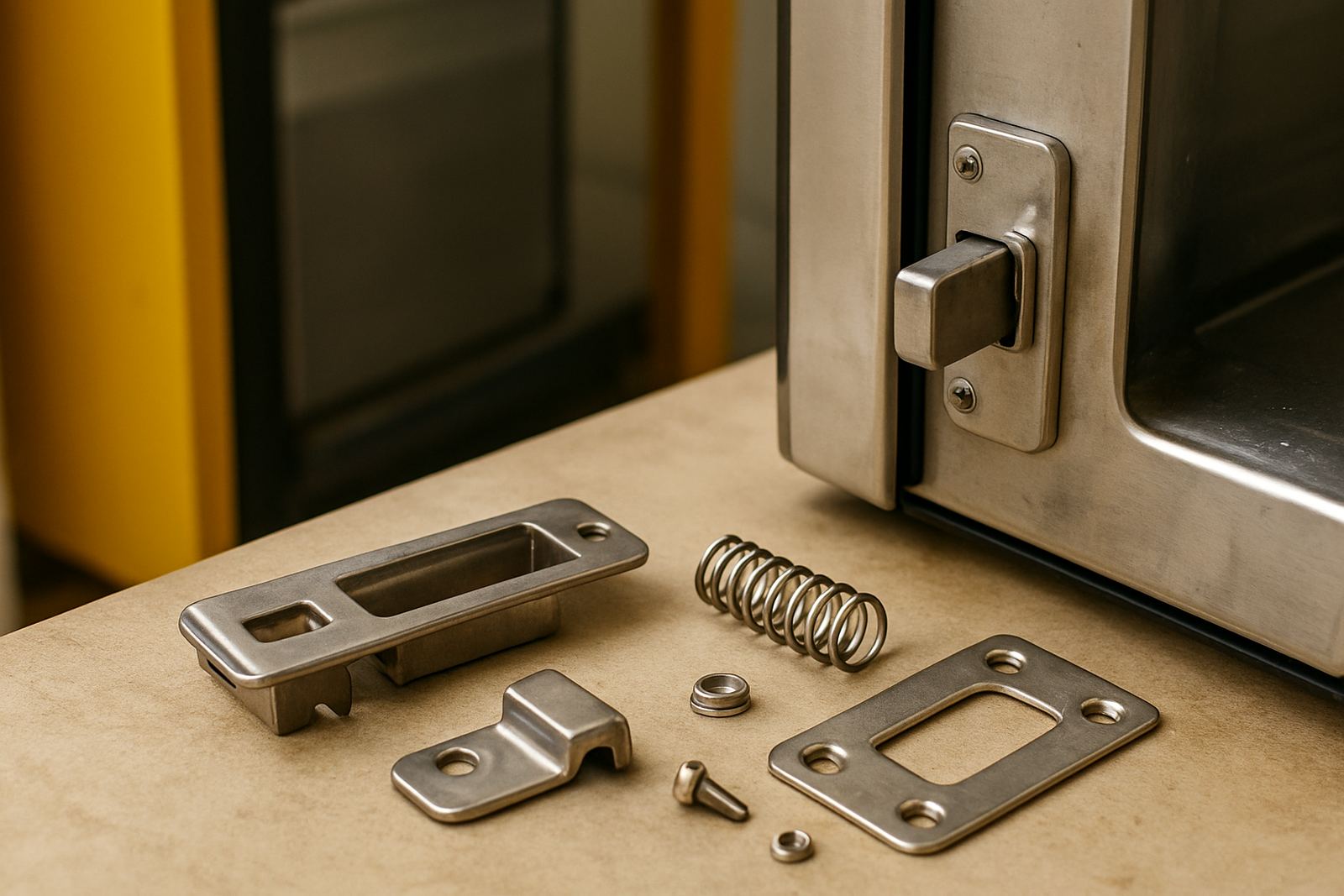
For a clean installation, check the panel thickness and the alignment of the holes. Some handles use spacers to keep the grip clear of hot surfaces, while others rely on shaped brackets. If the old handle has pulled through the panel, the fixing area may need reinforcement first. That is where a proper compatibility check helps, because a handle can look right in the photo but still need different bolts, washers or bracket depth. On site in a kitchen, small details matter and a 2 mm mismatch can stop the door sealing correctly.
After fitting, the handle should be tightened evenly so it does not twist under load. If the unit uses a latch, test that the door closes without forcing. On dishwashers and ovens especially, a handle that sits too high or too low can affect the way the door compresses the gasket. That leads to steam escape, heat loss or wash water leaks, so post-fit testing is worth doing before the machine goes back into service.
Care, wear points and servicing in daily use
Handles fail slowly in most kitchens. Staff notice a wobble first, then a loose screw, then a crack at the mount. Regular cleaning helps but harsh chemicals can dull coated surfaces and attack plastic ends if they are left wet. Wipe the handle dry after deep cleaning and check the fixings during routine service visits. If the handle gets hot to the touch, the insulation or spacing around it may also need attention.
Look out for these signs that a replacement is due:
- Loose movement at the mount or bracket
- Hairline cracks around screw holes
- Rust marks on the fasteners or end caps
- Warping, bending or a handle that sits uneven
- Heat damage, discolouration or a soft feel on the grip
In high volume kitchens, it is worth keeping a spare handle kit on the shelf if the appliance is essential to trade. A failed handle can be a simple fix, but only if the right part is close by. For sites with load shedding, staff often need to open and close equipment more carefully when power returns, so a worn handle gets put under extra strain. Sorting it before it breaks saves time and avoids damage to the panel or hinge.
What to check before you order the right kit
To order the correct handle kit, start with the make and model of the appliance, then measure the old part and the fixing points. If the handle has no visible part number, send clear photos of the front, back and side of the fitting area. The most useful details are the overall length, hole spacing, screw type and whether the handle is straight or curved. If the appliance door or lid has been repaired before, mention that too because a bent panel can change the spacing.
FoodServ Parts Store dispatches nationally from Midrand, and our team handles part identification and compatibility checks for commercial kitchen equipment every day. If you are replacing a handle after a breakage, it helps to know whether the machine is an oven, fryer or dishwasher because each one puts different stress on the fixing points. When the correct kit is chosen, the part should sit neatly, feel firm in the hand and keep the door closing as it should.
Key facts
| Product type | Commercial appliance handle kit |
|---|---|
| Typical use | Doors, lids and front access panels |
| Common materials | Stainless steel, coated metal, heat resistant polymer |
| Fixing styles | Surface mount, through-bolt, bracket fit |
| Usual measurements | Overall length, fixing centres, grip diameter, projection |
| Suitable equipment | Ovens, fryers, dishwashers, warmers and cabinets |