What rinse jets do in a busy kitchen
Rinse jets and rinse nozzles control the last stage of wash-up in a commercial dishwasher. After the wash cycle has removed grease and food, the rinse jet directs clean water across the load so detergent residue is cleared off before drying. In restaurants, takeaways, hotels, schools and canteens, that last spray matters just as much as the wash spray because it affects hygiene and the final finish.
When a jet is worn, scaled up or partly blocked, the rinse fan becomes thin or uneven. You may see cloudy glasses, spots on cutlery, soap film on plates, or trays that still feel slippery after the cycle. In coastal areas such as Durban or Cape Town, mineral build-up and humidity can shorten part life if the machine is not descaled and checked regularly. If the dishwasher is running through load-shedding and power is unstable, water temperature can dip too, which makes a good rinse jet even more important.
We supply rinse nozzles and jets for commercial dishwashers used in front-of-house and back-of-house kitchens. The right jet gives a steady pattern, correct flow and the coverage needed for proper final rinsing, not just a splash that looks fine for a day or two.
Sizes, patterns and material options to match the machine
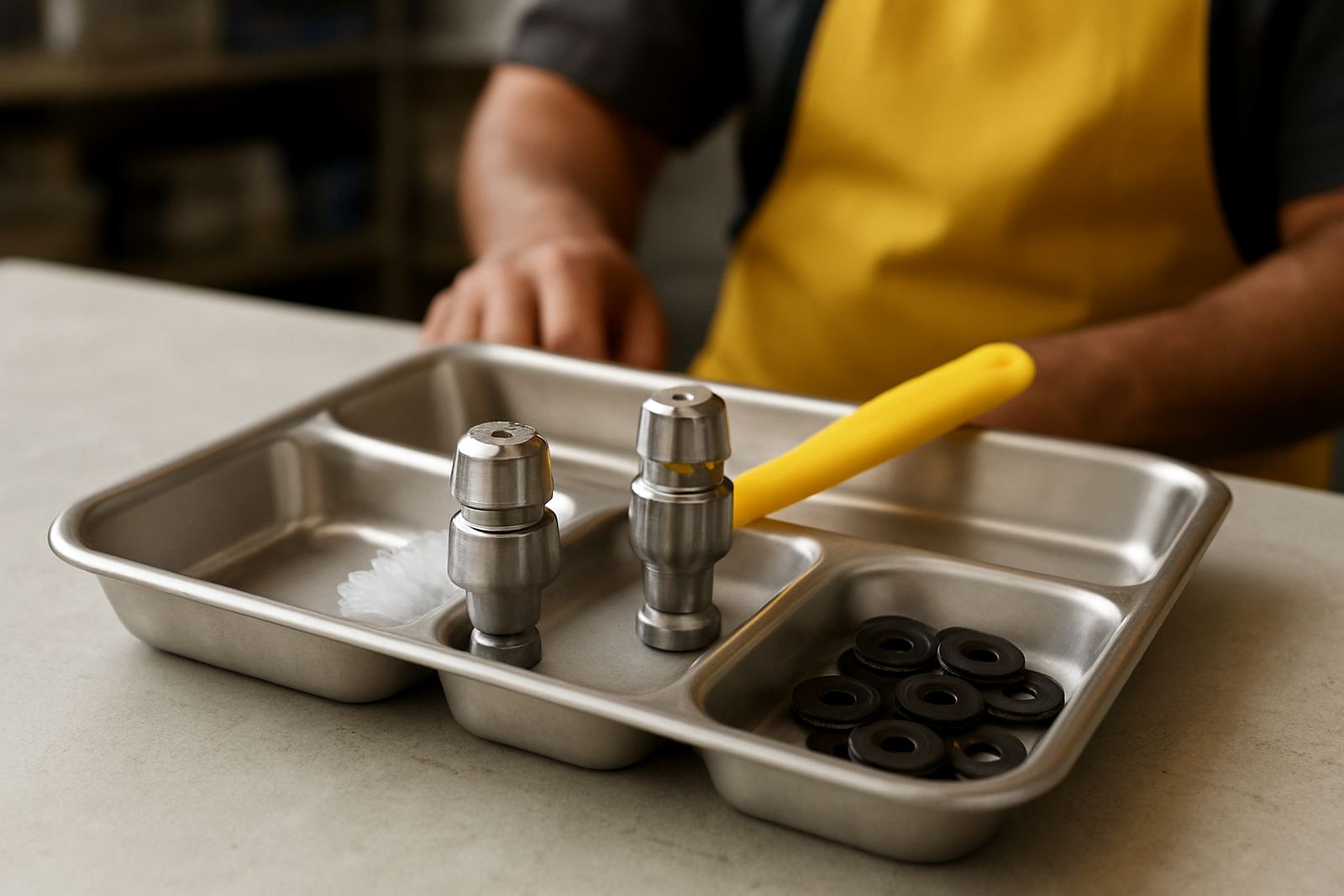
Rinse jets are not one-size-fits-all. Some dishwashers use a small screw-in nozzle, others use a push-fit jet, and some use a jet fixed into a spray arm or rinse bar. The bore size, thread size and spray angle must match the machine or the water pattern will not reach the full load. A jet that is too large can drop pressure, while one that is too small can starve the rinse arm and leave poor coverage.
Common options include straight spray jets, fan-pattern nozzles and interchangeable inserts. The material is usually brass, stainless steel or heat-resistant polymer, depending on the machine and the water conditions. In areas with hard water, a stainless or quality corrosion-resistant option is often the better pick. For kitchens running dishwashers for long shifts, especially in hotels and production kitchens, a jet with a consistent spray angle holds up better than a cheap, soft fitting that loosens after a few thermal cycles.
- Threaded jets for fixed rinse bars and manifolds
- Push-fit nozzles for specific spray arms
- Fine bore jets for controlled rinse pressure
- Fan spray nozzles for wider surface coverage
- Heat and scale resistant options for heavy daily use
Where rinse jets suit best
These parts suit undercounter dishwashers, pass-through machines, pot washers, glasswashers and conveyor-style dishwashers, provided the jet type matches the rinse system. They are used where final rinse quality is important, such as restaurants, coffee shops, hospitals, guest houses, bakeries and food production sites. If your kitchen handles starch, sauces, milk residue or oily crockery, a sound rinse jet helps reduce rewash and keeps turnaround times moving.
In larger sites around Midrand, Johannesburg and Pretoria, a weak rinse often shows up when the machine is pushed hard during lunch and dinner peaks. In smaller operations, the issue may only appear after a few months when scale builds up or the nozzle edge wears. Either way, the symptom is the same: rinse water is not being spread evenly across the load, and staff start compensating by running items twice. That costs water, power and time.
We also see rinse jet issues on machines fitted after a move or kitchen revamp, where the water pressure line changed and the old jet no longer gives the right pattern. A quick compatibility check avoids a part that seems close but does not perform once installed.
Installation and utility checks before fitment
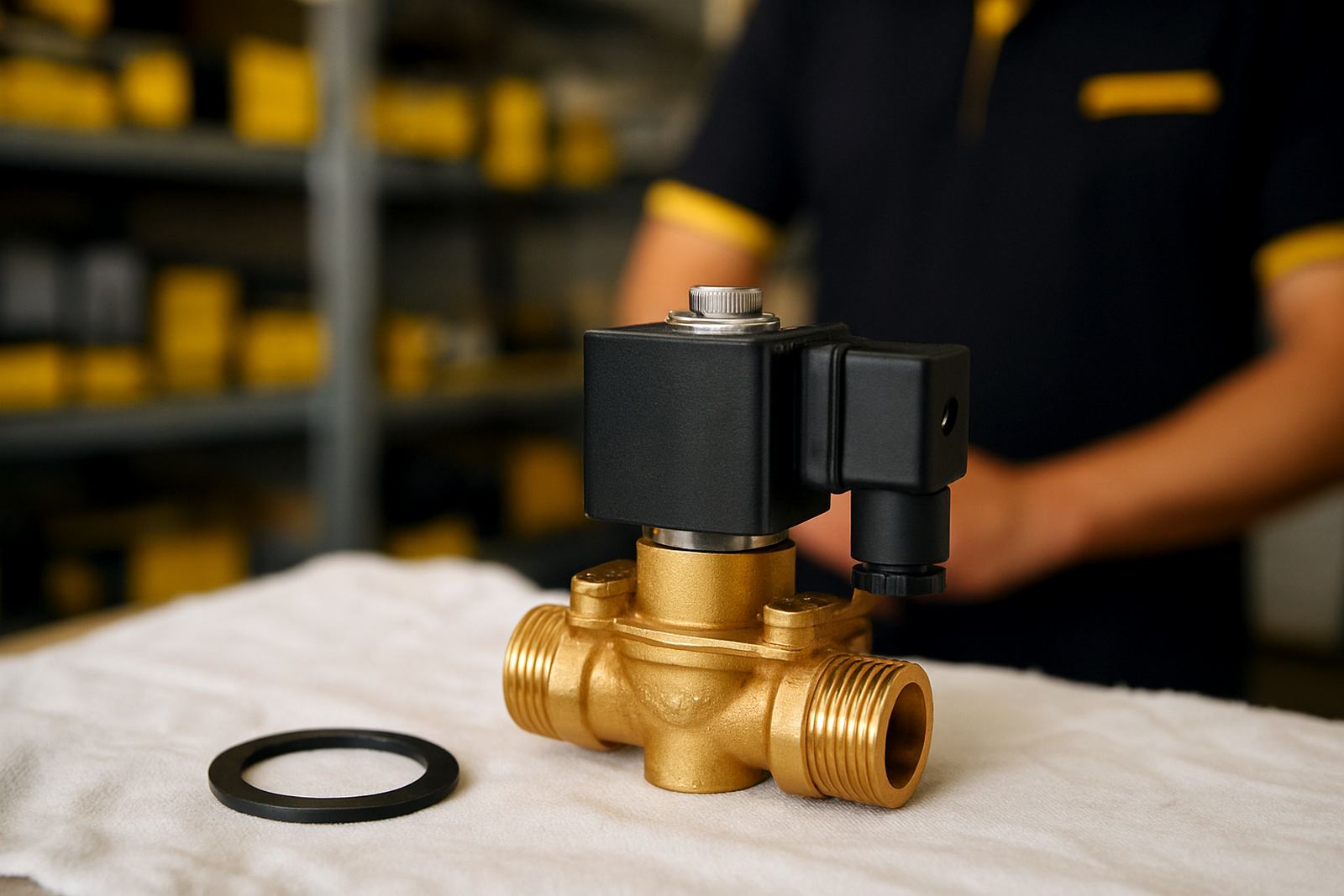
Most rinse jets do not need electrical wiring or gas connection, but they do depend on correct water pressure, clean pipework and a sound pump or rinse circuit. Before fitting, check that the machine is isolated, the spray arm or rinse bar is clear, and the water feed is not clogged with scale or food debris. If the dishwasher uses a rinse booster or solenoid-controlled rinse line, those parts must be working properly too, otherwise a new jet can still underperform.
Installation is usually straightforward, but the small details matter. Check thread direction, O-ring condition, seating depth and spray orientation. If the jet is slightly loose, water can leak around the fitting and cut the pressure at the nozzle tip. If the machine has been running on high mineral water, clean the line before putting in the new part so the fresh jet is not blocked the first week, which happens more often than it should.
- Confirm thread size or push-fit diameter before ordering
- Check the spray arm holes and rinse bar for scale
- Inspect seals, washers and O-rings at the same time
- Verify rinse pressure after fitment and during a full cycle
What to inspect when ordering the correct jet
To get the right rinse jet, start with the dishwasher make, model and serial details if you have them. Then compare the old part carefully. Measure the thread diameter, overall length, bore size and spray angle. If the old nozzle is worn, do not guess from eye alone because wear can make one side look larger than the original. A photo of the part next to a ruler helps a lot and saves time for both sides.
Also check whether the jet sits in a spray arm, rinse manifold or top rinse bar. Some machines use matched pairs or mirrored left and right fittings. If only one jet is replaced on a worn set, the spray pattern may stay uneven. Water quality matters too. In KZN and parts of Gauteng with scale problems, we often advise checking the jet, filter and rinse arm together so the same blockage does not return. It is a small part, but it works as part of the whole rinse circuit, not on its own.
Care, servicing and common warning signs
Rinse jets last longer when the machine is cleaned properly and descaled on schedule. Staff should wipe down the spray arm, flush filters and remove food particles before they harden. If the jet face is crusted with limescale, soak it in a suitable descaler and inspect the bore for pitting or wear. Do not poke the nozzle with wire or a hard pin unless the part maker allows it, because that can alter the spray pattern and make the jet worse.
Warning signs include poor final rinse, spotting on glasses, noisy spray action, water leaking around the nozzle, and a rinse cycle that seems to finish but leaves residue behind. If the machine is already due for thermostat, element or switch work, it is worth checking the rinse side as part of the same service. That avoids a return call when the rinse jet was the last weak point all along.
For busy kitchens with no room for downtime, a spare rinse jet is a sensible item to keep on hand. It is small, inexpensive compared with lost service time, and can get the machine back into line quickly after a failure or blockage.
Key facts
| Product type | Rinse jets and rinse nozzles for commercial dishwashers |
|---|---|
| Typical fitment | Undercounter, pass-through, pot washer, glasswasher and conveyor rinse systems |
| Material options | Brass, stainless steel and heat-resistant polymer |
| Connection styles | Threaded and push-fit, depending on the machine |
| Common sizes | Small bore, medium bore and machine-specific calibrated openings |
| Use case | Final rinse coverage for plates, glasses, cutlery, trays and pots |