What a knob set does on commercial equipment
A knob set is the user interface for a lot of kitchen gear, so if the knob is broken the appliance can still be working but the operator cannot set heat, time or wash functions properly. In a busy kitchen that means wasted time, uncertain settings and more wear on the control shaft if the knob is slipping.
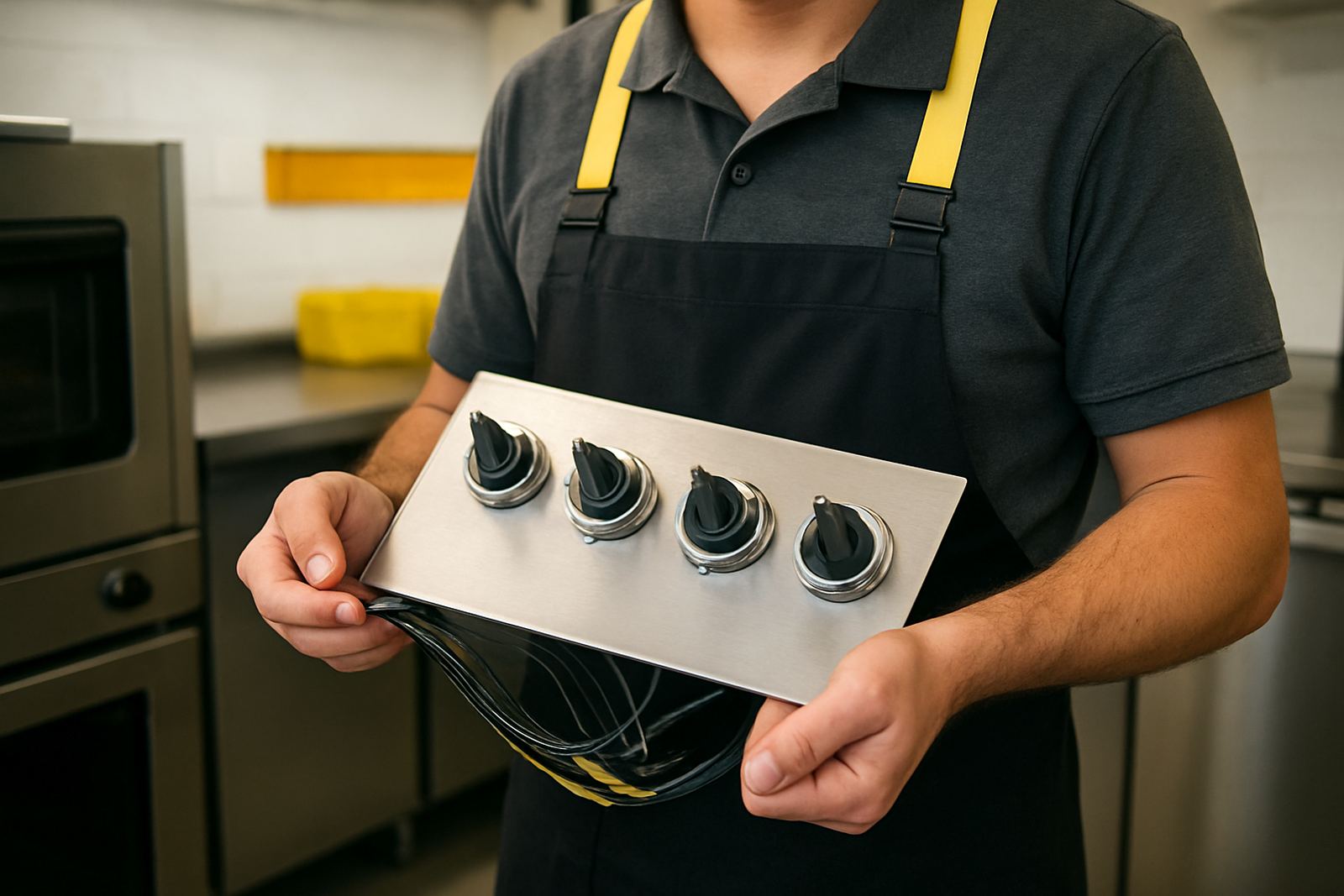
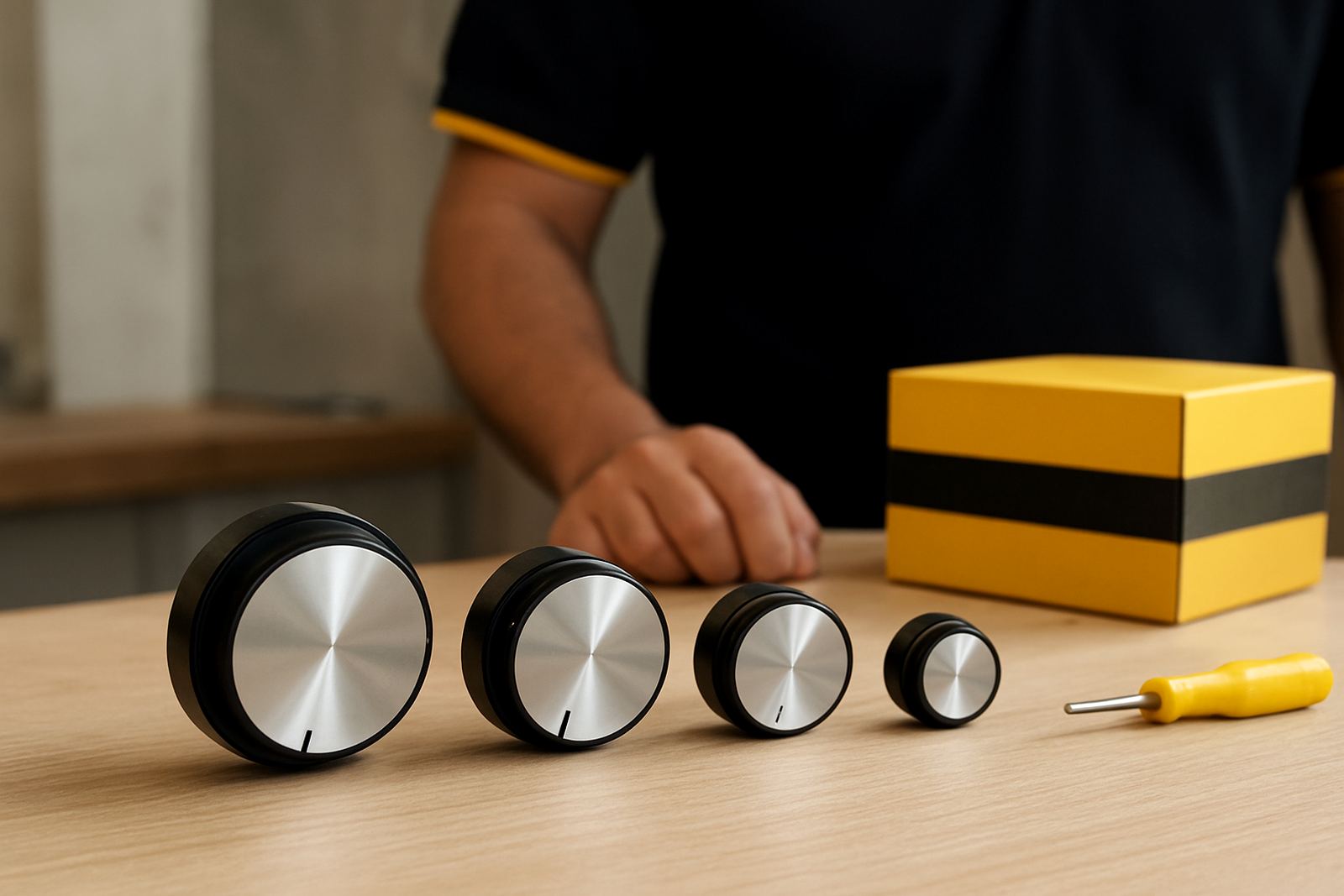
We supply replacement knob sets for commercial ovens, fryers and dishwashers, including the main knob body and the insert or adaptor that grips the shaft. These parts are used when the original front control is cracked, loose, faded or missing after cleaning, heat exposure or heavy daily use. In Durban or any coastal site, humidity and salt air can also harden plastic over time, while in kitchens with frequent load-shedding back-up starts, repeated switching can loosen worn fittings.
Sizes, inserts and common control styles
Knob sets are not all the same. Some are small round controls for thermostats, while others are wider grip knobs used on oven fronts, fryer controls or wash cycle selectors. The key is the shaft profile and the depth of the insert. A good fit should sit square, turn smoothly and not wobble when the operator sets the dial.
- Round, ribbed and pointer-style knobs
- Insert types for flat, D-shaft, splined and square shafts
- Different face diameters for small and large control panels
- Black, white and other neutral finishes for clear front-panel reading
- Knobs with printed markers or plain faces for label matching
For some equipment, the insert is what carries the grip and the knob shell is the visible cover. On others, it is one complete piece. When ordering, send a clear photo of the old knob front and the shaft if the part is missing. That saves time and helps avoid the wrong insert size, which is a common problem on older imported units.
Where knob sets are used in the kitchen
Knob sets suit equipment where the operator needs quick manual control rather than a digital keypad. They are common on gas ovens, electric ovens, countertop fryers, dishwashers and warming units. In food prep areas from Midrand to Bloemfontein, these controls take daily handling, cleaning chemical spray and heat from nearby appliances, so the replacement part must be easy to grip and simple to read.
If a knob turns but the setting does not change, the shaft or insert may already be worn. If the front face has become slippery, the kitchen staff often over-tighten it and that can crack the plastic ring. It is better to replace the set before the shaft gets damaged, because a damaged spindle can turn a small parts job into a more expensive repair.
- Commercial ovens and baking ovens
- Deep fryers and temperature controls
- Dishwashers with manual programme knobs
- Holding cabinets and warmers with simple rotary controls
Fitting and power or gas checks before installation
Most knob sets are simple to fit, but the control behind the knob still needs to be checked before you push a new part on. Make sure the shaft is not bent, scored or partially broken. If the appliance has had a short circuit, heat damage or a gas burner fault, the knob may only be part of the fault and the internal control may also need inspection.
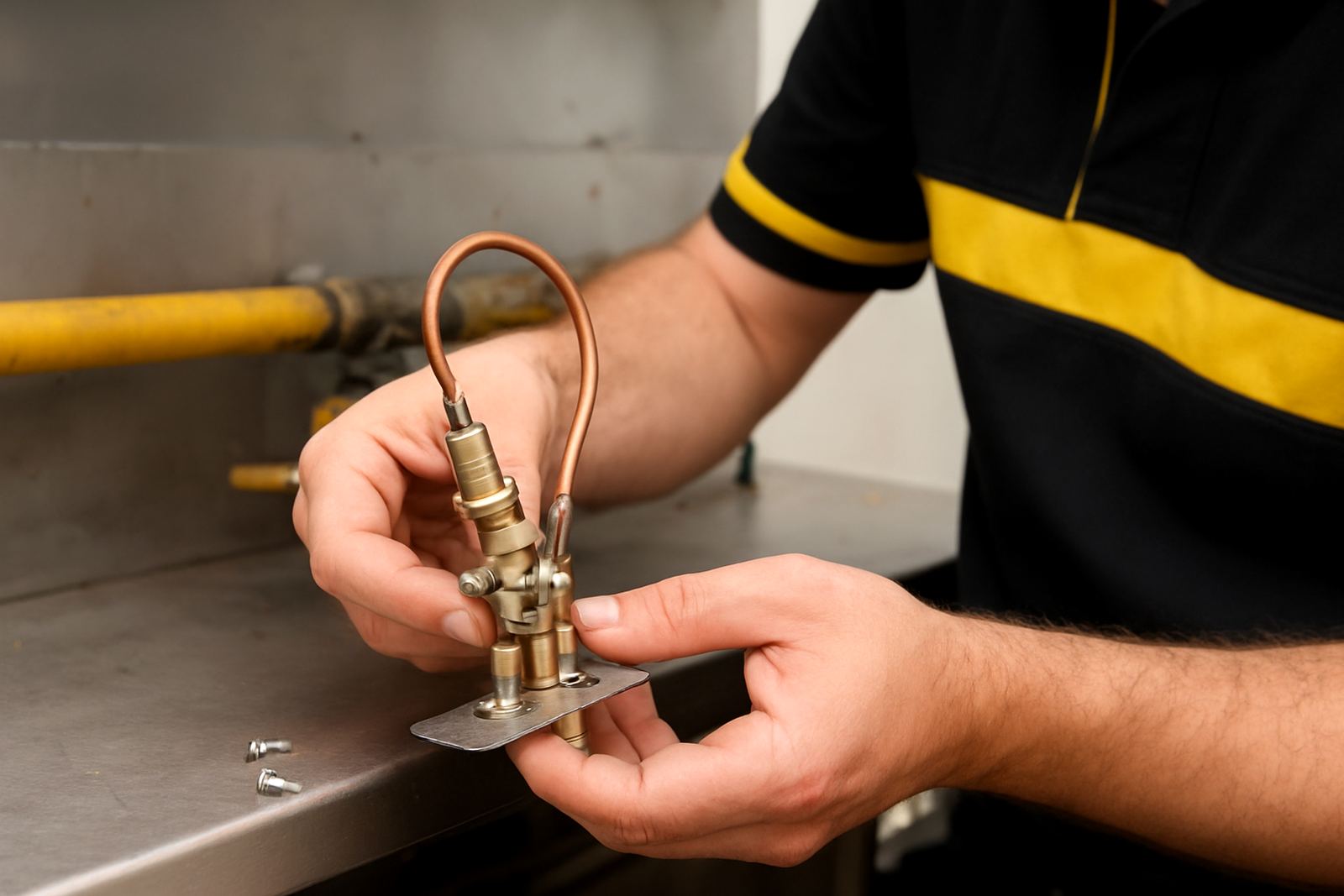
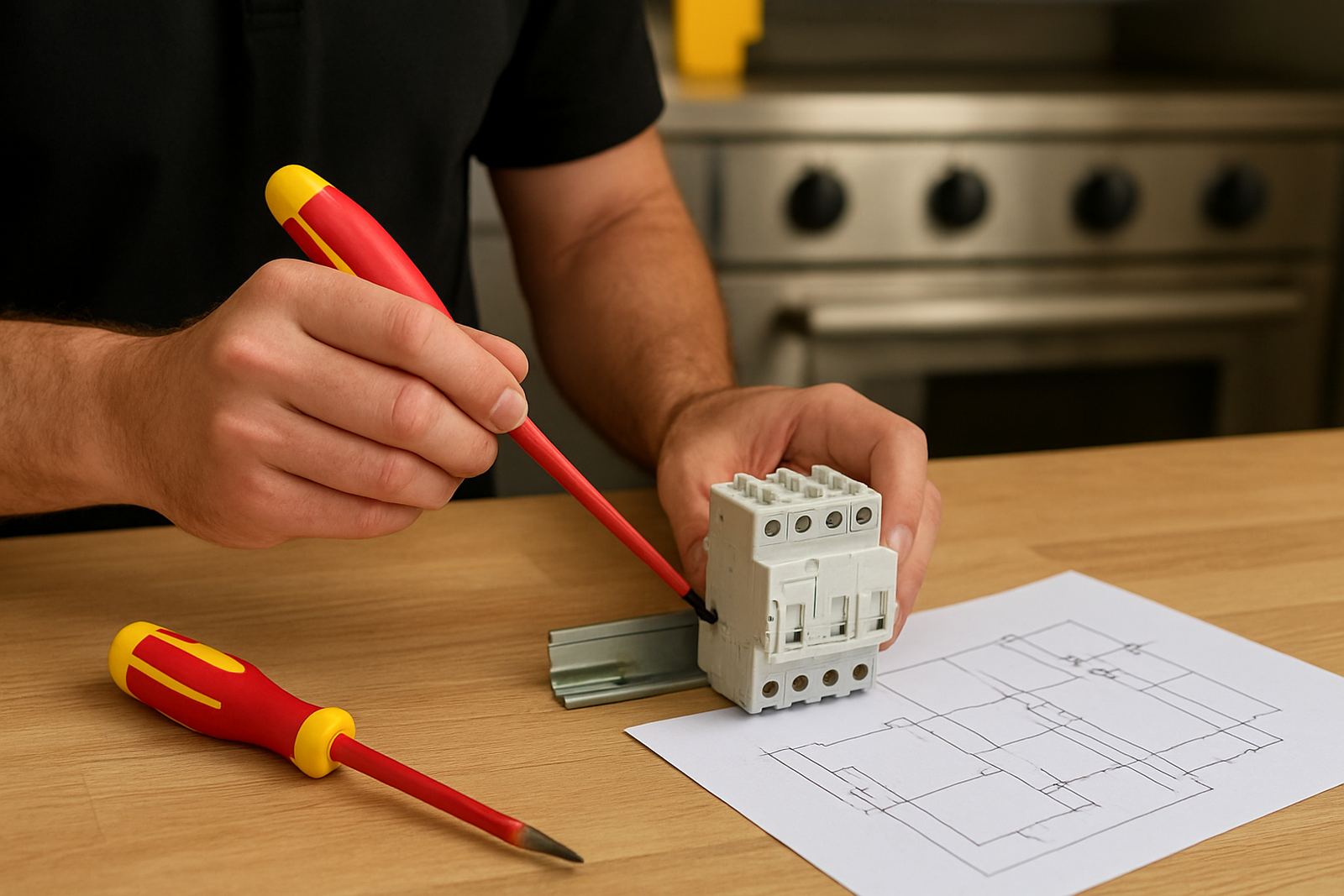
For electric equipment, isolate the unit at the breaker before any work starts. For gas equipment, shut off the supply and confirm there is no flame or pilot issue nearby. A loose knob on a gas oven can make setting the flame awkward, and on fryer controls it can lead to overshooting the temperature. If the appliance panel is warm after use, let it cool fully first. That is basic safety, but it gets overlooked in a hurry.
If the knob is fitted to a machine with a selector switch or thermostat behind the panel, check that the spindle position matches the marking before final fitting. The knob should align with the off point and operating range. If it sits crooked, do not force it. That usually means the insert is the wrong type or the shaft is damaged.
Care, cleaning and long-life use
Knob sets last longer when staff wipe them with a damp cloth rather than soaking them in harsh cleaner. Strong degreasers can fade the print or harden some plastics over time. In coastal kitchens, a quick dry wipe after washing down helps prevent moisture sitting in the insert area, which can make removal difficult later.
During planned servicing, include a quick check on all front controls. Look for loose movement, faded markings, cracked collars and any play between the knob and the shaft. If several knobs are already worn, it is often cheaper to replace the set in one go instead of waiting for each one to fail separately. That also keeps the front panel looking tidy and makes it easier for staff to use the right setting first time.
- Wipe clean after each service shift
- Avoid soaking and high-pressure spray at the control face
- Check for wobble when the unit is cold
- Replace cracked inserts before the shaft is marked
What to send us when ordering the right set
To match a knob set correctly, we need more than just the model name. Many kitchens use units with similar fronts but different shaft types. The best order details are a photo of the existing knob, a photo of the exposed shaft if the knob is missing, and the diameter of the visible face if you can measure it. A ruler in the photo helps a lot, even if it is only rough measure.
Please include the appliance type, whether it is electric or gas, and what function the knob controls. Tell us if the part is for an oven thermostat, fryer temperature control or dishwasher programme selector. If the equipment is in a restaurant, school kitchen or take-away with high daily turnover, mention that too because we can help decide whether a standard replacement or a heavier-use style is the better fit. Our Midrand depot supports Johannesburg, Pretoria, Durban, Cape Town and Bloemfontein coverage, with national dispatch from our base for urgent parts jobs.
If you are unsure, we can help identify the part before you order. A quick photo often saves a return and gets the kitchen back to normal faster.
Key facts
| Product type | Commercial control knob sets and inserts |
|---|---|
| Suitable equipment | Ovens, fryers, dishwashers, warmers and similar front controls |
| Common shaft types | Flat, D-shaft, splined and square |
| Typical finishes | Black, white and neutral control colours |
| Mounting | Push-fit or insert-fit depending on shaft and panel |
| Supply area | Nationwide dispatch from Midrand, South Africa |