What an oven element does in daily service
An oven element is the heating part that turns electrical power into the dry, even heat a commercial oven needs. When it is working properly, trays brown at the same rate, the cabinet recovers quickly after door openings, and staff can hold temperature without chasing the thermostat all day.
In bakeries, canteens, butcheries and restaurant kitchens, worn elements show up as slow heat-up, cool spots, uneven tops or a unit that trips under load. In coastal areas like Durban and Port Elizabeth, moisture can shorten element life if the oven is not cleaned and dried properly. Around Gauteng, a lot of failures come after years of heavy daily use plus load-shedding surges and repeated restarts.
We supply replacement oven elements for commercial units only, with a practical focus on fit, wattage and terminal layout. If you can send a photo of the old part, we can usually narrow it down fast and avoid ordering the wrong size.
Sizes, shapes and power ratings we handle
Oven elements are not one-size-fits-all. They differ by bend shape, overall length, terminal position, mounting style and wattage. Some fit top heat, some fit bottom heat, and some ovens use a matched pair so the chamber heats evenly from both sides.
- Straight tubular elements for many general-purpose ovens
- U-shaped and circular styles for specific chamber layouts
- Top grill and bottom bake elements
- Single-phase and three-phase arrangements depending on the oven
- Units with ceramic or metal terminal supports
Common commercial sizes range from compact cabinet oven elements to longer chamber units around 300 mm to 900 mm, with custom lengths also used on some imported ovens. Wattage can vary widely, often from about 1.5 kW up to 6 kW or more per element, so the oven plate and wiring must match the load. If the element is too powerful for the circuit, it can cause nuisance tripping or burnt terminals. That is the sort of fault that keeps happening untill the correct part is fitted.
Where these elements suit best
These replacement parts suit commercial ovens used in food production and service kitchens. That includes baking ovens, convection ovens, pizza ovens with electric chambers, combi-style units with electric heat sections, and some undercounter or stand-alone ovens used in schools, hotels and takeaways.
They are also a practical spare to keep on hand where downtime is costly. In a busy Pietermaritzburg kitchen or a food outlet in Bloemfontein, an oven that is down for half a day can affect service immediately. Having the correct element ready means the repair team can fit, test and hand the unit back without waiting on another delivery.
- Bakeries and pastry kitchens
- Restaurants and hotel kitchens
- School and hospital feeding kitchens
- Butcheries and deli hot cabinets with oven sections
- Catering prep areas and central production kitchens
Fitting requirements and supply checks before installation
Fitting an oven element is not difficult for a trained technician, but the basics matter. The oven must be isolated from power first, the old terminals checked for heat damage, and the mounting points cleaned before the new part goes in. If the wiring lugs are loose or blackened, they should be repaired at the same time, otherwise the replacement can fail early.
We also look at the supply side. A 230 V single-phase oven needs the correct breaker size and cable thickness. Larger site ovens may be wired for three-phase supply, and then the element set must be balanced correctly across phases. If the unit has been running off a weak supply or on a generator during outages, check the cable ends and contactors as well. A good element won't fix a poor power feed.
For gas-assisted ovens, the electric element may still sit alongside ignition or control parts. In those cases the burner system, thermostat and safety cut-out should be checked at the same time so the oven does not go back into service with another fault waiting.
Care, servicing and signs the element is on the way out
Regular care helps an element last longer. Keep grease off the chamber floor, avoid spraying water onto a hot unit, and let the oven cool before wiping around the terminals. In coastal kitchens, dry the cavity fully after cleaning so salty moisture does not sit on the fittings overnight. A small amount of attention after each shift can save a lot of downtime later.
Look out for these signs:
- Slow heat-up or no heat at all
- Visible hot spots, blisters or cracks on the sheath
- Breaker trips when the oven switches on
- Burning smell near the rear or base of the cabinet
- Uneven baking, with one side darker than the other
If the oven keeps underperforming after a new element is fitted, the thermostat, switch gear and door seal should be checked too. A weak gasket or a faulty thermostat can make the new part work harder than it should. We have seen plenty of ovens where the element was blamed, but the real issue was a control fault or heat loss through the door.
What to send when ordering the correct part
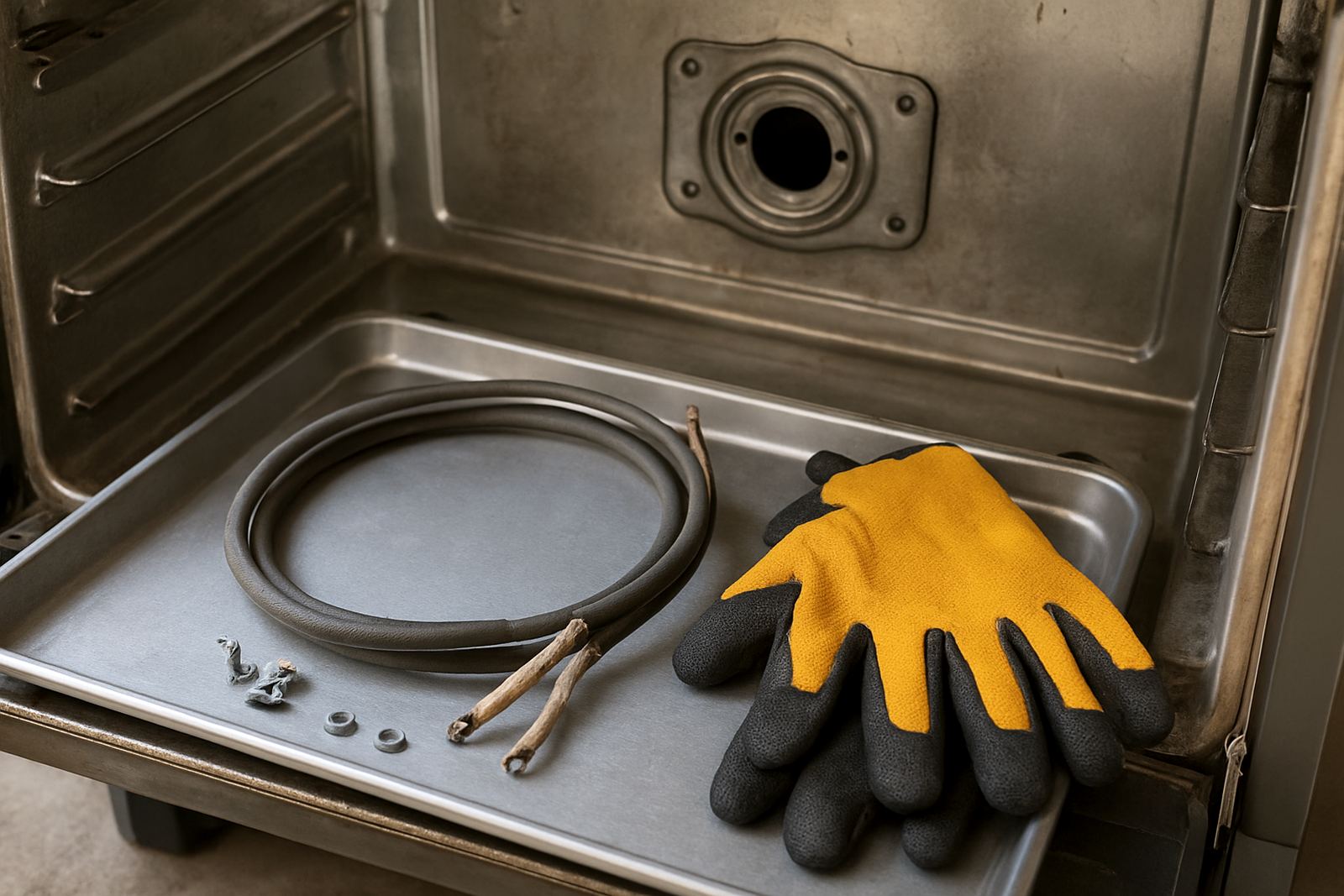
The quickest way to avoid the wrong replacement is to send clear information from the old element and the oven data plate. A photo of the part, the model number, and the overall length usually gets us close straight away. If the old element is broken, send the broken ends as they are and include the mounting distance so we can measure from the fixing points.
- Oven make and model number
- Voltage and wattage from the rating plate
- Overall length and bend shape
- Terminal type and spacing
- Position in the oven, top or bottom
- Any signs of damage to the wiring or terminals
From Midrand we dispatch nationally, with coverage into Johannesburg, Pretoria, Durban, Cape Town and Bloemfontein. If the job needs more than a box drop, our technical parts team can help with compatibility checks, fitting advice and post-fit testing so the repair is done properly the first time.
Key facts
| Product type | Commercial oven replacement heating element |
|---|---|
| Typical supply | 230 V single-phase or 400 V three-phase, depending on oven |
| Common power range | About 1.5 kW to 6 kW per element |
| Common lengths | Approx. 300 mm to 900 mm, plus selected custom sizes |
| Mounting styles | Straight, U-shaped, circular and matched pair layouts |
| Use cases | Bakeries, restaurants, schools, hotels, catering kitchens |